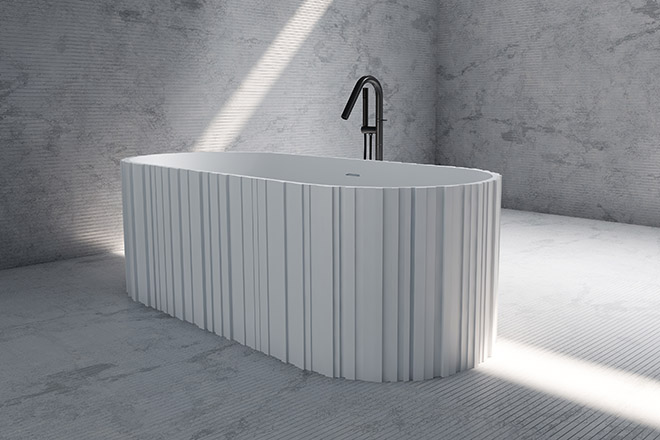
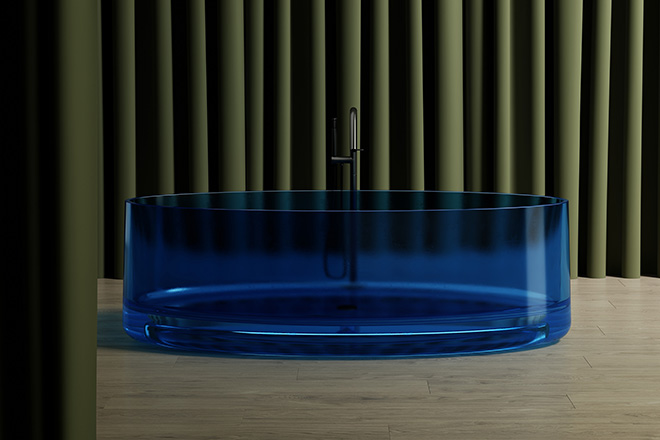
When it comes to outfitting hotels, apartments, or large-scale residential projects, wholesale
solid surface bathtubs have become the preferred choice for designers and procurement teams. Offering a perfect balance of durability, aesthetic consistency, and repairable surfaces, these cast mineral tubs stand out from standard acrylic or stone resin options. For B2B buyers, understanding the composition, performance metrics, and specification requirements of wholesale solid surface bathtubs is essential to ensure project success, from compliance and lead times to finish consistency and lifecycle management. This guide breaks down everything you need to know when sourcing solid surface bathtubs in bulk, helping you make informed decisions that save time, reduce risk, and maintain high-quality standards across multi-unit installations.
Definition, scope, and commercial procurement criteria
Before comparing price or performance, it’s important for buyers and b2b bathtub suppliers to agree on what is — and is not — included when specifying solid surface bathtubs for bulk and project use.
Product definition: cast solid surface (acrylic/polyester resin + mineral fillers)
Wholesale solid surface bathtubs in project supply are typically cast composite products manufactured from an
acrylic or polyester resin binder combined with mineral fillers (commonly aluminum trihydrate and other graded minerals). The casting process produces a monolithic, non-porous body with a continuous surface finish, supporting consistent aesthetics across multi-unit programs and enabling controlled dimensional repeatability when tooling and process controls are stable.
For specification purposes, solid surface should be defined by:
- Binder chemistry (acrylic vs polyester blends)
- Filler system (type, loading rate, and particle distribution)
- Surface continuity (integral material rather than a thin gelcoat over a different substrate)
- Declared performance metrics (water absorption, stain resistance, thermal shock behavior, repairability limits)
Scope boundaries: freestanding solid surface tubs vs stone resin vs acrylic shells
Procurement documents should separate the following categories because they drive different weight, tolerances, repair strategies, and compliance pathways:
- Cast mineral solid surface (this article’s focus): homogeneous composite body intended to be sanded/refinished within limits.
- Stone resin tubs (bulk supply): often used as a market term; in practice it may overlap with solid surface or may indicate higher mineral loading and different binder systems. Require confirmation of composition and repair method.
- Acrylic shells: typically thermoformed acrylic with reinforcement layers. These are lighter and often cost-optimized, but surface repair and long-term rigidity depend on reinforcement design and thickness distribution.
For multi-site procurement, require the manufacturer to declare the material system (binder + filler) rather than accepting “stone,” “resin,” or “solid” as generic descriptors.
Primary project decision points: compliance, lead time, customization, lifecycle risk
For hotel project bathtubs and other multi-unit programs, decision-making typically consolidates around:
- Compliance and approval: required plumbing product listings/marks, material safety documentation, and acceptance by the authority having jurisdiction.
- Lead time and capacity: mold availability, curing time, finishing throughput, and quality inspection capacity for batch shipments.
- Customization feasibility: dimensional envelope changes, drain/overflow relocation, color/finish development, and packaging/labeling requirements for distribution channels.
- Lifecycle risk controls: expected surface wear, scratch remediation protocols for facilities teams, spare unit strategy, and warranty terms aligned to commercial use.
Submittal set overview: shop drawings, cut sheets, test reports, warranty terms
A project-ready submittal package for solid surface bathtubs typically includes:
- Dimensioned shop drawings (overall dimensions, rim profile, base footprint, drain/overflow coordinates, tolerance notes)
- Cut sheets (material description, finish, color code, net/gross weight, packaging dimensions, included accessories scope)
- Compliance documents (listing certificates, test reports, material declarations as specified)
- Care/limitations statement (commercial cleaning chemistry boundaries, scratch repair limits, stain exposure limits)
- Warranty terms (structural vs surface coverage, exclusions for chemicals/abrasives/impact, claim procedure and documentation)
Material composition and performance characteristics (cast mineral solid surface)
The performance of solid surface bathtubs is driven by what’s inside the material, not just how the surface looks. This section explains how resin systems and mineral fillers affect durability, hygiene, and long-term use in hotel and project baths.
Composition variables: resin type, mineral filler loading, aluminum trihydrate (ATH)
- Resin selection: acrylic binders often target improved color stability and surface feel; polyester systems can be cost-competitive but may require tighter process control for consistent curing and color.
- Filler loading and grading: higher mineral loading can improve hardness and thermal mass but may increase brittleness if not balanced with binder and curing profile.
- ATH content: ATH is frequently used to support fire performance characteristics and to control processing and surface properties. Confirm declared formulation class and whether ATH is used as the primary filler or part of a blended system.
Specification language should request declared ranges (not proprietary exact formulas) for resin family and filler system, plus process controls that maintain batch-to-batch stability.
Non-porous performance: water absorption benchmarks and hygiene implications
A principal commercial advantage of cast solid surface is very low water absorption due to a non-porous surface. Manufacturers commonly declare absorption values around 0.03% for their material systems (verify per the test method stated in submittals). Low absorption supports:
- Reduced risk of moisture-driven staining
- Lower likelihood of odor retention in high-use hospitality settings
- More predictable outcomes with approved disinfectants used in commercial housekeeping programs
Procurement should require the test method reference and specimen preparation conditions, as absorption values can vary with formulation, cure completeness, and surface finishing.
Thermal and acoustic behavior: heat retention and sound dampening in hospitality use
Compared with thin acrylic shells, cast mineral solid surface typically provides:
- Higher thermal mass, improving perceived heat retention in soaking applications
- Better sound dampening during filling and use, relevant for hospitality guestroom acoustic targets
For projects where guest experience and operational noise are specified, request a declared wall thickness range and verify the tub body is homogeneous rather than a thin cosmetic layer over a different substrate.
Repairability and refinishing tolerance: scratch remediation limits for commercial service
Solid surface bathtubs are commonly specified because localized scratches and minor wear can be remediated via controlled abrasion and refinishing, subject to limits:
- Acceptable repairs: light scratching, surface haze, minor staining where the material is not chemically etched
- Constraints: deep impact damage, cracks caused by structural movement, and aggressive chemical etching may require professional refurbishment or replacement
- Project implication: define a maintenance protocol aligned to facilities capability and specify whether the manufacturer supports refinishing kits/process documentation for trained service teams (without treating it as a DIY workflow)
This is a key lifecycle differentiator when evaluating whether solid surface is better than acrylic for hotels: acrylic shell repairs often depend on coatings and reinforcement integrity, whereas solid surface remediation typically targets the same material throughout the thickness (within the manufacturer’s stated sanding limits).
Dimensional, functional, and finish specifications (freestanding soaking tubs)
For custom solid surface tubs and stone resin tubs in bulk, size, weight, and finish choices directly affect installation, coordination, and user experience. This section focuses on the practical specification details that matter on site.
Standard size bands and capacity ranges: 1500–1800 mm class and custom envelopes
Freestanding solid surface tubs in wholesale programs commonly sit in the 1500–1800 mm length band, with variations in width and depth driven by bathing posture targets and bathroom planning constraints.
Typical specification ranges (confirm per model and mold family):
- Overall length: 1500–1800 mm
- Overall width: 700–900 mm
- Rim height: commonly 550–650 mm class
- Water capacity (to overflow): often ~180–320 L depending on interior geometry
For custom solid surface tubs, define the maximum envelope permitted without retooling, and identify which changes require a new mold versus parametric adjustments (e.g., drain position, overflow height, rim thickness).
Wall thickness, weight, and handling constraints: thin-wall molding vs natural stone
Cast solid surface generally targets a controlled wall thickness profile to balance stiffness, weight, and heat retention. Typical commercial targets often fall around:
- Wall thickness: ~12–20 mm (varies by design and structural ribs)
- Net weight: commonly ~120–180 kg for many freestanding models (higher for larger volumes or thicker builds)
This is materially different from natural stone tubs, where weight can be substantially higher and may introduce handling and structural constraints in upper-floor applications. For procurement, require the net weight per SKU and a packaged weight for logistics and site handling planning.
Drain and overflow configurations: center/bottom drain, integrated overflow, trap alignment
Drain and overflow interfaces are a frequent source of site rework if not controlled in submittals. Specify:
- Drain type and size (as required by the project standard and local plumbing code)
- Drain location: center, offset, or end; provide coordinates from defined datum points
- Overflow type: integrated slot overflow vs fitting-based overflow; confirm included hardware scope
- Trap alignment: vertical clearance under the tub, offset tolerances, and whether a low-profile trap is required due to slab recess limits
When sourcing stone resin tubs in bulk (market term), verify the drain/overflow hardware compatibility and whether the manufacturer supplies a complete, listed assembly where required for approvals.
Finish and color control: matte vs gloss, pure colors vs chip patterns, batch consistency
Commercial specification should treat finish and color as controlled variables:
- Finish: matte/satin vs gloss. Matte finishes can mask micro-scratches but may show burnishing in high-contact zones; gloss can highlight surface abrasion but may clean differently under housekeeping chemicals.
- Color system: pure colors vs chip patterns. Chip patterns can visually reduce minor wear but require tighter control of distribution and batch matching.
- Batch controls: require color batch locking for multi-phase projects, sample retention at factory, and an agreed acceptance method (lighting conditions, viewing distance, and allowable ΔE or equivalent method if specified).
Standards, certifications, and project approval documentation
Certifications for bathtubs are rarely universal. This section helps project teams understand how approvals, listings, and documentation apply to solid surface and stone resin bathtubs across different regions and project requirements.
Applicable plumbing product standards: ASME A112.19.4 / CSA B45 (as applicable)
Where specified by jurisdiction or client standards, bathtubs may be evaluated to ASME A112.19.4 and/or CSA B45 series requirements (scope depends on the exact product type and regional enforcement). The procurement requirement should state:
- The target standard edition (year/version)
- Whether listing/labeling is required on product and packaging
- Whether the tub must be supplied as a listed assembly including waste/overflow components
Third-party certification pathways: IAPMO/cUPC, CE, UL (project-required variants)
Common approval pathways requested in international project documentation can include:
- IAPMO listing and cUPC marking where required for plumbing product acceptance
- CE marking where applicable in relevant markets and where a harmonized framework is specified for sanitaryware-related products
- UL or equivalent test reports when material safety, electrical proximity, or project-specific fire requirements call for recognized documentation (scope must be defined; bathtubs are not inherently electrical products)
Procurement should treat certification as project-specific, not generic. Require the supplier to submit certificates tied to the manufacturing location and product family, not a marketing list.
Fire/smoke and material safety documentation: UL/ISO test reports where specified
For hospitality and multi-unit developments, some specifications request:
- Reaction-to-fire or surface burning characteristics (method depends on jurisdiction and project specs)
- Material safety declarations and restricted substance compliance aligned with client policies
- ISO-based quality management standards are sometimes referenced in procurement systems to assess factory-level process control and consistency. These standards focus on management and production systems rather than certifying the bathtub as a finished product.
The correct approach is to list required documents in the submittal register and require that reports are traceable (lab identity, report number, sample identification, and date). In these cases, third-party testing bodies such as
UL are often referenced in project specifications to validate fire performance, material safety, or surface burning characteristics, depending on the jurisdiction and client requirements.
Which certifications are typically required for multi-unit and hotel approvals?
Typical approvals are driven by the project location and the authority having jurisdiction. For many commercial programs, minimum expectations often include:
- A recognized plumbing product listing/mark where mandated (jurisdiction-dependent)
- Third-party factory/product audit evidence when client QA frameworks require it
- Material documentation for fire performance and restricted substances when specified by the brand standard or developer requirements
Avoid assuming a universal set; instead, issue a compliance matrix in the RFQ with “required / optional / not applicable” fields per project.
System compatibility and coordination (MEP + architectural interfaces)
Even a well-specified solid surface tub can fail at the site level without proper coordination. This section looks at how bathtubs interface with plumbing, structure, and finishes in real project environments.
Rough-in coordination: drain location tolerances, overflow routing, access planning
Freestanding tubs demand early alignment between architecture and MEP:
- Define drain rough-in coordinates with tolerances that match the tub base design and the site’s slab penetration constraints.
- Confirm whether the overflow is integrated or relies on a routed assembly with specific clearance needs.
- Plan for access strategy (where permitted/required) for servicing connections without disrupting finished surfaces.
Site issues frequently occur when the tub’s “nominal center drain” differs from the plumbing rough-in centerline by even small offsets. Require coordinate drawings that use a consistent datum system.
Floor loading and structural coordination: filled tub load distribution and point loads
For upper floors, the relevant coordination is not the empty tub weight alone but the in-service load:
- Tub net weight (example class): ~120–180 kg
- Water load: up to the overflow capacity in liters ≈ kg (e.g., 250 L ≈ 250 kg)
- Occupant allowance: project-defined (commonly 75–100 kg or as engineered)
The structural risk is often point loading at feet or small contact pads. Require the tub base drawing showing:
- Contact locations and area
- Any leveling feet or pads
- Recommended load distribution approach if the floor finish system is resilient
This directly addresses the common concern “are stone resin tubs too heavy for upper floors?”—they can be acceptable when the in-service load is engineered and distributed appropriately, but confirmation must be based on the specific tub weight, footprint, and structural design.
Waterproofing and floor finish interfaces: movement joints and sealant compatibility
Freestanding tubs interface with waterproofing and finishes through:
- Perimeter sealant joints at the base (if specified)
- Movement accommodation between tub and floor finish
- Compatibility of sealants with the tub surface (neutral cure systems are often specified for compatibility; confirm with supplier)
Project documents should define whether the tub is installed over tile, stone, or a prefabricated waterproof floor system, and who owns responsibility for the jointing detail and any inspection hold points.
What drain/overflow configuration should be specified to avoid site rework?
To minimize site rework, specify the configuration as a coordinated package:
- Fixed drain centerline coordinates from two orthogonal datums
- Declared vertical clearance required for the waste/overflow assembly
- Whether the supplier provides the drain/overflow kit and whether it is listed/approved where required
- Agreement on tolerance stack-up (tub, slab penetration, trap set-out)
Where projects run across multiple contractors or regions, standardize on one drain location per bathroom typology to reduce variation risk across room counts.
Manufacturing process controls and quality assurance criteria
For wholesale and bulk supply, consistency is critical. This section outlines how manufacturing controls and QA processes influence surface quality, color stability, and long-term reliability of solid surface bathtubs.
Casting, curing, and polishing workflow: defect prevention for bubbles/inclusions
In cast solid surface, long-term performance is strongly linked to process stability:
- Mixing and de-airing control reduces entrapped air that can present as bubbles or pinholes.
- Curing profile affects shrinkage, internal stress, and thermal shock resistance.
- Demolding discipline and controlled post-cure reduce warpage and dimensional drift.
- Polishing/finishing sequence determines surface uniformity and can expose sub-surface inclusions if earlier steps were inconsistent.
Procurement should request the factory’s defined control plan for de-airing, cure time/temperature, and surface finishing grit sequence (as a process description, not proprietary parameters).
Raw material incoming QC: moisture, particle size, pigment control, batch traceability
Incoming QC is a key predictor of batch consistency, especially for pure-color matte finishes:
- Mineral moisture content can affect cure and surface appearance.
- Particle size distribution influences surface smoothness and chip pattern consistency.
- Pigment dosing control affects shade drift across production weeks.
- Batch traceability enables containment if an issue is found in the field.
For multi-phase developments, require the supplier to retain reference panels per color batch and maintain traceability to production dates and raw material lots.
Dimensional tolerance and visual acceptance: go/no-go criteria and inspection lighting
Define acceptance criteria that can be audited:
- Dimensional tolerances for overall length/width/height and for drain/overflow coordinates (these should be tighter than general external dimensions).
- Surface acceptance under agreed lighting and viewing conditions (distance, angle, and lux level), including rules for inclusions, gloss variance, and edge radii consistency.
Without agreed inspection conditions, “acceptable finish” becomes subjective and inconsistent across shipments.
What factory QA checkpoints best predict long-term cracking or discoloration risk?
Risk-reducing QA checkpoints commonly include:
- Cure completion verification (process records and periodic physical testing)
- Thermal cycling/thermal shock sampling on production lots when specified
- Color and gloss measurement against retained master standards for each batch
- Dimensional verification of drain/overflow coordinates on every unit or at defined sampling frequency
- Visual inspection under controlled lighting before packing, focusing on pinholes, inclusions, and edge integrity
Cracking risk is often associated with internal stress (cure profile, thickness transitions, handling impacts) and poor support conditions on site. Discoloration risk is typically linked to pigment stability, resin selection, and exposure conditions; require documentation that ties material selection to the project’s cleaning chemistry and lighting environment.
Wholesale solid surface bathtubs: sourcing, OEM/ODM, and commercial terms
Sourcing solid surface bathtubs in bulk is a commercial decision as much as a technical one. This section covers how B2B buyers evaluate suppliers, OEM/ODM options, pricing structure, and lead times.
RFQ inputs that control price and feasibility: drawings, quantity, finish, drain kit scope
To quote wholesale solid surface bathtubs accurately and avoid post-award changes, RFQs should include:
- Dimensioned drawings with datums and drain/overflow coordinates
- Target quantity by model and by phase (initial + replenishment)
- Finish requirement (matte/gloss) and color system (pure/chip)
- Required compliance marks/listings and document language
- Scope clarity: tub only vs tub plus waste/overflow kit, leveling feet, and packaging standard
- Required spare parts or spare units strategy for handover
This is also where cost questions such as “how much do wholesale stone resin tubs cost?” should be handled: unit cost is typically driven by material system, finish, certification scope, included hardware, packaging, and shipment terms—not only by external dimensions.
MOQ, lead time, and capacity planning: sample approvals, tooling timeline for new molds
MOQ and lead time depend on whether the model is from an existing mold family or requires new tooling:
- Existing models: MOQs can be low for trial orders, but project programs commonly set MOQs to stabilize production scheduling and color batching.
- Custom molds: require engineering review, prototype approval, and tooling manufacture. Tooling time plus first-article validation is commonly measured in weeks, and production lead time must include curing and finishing capacity.
When asked “what is the lead time for bulk bathtub orders?”, a procurement-appropriate answer is: lead time is a function of (1) mold readiness, (2) finish and color batching, (3) certification scope and labeling, and (4) packing and consolidation into container schedules. RFQs should request a capacity plan tied to the project delivery sequence.
Packaging, labeling, and logistics: crate standards, drop-test expectations, Incoterms
Freestanding tubs are damage-sensitive in transit; project procurement should define:
- Packaging type (palletized carton vs crated protection) aligned to distribution channel handling
- Corner/edge protection requirements and finish protection films compatible with matte surfaces
- Drop/impact test expectations where distribution networks require it
- Labeling: SKU, color code, batch ID, gross weight, handling marks, and any compliance labeling
- Commercial terms: Incoterms, container loading plan, and documentation responsibilities
What is the typical MOQ and lead time for custom solid surface bathtub molds?
For custom solid surface tubs requiring a new mold, MOQs and lead times vary by factory capability and project constraints. In procurement terms, plan for:
- A tooling and first-article window (engineering + mold + prototype approval) before production allocation
- A production window dependent on curing/finishing throughput and inspection capacity
- A defined MOQ that supports stable batching for color and finish consistency
To control schedule risk, require a gated timeline: design freeze date, first-article approval date, and phased production release quantities aligned to the construction program.
Project applications and specification decision frameworks
Different project types place different demands on bathtubs. This section connects solid surface and stone resin tubs to typical applications such as hotels, apartments, villas, and spas, helping teams make more grounded specification decisions.
Application fit by segment: hotels, apartments, villas, spas (high-traffic durability logic)
Solid surface bathtubs are commonly selected for:
- Hotels: where acoustic dampening, surface repairability, and consistent aesthetics across room types support operational maintenance.
- Apartments and multi-unit residential: where standardized rough-ins and repeatable procurement reduce coordination risk; weight must be verified for upper floors.
- Villas and premium developments: where custom solid surface tubs may be used to meet design intent while maintaining manageable weight relative to natural stone.
- Spas: where chemical exposure and cleaning protocols must be matched to the declared resistance of the material system.
Selection should be based on the facility’s maintenance model and the project’s compliance framework, not solely on appearance.
Comparison matrix: solid surface vs acrylic vs cast iron (weight, repairability, compliance)
| Criterion |
Cast mineral solid surface |
Acrylic shell |
Cast iron (enameled) |
| Typical weight impact |
Medium (model-dependent) |
Low |
High |
| Surface repair approach |
Sand/refinish within limits |
Coating/patch dependent |
Enamel damage often not field-restorable |
| Acoustic dampening |
Typically higher |
Typically lower |
High (mass-driven) |
| Thermal mass |
Medium-high |
Lower |
High |
| Custom geometry feasibility |
High with tooling |
Moderate (forming limits) |
Low |
| Compliance pathway |
Project- and region-specific |
Project- and region-specific |
Project- and region-specific |
This framework supports the common project question “is solid surface better than acrylic for hotels?”—solid surface is often favored where in-service repairability and acoustic performance are procurement priorities, while acrylic may be selected where weight and cost constraints dominate and the operational model accepts different repair limitations.
Risk controls for project deployment: spares strategy, color batch locking, warranty tiers
For multi-room-count deployments, risk controls typically include:
- Spares strategy: hold a defined percentage of spare tubs or spare panels (where relevant) to address transport damage or late-stage room refresh needs.
- Color batch locking: fix batch windows and retain approved control samples to prevent shade drift across floors or phases.
- Warranty alignment: distinguish structural warranty from surface appearance warranty; define exclusions tied to cleaning chemistry, impact, and unsupported installation conditions.
How should solid surface tubs be specified to control variation across room counts?
To reduce variation in large room counts, specify and enforce:
- A single approved master sample per color/finish, retained by both buyer and factory
- Defined inspection lighting and acceptance criteria for each shipment
- Locked drain/overflow coordinates and tolerance notes across all orders
- A controlled change process: any resin/filler/pigment substitution requires written approval and (where required) re-validation testing
- Batch traceability on packaging and documentation so that any issues can be contained without broad replacements
FAQs
What certifications are needed for commercial bathtubs?
This is one of those questions where the honest answer is: it depends on the project. There isn’t a single global certification that automatically makes a bathtub acceptable for every commercial application, which is why this topic often causes confusion.
In many U.S. and Canadian projects, bathtubs are typically expected to meet recognized plumbing standards such as ASME A112.19.4 / CSA B45, often verified through a cUPC listing. For international projects or hospitality brands operating across regions, additional requirements like CE marking may come into play—but only if they’re clearly written into the specification.
What matters most is not collecting certificates after the fact, but confirming requirements early. Asking the project team or AHJ what documentation is actually required can save weeks of back-and-forth later. For commercial jobs, clarity upfront almost always beats assumptions.
Can solid surface tubs be repaired if chipped?
In many cases, yes—and that’s actually one of the reasons solid surface tubs are popular in hotels and multi-unit buildings.
Because the material is consistent all the way through, minor surface damage like small chips or scratches can often be sanded and refinished, instead of forcing a full replacement. This makes everyday wear and tear much less stressful compared to coated or layered materials.
That said, repairs do have limits. Deep cracks, structural damage, or chemical burns from harsh cleaners may go beyond what a simple repair can fix. The takeaway for homeowners and operators is this: solid surface tubs are more forgiving than many alternatives, but they still need proper care and realistic expectations.
What is the typical lead time for bulk bathtub orders?
Lead time is less about the number of tubs and more about how standard or customized they are.
If you’re ordering a standard model in an existing finish, production usually follows a predictable schedule based on curing, finishing, inspection, and shipping. Things slow down when customization enters the picture—new molds, special dimensions, or non-standard finishes all add steps before mass production can even begin.
For larger projects, it’s often smarter to think in phases rather than a single delivery date. Confirming when designs are frozen, when samples are approved, and how batches will ship gives you a much clearer picture than asking for one blanket lead-time estimate.
Are stone resin tubs too heavy for upper floors?
They can be—but weight alone isn’t the full story.
What really matters is the total load once the tub is installed and filled with water, not just the tub’s empty weight. Add a person, and the numbers climb quickly. Equally important is how that weight is transferred to the floor—some tubs spread load evenly, while others concentrate it at small contact points.
This is why structural review is so important, especially for upper floors. When the tub model, water capacity, and support footprint are evaluated together, many stone resin tubs can be installed safely. Problems usually happen when these checks are skipped or assumed.
What information should be included in an RFQ for custom solid surface tubs?
A good RFQ makes everything easier—for both sides.
At a minimum, it should clearly show exact dimensions, drain and overflow locations, and allowable tolerances. Vague drawings are one of the biggest causes of delays and rework later on.
Beyond that, it helps to spell out finish expectations, required certifications, packaging standards, and whether plumbing components are included. For larger or phased projects, breaking quantities down by stage also leads to more realistic pricing and timelines. The more specific the RFQ, the fewer surprises show up after production starts.
References