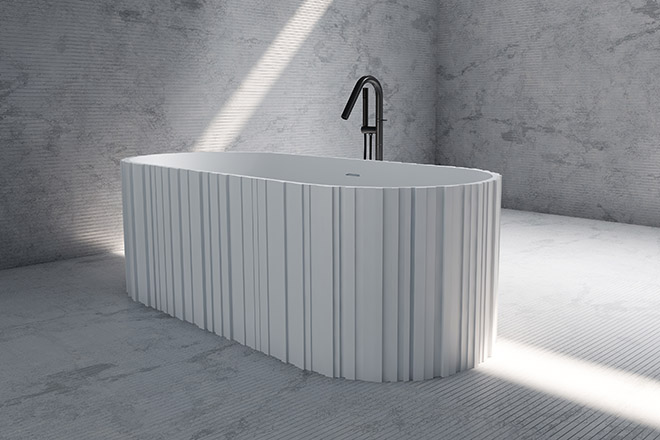
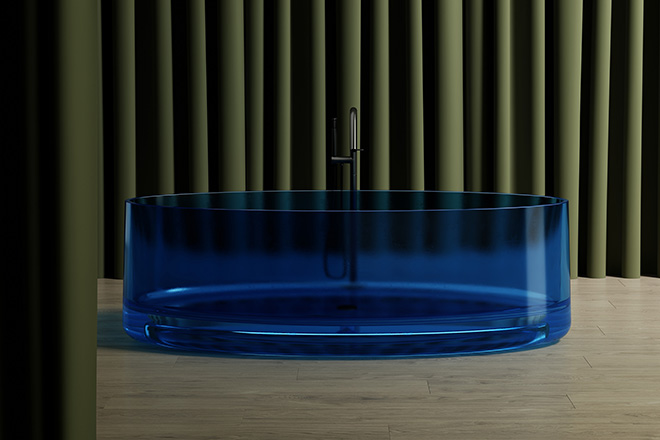
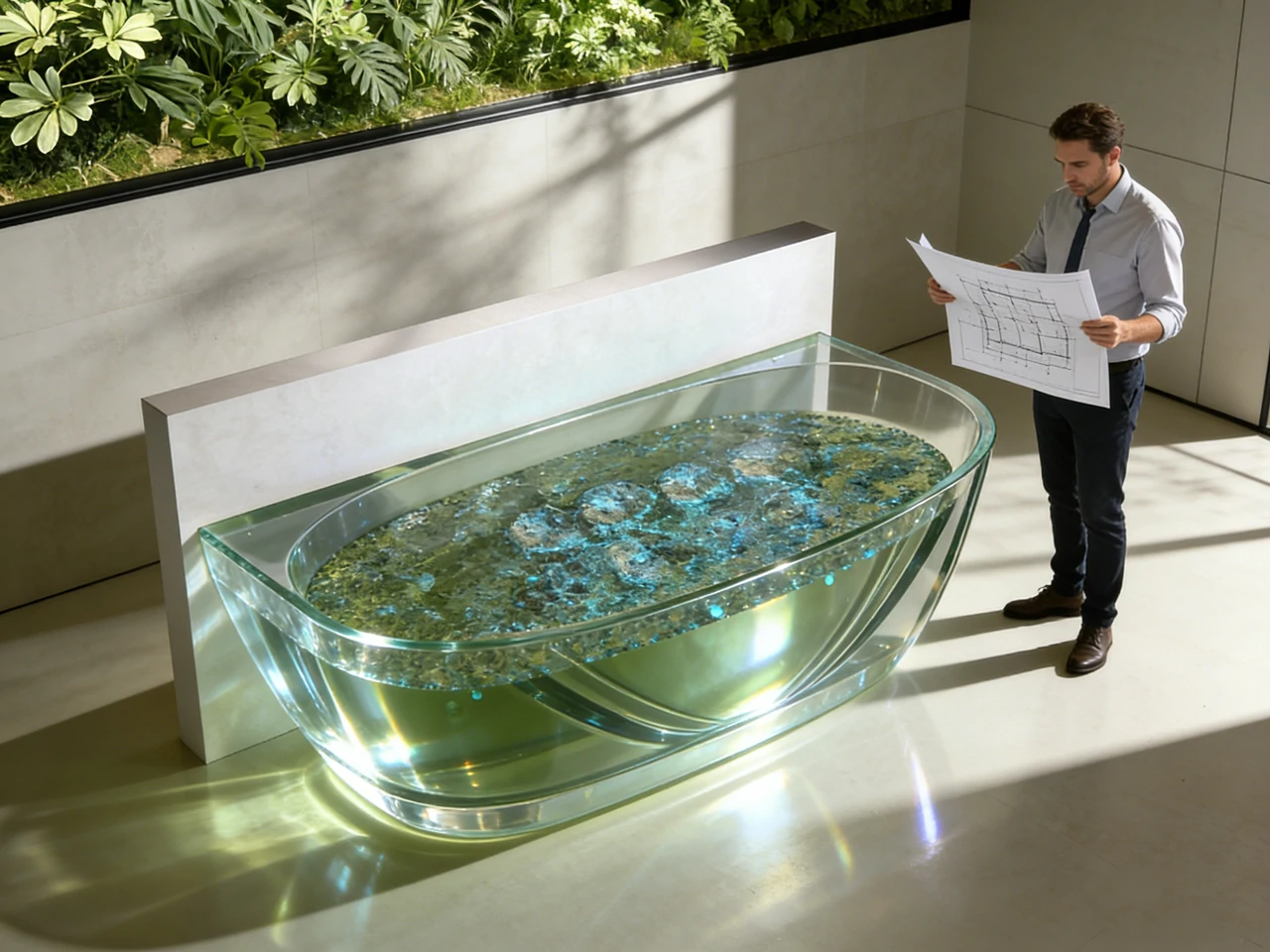
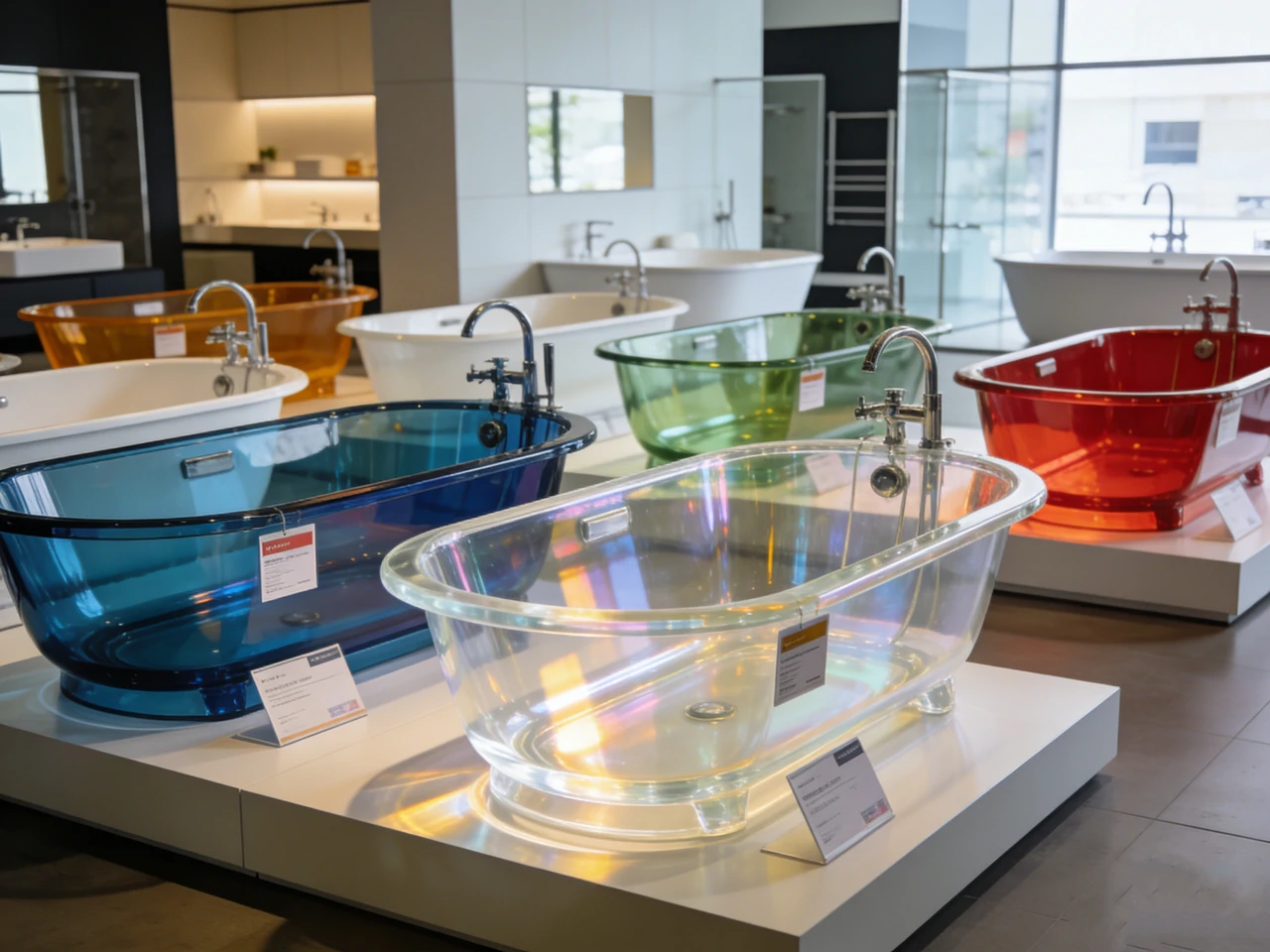
Choosing the right transparent resin bathtub supplier is not just about aesthetics—it’s about understanding materials, performance standards, and how design requirements align with procurement decisions. Project teams can refer to a curated collection of
transparent bathtubs that meet designer and boutique hotel standards, offering clear resin options with consistent optical clarity and reinforced structural design. Before comparing specifications or sourcing options for designer and boutique hotel tubs, it’s important to clarify the scope, key definitions, and decision factors that influence a successful purchase.
Scope, Definitions, And Procurement Decision Inputs For Transparent Resin Bathtub Supplier
Transparent resin freestanding bathtubs are typically specified as statement fixtures within complete bathroom systems—coordinated with drainage kits, waterproofing details, floor finishes, lighting (if applicable), and cleaning/maintenance regimes suitable for commercial operations. For project teams, the supplier evaluation should prioritize repeatable manufacturing quality, dimensional control, and compliance documentation before aesthetics.
Definition Of Transparent Vs Translucent Resin Bathtub Types Clear Resin And Solid Surface Resin
In commercial specifications, “transparent” is often used loosely. Clarify the optical and material definition in the tender documents:
- Transparent clear resin tubs: visually clear walls intended to transmit light and allow internal visibility. These are resin-composite structures (not glass) designed for freestanding use with reinforcement and controlled wall thickness.
- Translucent solid surface resin tubs: light-transmitting, privacy-forward surfaces that diffuse light rather than providing full visibility. They are frequently specified where privacy and reduced visual clutter are desired while still enabling backlighting effects.
This distinction matters because reinforcement strategy, surface finishing, and defect acceptance criteria (haze, inclusions, color delta) differ materially between fully clear and translucent constructions.
Project Fit Of Freestanding Transparent Tubs For Hospitality Spa Multi-Unit And Showpiece Lobbies
Freestanding transparent tubs are most often allocated to:
- Hospitality suites and boutique hotel tubs where the tub is part of the room’s visual program and coordinated with lighting and sightlines. A variety of transparent bathtubs and acrylic tubs are available for these applications, ensuring optical clarity, color consistency, and proper reinforcement for multi-unit installations.
- Spa and wellness rooms require controlled chemical resistance and rigorous cleaning protocols.
- High-visibility feature bathrooms (e.g., public-facing lounge restrooms) where surface clarity and scratch behavior must be validated.
- Multi-unit premium developments when the developer accepts increased procurement control requirements (batch matching, spares strategy, and strict receiving inspections).
For multi-unit deployment, the procurement risk is less about initial appearance and more about batch-to-batch clarity consistency, rework/repair pathways, and change-control discipline across production lots.
Key Performance Expectations For Transparent Resin Bathtubs Wall Thickness Structural Stability Surface Clarity And Chemical Resistance
For clear resin freestanding tubs used in commercial settings, common baseline expectations include:
- Wall thickness: commonly specified at ≥25 mm for structural rigidity and reduced flex under load (confirm thickness at rim, side wall, and base zones separately).
- Structural stability: reinforcement must control deflection at the rim and base under static loading and during handling. Clarify test method and pass/fail limits in submittals.
- Surface clarity: define allowable haze, inclusions/bubbles, and optical distortion zones (e.g., base radius areas may show higher distortion due to geometry).
- Chemical resistance: confirm resistance to neutral-pH cleaners, disinfectant regimes used by facilities teams, and staining agents typical to hospitality operations.
These requirements should be written as measurable acceptance criteria, not descriptive claims.
Submittal Package Requirements From A Transparent Resin Bathtub Supplier
A transparent resin bathtub supplier should be prepared to submit a complete package suitable for design coordination and construction approval:
- Technical datasheet (material build-up, thickness mapping, weight, drain interface, allowable tolerances)
- 2D shop drawings and 3D CAD (STEP/IGES or equivalent) including drain centerlines and overflow details (if present)
- Finish samples: clear, tinted, frosted/privacy treatments with documented color control approach
- Compliance evidence (certifications, test reports, quality management documentation, traceability statement)
- Packaging specification and handling notes (lifting points, edge protection)
This submittal set is the primary control point to prevent downstream coordination failures (rough-in mismatch, trap clearance conflicts, or unacceptable optical variation).
Materials And Performance Characteristics Engineering View
From an engineering perspective, material selection directly affects clarity, strength, and long-term performance of designer transparent tubs.
Resin Families High Performance Unsaturated Polyester Resin Vs Translucent Solid Surface Resin
Two resin families commonly appear in procurement specifications:
- High-performance unsaturated polyester resin (clear systems) Used to achieve high transparency with a polished finish. Performance depends on resin purity, stabilizer package (including UV stability), and cure control. Clear systems are sensitive to process variation that can introduce haze, microbubbles, or color shift.
- Translucent solid surface resin (diffusing systems) Often selected when the project requires light diffusion and reduced visibility. These systems can be more forgiving visually, but specifiers should still define scratch behavior, repair protocol, and allowable color delta.
From a project perspective, the key decision is whether the tub must remain optically clear under commercial cleaning cycles and ambient light exposure, or whether a translucent/frosted solution better fits operational reality.
Reinforcement Strategies And Implications Fiberglass Backing Embedded Frames And Stress Control
Transparent resin tubs are not specified solely by “resin type.” Reinforcement and stress management are decisive for long-term stability:
- Composite backing (e.g., fiberglass reinforcement): increases stiffness and impact tolerance but can introduce visual read-through if placed within sight zones. Submittals should identify backing placement and visibility control.
- Embedded frames or localized stiffeners: used to control rim deflection and base stability, especially in thin-edge designs. Confirm corrosion resistance if metal components are present and specify isolation from wet zones.
- Stress control: cure shrinkage and post-cure stabilization affect dimensional accuracy and long-term cracking risk. Suppliers should document cure cycle control and post-cure handling.
A clear requirement should be included for no visible reinforcement patterning within defined viewing areas where transparency is a design intent.
Optical And Finish Parameters Clarity Haze Tinting Privacy Frosted Treatments And Color Consistency
Optical performance must be specified with the same rigor as dimensional performance:
- Clarity and haze: define maximum haze and allowable localized distortion, particularly around radii, drain sump, and overflow zones.
- Tinting: for colorful resin bathtubs, require documented pigmentation control and batch retention samples. Specify acceptable color delta thresholds and the measurement method where possible.
- Privacy/frosted treatments: define whether the frosting is integral to the resin system or a surface treatment; surface treatments may have different abrasion performance and cleaning compatibility.
- Consistency across a project: require lot traceability and a written change-notification commitment for resin formulation, pigments, and polishing compounds.
This is particularly important for designer transparent tubs specified across multiple suites or floors where visual mismatch is immediately apparent.
Comparison Matrix Transparent Resin Vs Acrylic Vs Solid Surface Strength Expansion And Repairability
The following matrix supports early-stage material selection and value engineering discussions. Final values depend on formulation and construction; require project-specific substantiation in submittals.
| Parameter (typical project concern) |
Transparent resin composite |
Acrylic (clear/colored) |
Solid surface resin (typically translucent/opaque) |
| Typical wall thickness used for freestanding commercial tubs |
≥25 mm (commonly specified) |
Often thinner with reinforcement |
Varies; often moderate thickness |
| Optical intent |
Fully clear / tinted / frosted |
Can be clear but often different optical depth |
Light-diffusing translucency |
| Stiffness / deflection control |
High when reinforced and thick |
More dependent on backing and frame |
Generally stable, depends on build-up |
| Thermal expansion management |
Moderate; confirm with supplier |
Higher expansion; coordination critical at interfaces |
Often lower than acrylic; confirm |
| Repairability (scratch/scuff) |
Requires defined polishing/repair protocol |
Repairable; depends on thickness |
Often repairable with refinishing methods |
| Procurement risk drivers |
Clarity defects, color delta, cure stability |
Surface scratch/warp risk if thin |
Color matching, seam/finish consistency |
For clear acrylic tubs wholesale programs, confirm whether the acrylic is intended to be optically clear at thickness and whether reinforcement will be visible. For transparent resin, confirm clarity retention and yellowing resistance measures (see below).
Dimensional Standards And Bathtub Specification Parameters For Commercial Projects
Dimensional control is essential when specifying transparent resin bathtubs to ensure compatibility with plumbing, structure, and spatial planning.
Standard Dimensional Ranges For Commercial Selection Length Width Height Bands And Volume Considerations
Commercial selection typically falls within established planning bands to fit common bathroom layouts and plumbing zones. Common freestanding ranges used in project planning include:
- Length: 1600–1800 mm (with longer formats possible where circulation allows)
- Width: 700–860 mm (driven by ergonomic brief and room clearances)
- Height: 380–630 mm (driven by rim profile, double-ended geometry, and base construction)
When evaluating substitutions, require the supplier to disclose:
- Overflow level (if present) and effective fill volume
- Bather area geometry (internal length at a defined depth), not only external dimensions
- Drain location coordinates relative to centerlines and finished floor
Wall Thickness Rim Geometry And Edge Design Constraints For Transparent Tubs Thin Edge Vs Full Body
Transparent tubs are frequently specified with thin-edge rim aesthetics, but thin edges raise structural and QA demands:
- Thin-edge designs: require localized reinforcement strategies to prevent rim flex, especially near lifting points. Specify minimum thickness at rim and transition radii to reduce stress concentrations.
- Full-body thickness designs: typically provide robust rigidity but increase unit mass and freight cost; confirm handling method and receiving requirements.
For transparent finishes, rim geometry also controls optical distortion. Tight radii can amplify visual waviness; require sample approval from the exact mold family used for production.
Mass And Handling Typical Unit Weight Thresholds And Deflection Load Implications Static Load Criteria
Freestanding transparent resin tubs are commonly heavy units (often 70 kg or more depending on thickness and reinforcement). In commercial workflows, weight impacts:
- Site handling equipment requirements and route planning (elevator capacity, corridor protection, turn radii)
- Risk of edge damage during staging and positioning
- Base stability and long-term deflection behavior
For safety and durability, require a static load test criterion and a deflection limit statement for the rim and base. Weight capacity should not be presented as a marketing claim; it should be evidenced by a test report or an engineering statement tied to a defined load case and support condition.
Tolerance Framework Dimensional Tolerance Flatness Drain Location And Interface Offsets
Transparent freestanding tubs require tight control at functional interfaces (drain, base contact, overflow if applicable). Establish a tolerance framework in the specification and require the supplier to commit in writing.
| Parameter |
Typical control point for coordination |
Example requirement to state in submittals |
| Overall length/width/height |
Fit within room clearances |
Supplier-stated manufacturing tolerance per dimension |
| Base flatness / contact stability |
Prevent rocking; ensure seal stability at drain |
Flatness limit across defined base footprint |
| Drain outlet center location |
Align to rough-in and trap zone |
Maximum offset tolerance from drawing datum |
| Drain-to-finished-floor interface |
Ensure trap clearance and access |
Minimum clearance zone around drain sump |
| Overflow opening location (if present) |
Code compliance and alignment |
Location tolerance and sealing method |
Where local code drives overflow requirements, the tolerance and sealing details must be reviewed by the plumbing engineer before approval.
Codes Certifications And Compliance Documentation For Transparent Resin Bathtubs
Compliance documentation ensures that transparent resin bathtubs meet regional regulatory requirements and are suitable for commercial and hospitality use.
North America CUPC Certification Pathways And IAPMO Listing Evidence Reference IAPMO
For North America, many projects require third-party certification for plumbing fixtures. If the tub is represented as certified, request:
- Certificate or listing evidence from the recognized certification body
- Model identification that matches the procurement schedule and submittals
- Scope statement clarifying what is certified (fixture, drain kit, overflow assembly—often not identical scopes)
Do not accept generic certificates that cannot be traced to the specific model number, production site, and product description.
EU And UK CE Documentation Scope And Technical File Expectations Reference Applicable EU Directives
CE marking applicability depends on the regulatory scope. For a passive bathtub (no electrical components), CE marking may not be required as a default. However, if the tub is supplied as part of a system that includes regulated elements (for example, integrated LED lighting or powered components), CE/UKCA-related documentation may be relevant to those elements.
Where CE marking is declared, request:
- Declaration of Conformity/Performance as applicable
- Technical file summary (risk assessment, applicable directives/standards, test evidence)
- Traceability to the exact configuration supplied (lighting type, power supply specification, ingress protection rating if applicable)
From a coordination standpoint, it is critical to separate the fixture compliance from electrical accessory compliance and ensure both are documented.
Quality Management Evidence ISO 9001 Documentation And Traceability Expectations Reference ISO
For project procurement,
ISO 9001 certification can support confidence in change control and traceability, but it is not a performance certificate for the tub. Use it to validate that the supplier can:
- Track resin batch and pigment batch per production lot
- Maintain inspection records tied to serial/lot identifiers
- Control nonconforming product disposition and corrective actions
- Manage engineering change notices affecting clarity, tint, or reinforcement layout
Require the supplier to state how lot tracking is applied to shipments (labeling on crate, carton, and unit).
What Certification Documents Are Required to Approve a Transparent Tub for a Commercial Project?
Approval packages typically require:
- Certification listing evidence (where the project jurisdiction requires it) with model traceability
- Factory test reports supporting structural/load and chemical resistance claims
- Quality documentation supporting traceability and change control (including lot tracking method)
- Material declaration and safety data where required by the project’s chemical compliance policy
System Compatibility And Integration Plumbing Building Envelope And Coordination
Proper system integration reduces installation risks and ensures transparent resin bathtubs perform as part of a coordinated bathroom assembly.
Drain and Waste Interface: Outlet Sizes, Trap Clearance, Rough-In Zones & Drain Kit Compatibility
Transparent freestanding tubs frequently use centered or near-centered waste. For coordination, require:
- Outlet diameter specification and drain kit compatibility statement
- Defined rough-in zone (X/Y coordinates from tub datum lines) and a trap clearance envelope
- Access strategy for service (especially in slab or podium conditions)
Procurement should ensure that the tub, drain kit, and waste/trap configuration are treated as a coordinated system, not separate packages procured independently without interface control.
Overflow Strategy: No-Overflow Designs vs Code-Compliant Overflow Solutions
Some transparent freestanding tubs are specified with no-overflow aesthetics. From a project standpoint, this is a compliance and risk decision:
- Confirm whether local code or the project brief requires an overflow
- If an overflow is required, define the overflow type, location, and sealing method
- If no overflow is accepted, document the operational controls (fill management expectations) at the owner/operator level
The overflow strategy affects wall thickness mapping and may introduce additional optical considerations at the cutout zone.
Floor Loading & Base Interface: Leveling, Point-Load Distribution and Substrate Requirements
Even when overall floor loading is acceptable, localized point loads and stability at the base are common failure points. Planning requirements to state early include:
- Base footprint dimensions and contact pattern (continuous base vs support points)
- Leveling approach (factory-integrated leveling features vs site leveling shims specified by the contractor)
- Substrate flatness requirement on the finished floor where the tub contacts the surface
- Waterproofing and sealant compatibility with the resin surface at the base perimeter (confirm curing chemistry and adhesion constraints)
These are coordination notes, not installation instructions, and they reduce call-backs related to rocking, creaking, or drain seal stress.
MEP Coordination & Rough-In Tolerances for Transparent Resin Bathtubs
They tighten coordination in three areas:
- Drain centerline control: drain location tolerance must be compatible with the plumbing rough-in tolerance and trap geometry; otherwise, on-site rework is likely.
- Trap clearance envelope: thicker bases and reinforcement can reduce usable space for the trap and access.
- Accessory integration: if LEDs or other powered elements are specified, electrical routing and service access must be designed as part of the bathroom system, with documented separation between wet zones and power components.
Manufacturing Process Controls And Quality Assurance For Transparent Resin Tubs
Manufacturing controls and QA systems directly impact clarity consistency, dimensional accuracy, and long-term durability.
Mold Design & Curing Controls: Cycle Stability, Shrink Management and Finish Windows
Transparent resin tubs are sensitive to process variation. Manufacturing controls that matter for project outcomes include:
- Mold stability and maintenance regime (surface condition directly affects optical finish)
- Cure cycle control to limit shrinkage and warpage that can shift drain location or base flatness
- Controlled finishing windows for polishing or clear-coat operations to achieve consistent gloss without introducing swirl marks or haze
For OEM/ODM programs, confirm that any geometry changes trigger a documented validation step, including sample sign-off and revised drawings.
QA Checkpoints & Inspection Plan: Clarity, Inclusions, Color Delta and Surface Flatness
A commercial-grade inspection plan should include, at minimum:
- Visual inspection under standardized lighting for bubbles, inclusions, haze bands, and distortion
- Color measurement for tinted products with defined acceptance thresholds
- Dimensional checks at critical points: drain center, base footprint, rim height, overflow location (if applicable)
- Surface flatness verification at base contact zones
For multi-unit projects, require the supplier to retain reference samples for each production lot to resolve any later disputes about clarity shift or color mismatch.
Performance Verification: Stain, Chemical, Thermal, Impact and Load Testing
Transparent resin tubs should be supported by verification appropriate to commercial environments:
- Stain/chemical resistance: documented compatibility with neutral-pH, non-abrasive cleaning agents and disinfectant regimes used by facilities teams
- Thermal cycling: evidence that hot/cold cycling does not introduce stress cracking, haze shift, or joint failures at drain interfaces
- Impact resistance: resistance to incidental knocks during housekeeping and luggage movement in hospitality use
- Static load testing: load case definition and pass/fail criteria, including support condition (on finished floor, on leveling points, etc.)
These test artifacts are also the practical basis for answering “Are transparent bathtubs safe for heavy use?” in a commercial context: safety is established by structural design intent plus evidence, not by anecdote.
Factory QA Tests for Clear Resin Freestanding Bathtubs
Request, at minimum:
- Lot-based visual clarity inspection records with defect classification criteria
- Dimensional inspection records for drain location and base stability
- A defined static load test report (load magnitude, duration, support condition, deflection outcome)
- Chemical resistance testing summary aligned with the project’s cleaning/disinfection plan
- Change-control log for resin formulation, pigments, and finishing compounds across the production period
Transparent Resin Bathtub Supplier Evaluation Criteria For Commercial Projects
Evaluating supplier capability beyond product appearance helps reduce risk in OEM, ODM, and boutique hotel tub programs.
Supplier Capability Checklist: OEM/ODM, Mold Lead Time, Engineering Support and Change Control
When evaluating a transparent resin bathtub supplier, prioritize operational capability over catalog breadth:
- Engineering support for CAD coordination and interface control
- Documented change-control process (revisions, approvals, traceability)
- Tooling and mold management capability, including lead time for new molds and validation sampling
- Defined acceptance criteria for optical finish and how rework is controlled without degrading clarity
This is particularly important for designer transparent tubs where design intent cannot tolerate visible inconsistencies.
MOQ and Sampling Logic: Approval Flow, Pilot Runs and Production Scaling
For commercial procurement, sampling should be structured to reduce risk:
- Require an approval sample that matches the intended production mold and finish process (not a prototype made by different methods)
- Confirm how sampling affects production schedule (pilot run vs single unit)
- Define how batch matching will be managed for multi-unit orders (lot size, retained samples, batch labeling)
For clear acrylic tubs wholesale procurement programs, apply the same discipline: optical and dimensional approval must be based on production-equivalent units.
Commercial Terms and Risk Review: Warranty, Defects, and Spare Parts
Transparent resin tubs introduce unique aftercare considerations:
- Warranty scope should distinguish between structural integrity, optical clarity retention, and surface wear
- Define defect handling: thresholds for acceptable cosmetic variation, rejection criteria, and dispute resolution timeline
- Confirm availability of matching drain covers/trim, and whether repair kits and approved refinishing methods are supplied for facility maintenance teams
From an operations perspective, the question “How to clean a transparent resin bathtub?” should be answered with a documented cleaning compatibility statement: neutral-pH, non-abrasive chemistry, avoidance of aggressive solvents, and a defined approach to scratch polishing that does not cloud the surface.
RFQ Requirements for Transparent Resin Bathtub Suppliers
Include:
- Required dimensions with drain coordinates and allowable tolerances
- Required wall thickness mapping and rim design constraints
- Optical requirements (clarity/haze, tint, frosting method, acceptable defect limits)
- Compliance requirements by jurisdiction (certification/listing evidence)
- QA requirements (inspection records, testing reports, lot traceability)
- Packaging specification, shipping terms, spares strategy, and change-notification requirements
Packaging, Logistics, and Project Delivery Planning for Transparent Resin Bathtubs
Export packaging and logistics planning are essential to protect clear and colorful resin bathtubs from transit damage.
Export Packing Specifications: Cartons, Crates, and Edge Protection
Transparent tubs are sensitive to edge chipping and surface scuffing. Packaging must be treated as part of the product specification.
| Packaging element |
Requirement intent |
Example procurement requirement |
| Primary wrap and surface protection |
Prevent abrasion/scuffing |
Non-abrasive film and controlled contact materials |
| Edge and rim protection |
Protect highest-risk damage zones |
Continuous edge guards at rim and corners |
| Carton vs crate |
Match risk profile and freight mode |
Crate for long-haul/multi-handling routes; defined internal bracing |
| Handling labels and orientation |
Reduce tip/impact damage |
“This side up,” lifting points, no-fork zones |
| Drop/impact validation |
Evidence-based packaging |
Packaging test evidence or controlled trial shipment protocol |
Freight Planning for Heavy Freestanding Transparent Resin Tubs
Given typical unit mass, freight planning should define:
- Container loading method and allowable stacking rules
- High-risk touchpoints (forklift transfer, transshipment hubs, last-mile delivery)
- Receiving inspection requirements: crate condition photos, unit inspection under consistent lighting, and immediate documentation of chips, cracks, or clarity defects
This approach reduces disputes by aligning supplier, freight partner, and site team on evidence and timing.
Batch Consistency Controls for Multi-Unit Transparent Resin Tub Deliveries
Multi-unit projects require explicit batch controls:
- Lot IDs tied to resin batch, pigment batch (if any), and finishing line records
- Shipment grouping by lot to prevent floor-to-floor mismatch
- Formal change notification requirement for any material or process adjustment that may affect clarity, tint, or reinforcement visibility
This is particularly relevant for boutique hotel tubs delivered across phases; phase-to-phase matching should be contractually defined.
Packaging Guidelines for Multi-Unit Transparent Resin Tub Shipments
Require:
- Rigid edge protection and internal bracing to prevent rim flex during shocks
- Non-abrasive surface separation layers to prevent rub marks
- Crate designs that support lifting without contacting the tub body
- A receiving checklist with immediate inspection criteria and quarantine process for nonconforming units
Commercial Applications Specification Notes And Decision Frameworks
Clear decision frameworks help project teams align design intent, performance requirements, and value engineering boundaries.
Application Fit Matrix for Transparent Resin Bathtubs
Transparent resin tubs are most successful when specification aligns with operational and coordination realities:
- Hospitality: prioritize clarity consistency, rapid replacement availability, and surface repair protocol.
- Spas: prioritize chemical resistance documentation and compatibility with disinfectant regimes.
- Premium residential towers: prioritize dimensional coordination with standardized bathroom stacks and lot-based consistency.
- Public-facing feature bathrooms: prioritize impact resistance and scratch management under high traffic.
Value Engineering Boundaries for Transparent Resin Bathtubs
Value engineering is feasible, but boundaries should be explicit:
- Reducing wall thickness can lower weight and cost but may increase flex and visible distortion; require revised structural evidence and deflection limits.
- Switching from fully transparent to frosted/translucent can reduce visible defect sensitivity and improve privacy while still supporting backlighting.
- Adjusting tint in colorful resin bathtubs may be viable, but only with documented batch control and retained samples to prevent mismatch across lots.
For “Do clear bathtubs turn yellow over time?” the specification-level response is: yellowing risk is managed through resin selection, stabilizer package, and exposure conditions. Require the supplier to declare UV stability measures, provide color stability evidence where available, and define acceptable long-term color shift parameters relevant to the project’s lighting and daylight exposure.
Specification Template for Transparent Resin Bathtubs
A performance-based clause set for procurement typically includes:
- Material system description (clear resin composite or translucent solid surface resin) with reinforcement constraints in viewing zones
- Minimum wall thickness and defined critical thickness locations
- Optical requirements: clarity/haze limits, tint/frost method, allowable inclusions, and color delta limits
- Dimensional tolerances for overall size and drain interface
- Compliance documentation requirements and traceability
- QA and testing evidence requirements (static load, chemical resistance, thermal cycling)
- Packaging and delivery requirements with receiving inspection criteria
- “Approved equal” language requiring equivalent documentation, not only similar appearance
Project Approval Workflow for Transparent Resin Bathtubs
A controlled approval workflow reduces rework:
- Mockup/approval sample review under agreed lighting conditions (critical for transparent materials)
- Sign-off on drawings showing drain coordinates and rough-in zones before procurement release
- Final inspection criteria aligned with the defect classification system (clarity, inclusions, scratches, edge chips) and dimensional verification at receiving
For “Can LED lights be added to transparent tubs?” treat lighting as a coordinated system element: define whether lighting is integrated, concealed in the plinth/base, or external to the tub; ensure electrical compliance documentation is separate and complete; and confirm service access provisions without compromising waterproofing.
For “What is the weight capacity of a resin bathtub?” require the supplier to provide a test-backed load rating with defined conditions, and confirm that the floor structure and base interface design support that load case as part of the building coordination process.
FAQs
What Should a Transparent Resin Bathtub Supplier Provide for Submittals?
For projects requiring designer transparent tubs or boutique hotel tubs, a complete submittal package ensures smooth coordination and compliance. A supplier should provide technical datasheets, 2D/3D CAD with drain coordinates, stated tolerances, finish samples (clear, tinted, or frosted), certification/listing evidence where required, and QA/testing documentation tied to the production model and factory.
Are Transparent Bathtubs Made of Glass or Resin in Commercial Specifications?
Understanding the material is critical when sourcing clear acrylic tubs wholesale or transparent resin tubs for boutique settings. Commercial transparent freestanding tubs are typically resin-based composites engineered for structural performance and optical clarity. Glass is rarely used as the primary material due to impact and safety concerns.
How Should Cleaning Compatibility Be Specified for Transparent Resin Tubs?
Cleaning guidance is essential for maintaining surface clarity in colorful resin bathtubs or designer transparent tubs. Require a written cleaning compatibility statement aligned with facility operations: neutral-pH, non-abrasive chemistry; restrictions on aggressive solvents; and an approved method for scratch polishing or refinishing that maintains optical clarity.
What Coordination Risks Are Most Common with Clear Freestanding Tubs?
Projects using clear acrylic tubs wholesale or boutique hotel tubs face specific MEP and installation challenges. The most frequent issues include drain location mismatch, insufficient trap clearance due to thick bases, base rocking from substrate flatness issues, and unapproved changes affecting clarity, tint consistency, or finish across lots.
What Evidence Supports Safe Use in Hospitality or High-Traffic Environments?
For designer transparent tubs in spas, hotels, or commercial projects, safety must be verified through testing. Request static load testing criteria and results, impact resistance evidence, thermal cycling outcomes, and documented QA inspection records for the production lot. Safety is established through defined load cases and verified performance, not anecdotal claims.
How Can Boutique Hotel Tubs Retain Optical Clarity Over Time?
Maintaining visual appeal is key for transparent resin bathtubs in high-visibility suites and spas. Require suppliers to declare UV stability measures, provide color stability evidence where available, and define acceptable long-term color shift parameters relevant to the project’s lighting and exposure conditions.
Can Clear Acrylic Tubs Be Customized in Color or Finish?
Customization matters for colorful resin bathtubs and designer installations. Clear acrylic or resin tubs can be tinted or frosted; suppliers should documentClear acrylic or resin tubs can be tinted or frosted; suppliers should document pigmentation control, batch retention samples, and define allowable color delta thresholds to ensure consistency across multi-unit orders.
References