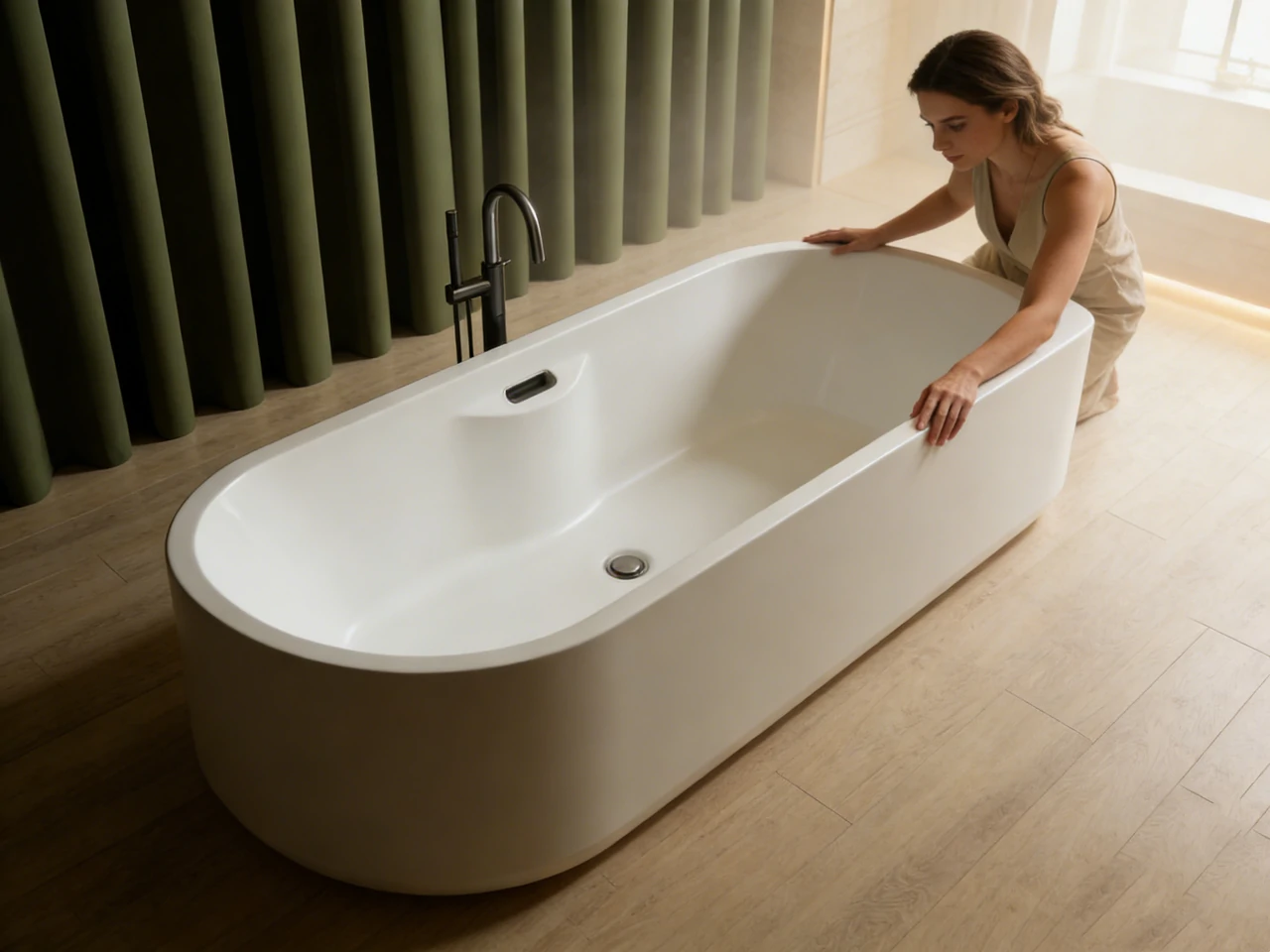
This section provides a complete guide to bathtub standard measurements and bathtub size, covering standard tub size, average bathtub size, standard bathtub height, and how wide is a bathtub for typical installations. It explains their significance in commercial, multi-unit, and small bathrooms projects, helping you in choosing the right bathtub, knowing the standard, and selecting common bathtub sizes and shapes and sizes for smaller bathrooms to ensure consistent coordination and compliance.
Definition, Scope, and Measurement Conventions
The ultimate guide to choosing the right tub helps you choose a bathtub correctly, ensuring the perfect bathtub size for your bathroom. Many commercial projects now use
solid surface bathtubs, which conform to standard dimensional envelopes while providing a durable and easy-to-maintain surface. Knowing standard bathtub size, bathtub dimensions, how wide is a bathtub, and how tubs come in various sizes allows you to select the average bathtub size, soaking tub, or Japanese soaking tub that fits your space. This guidance is particularly helpful when considering shapes and sizes, choosing the right bathtub, and selecting common bathtub options for smaller bathrooms, whether it is a 60 inches long alcove tub, freestanding tub, corner tub, or drop-in tub. In North American project documentation, the standard bathtub dimensions most often refer to the 60 inches in length alcove format, a popular bathtub style that ensures consistent coordination across wall construction, waterproofing assemblies, and tub/shower package layouts in multi-unit or hospitality projects.
When installing a bathtub or selecting a new bathtub, the critical point is to define which dimensions are “standard” in the submittal: overall envelope, interior bathing well size, rim height, and the drain/overflow datum locations that affect rough-in, ensuring the bathtub will fit and meet commercial requirements.
What Standard Tub Size Means in North American Specifications
In bathtub size schedules and cut sheets, “standard bathtub size” typically indicates: a 60 inches long alcove tub designed for alcove bathtub installation, often paired with a freestanding tub, corner tub, or drop-in tub enclosure.
Acrylic bathtubs are commonly used to meet these standard alcove dimensions while maintaining consistent rim heights and interior depths. Width classes that match common stud-to-stud planning and apron profiles are typically 30 to 32 inches, with some bathtub types ranging from 27 to 40 inches. A rim/apron height range is intended to align with typical finished floor buildup and wall tile terminations (14–20 in, depending on design and material)
This is why “how long is a standard bathtub” is usually answered as 60 inches long in North American specifications—because that length is the most repeatable in project delivery, not because other lengths are non-compliant.
How to Measure Tub Dimensions: Overall Envelope Versus Interior Bathing Well
Project errors often occur when teams compare dissimilar measurement conventions. Manufacturers typically publish both:
- Overall (outside) dimensions: used to validate fit inside framing, alcove opening, or deck cutout
- Bathing well (inside) dimensions: used to evaluate occupant fit and functional water depth
For example, a tub listed as 60 × 32 in may have a significantly shorter interior length due to backrest slopes, armrests, or thicker rim sections. When a program requires improved bathing comfort without changing the room module, interior dimensions matter more than the external “standard tub size.”
Key Dimensional Terms for Specification and Coordination
To avoid ambiguity, include these terms in the specification and submittal review:
- Rim height: finished floor to top of rim; affects accessibility coordination and wall finish interfaces
- Apron height: finished floor to apron top edge; affects tile termination and access panel detailing
- Soak depth (interior depth): vertical distance from the bottom of the bathing well to the overflow opening (or to a defined fill line); this is the functional depth that correlates with water capacity
- Overflow-to-rim: distance between overflow opening and rim; impacts usable depth and overflow fitting selection
- Drain centerline location: primary rough-in datum; must be referenced from a fixed tub edge (usually the drain-end rim)
Dimension Callout Diagrams for Plan and Section Views
Plan view callouts (top view)
- A: Overall length (L)
- B: Overall width (W)
- C: Bathing well length (Lᵢ) between interior end walls
- D: Bathing well width (Wᵢ) at the waterline
- E: Drain centerline from drain-end outside face
- F: Overflow centerline from drain-end outside face
Section view callouts (side cut)
- G: Rim height from finished floor
- H: Apron height (alcove)
- I: Interior depth to overflow (soak depth)
- J: Bottom slope to drain (functional drainage geometry, not a finish requirement)
Documenting both plan and section callouts in submittal drawings reduces field RFIs when tubs are swapped within the same “standard size” class.
Standard Tub Size Baselines and Typical Dimensional Ranges
This section outlines baseline and variant bathtub sizes, including compact and extended lengths, along with typical rim and interior depth ranges.
Core Baseline for Alcove Tubs at 60 Inches
Across North American commercial supply chains, the most specified baseline remains: 60 to 72 inches long for extended options and 30 to 40 inches wide, with a height frequently at least 20 inches deep. This ensures there are sufficient inches of space around the tub, side of the tub, and front of the tub to ensure the bathtub will fit. For drop-in tubs, at least 6 inches of flat deck space is recommended, with the bathtub to be set away from walls or surrounding finishes to allow for installation tolerance and maintenance. Alcove and freestanding tubs should also provide a clear perimeter wider than the tub itself, ensuring proper fit, service access, and finishing details. When installing a bathtub, consider clearance on each side of the tub and a flat deck of at least 6 inches for drop-in tubs.
This baseline supports repeatable bathroom module planning and aligns with common tub/shower conversions, wallboard layouts, and waterproofing zones.
Compact Fifty-Four-Inch and Extended Sixty-Six to Seventy-Two-Inch Variants
Compact 54-inch tubs and extended 66–72 inches long tubs give flexibility when choosing a bathtub for your bathroom, especially in small bathrooms where sizes can help maximize space.
Programs deviate from the 60-inch standard for two main reasons: constrained room modules or upgraded bathing requirements.
- 54 in (1372 mm) compact alcove: used where bathroom depth is limited (typical in some multi-family footprints and renovations with immovable stacks)
- 66–72 in (1676–1829 mm) extended lengths: used for “soaking tub” specifications or premium units where interior length is prioritized
In procurement terms, these variants often carry higher coordination cost because framing, wall finishes, and drain location may no longer be interchangeable with the 60-inch class.
Typical Rim Height and Interior Depth Ranges
When teams ask for “standard bathtub height,” the range is more informative than a single figure:
Standard bathtub height ranges typically from 14 to 20 inches, with interior soak depth or bathing well ranging from 15 to 20 inches. For smaller configurations, interior depth may be 12 to 16 inches, supporting standard tub size planning in small bathrooms.
Freestanding and deep-soak formats can exceed these, but in alcove programs these ranges support consistent apron/tile terminations and controlled step-in height.
Standard Tub Size Table With Imperial and Metric Equivalents
| Size class / use case |
Bathtub standard measurements (L × W) |
Metric equivalent |
Typical rim height |
Typical interior depth (to overflow) |
| Standard alcove baseline |
60 inches long × 30–32 inches wide alcove tub |
1524 × 762–813 mm |
14–20 in |
12–16 in |
| Compact alcove |
54 × 28–30 in |
1372 × 711–762 mm |
14–19 in |
11–15 in |
| Extended / soaking length |
66–72 × 32–36 in |
1676–1829 × 813–914 mm |
16–20 in |
14–18 in |
| Typical freestanding envelope (variable) |
55–75 × 27–40 in |
1397–1905 × 686–1016 mm |
20–30 in |
14–20 in |
| Corner tub planning (by side length) |
48–60 in per side |
1219–1524 mm per side |
project-specific |
project-specific |
Use this table as a size-class filter; the final selection should be confirmed with manufacturer drawings that include drain/overflow datums and tolerance notes.
Size Categories by Installation Type
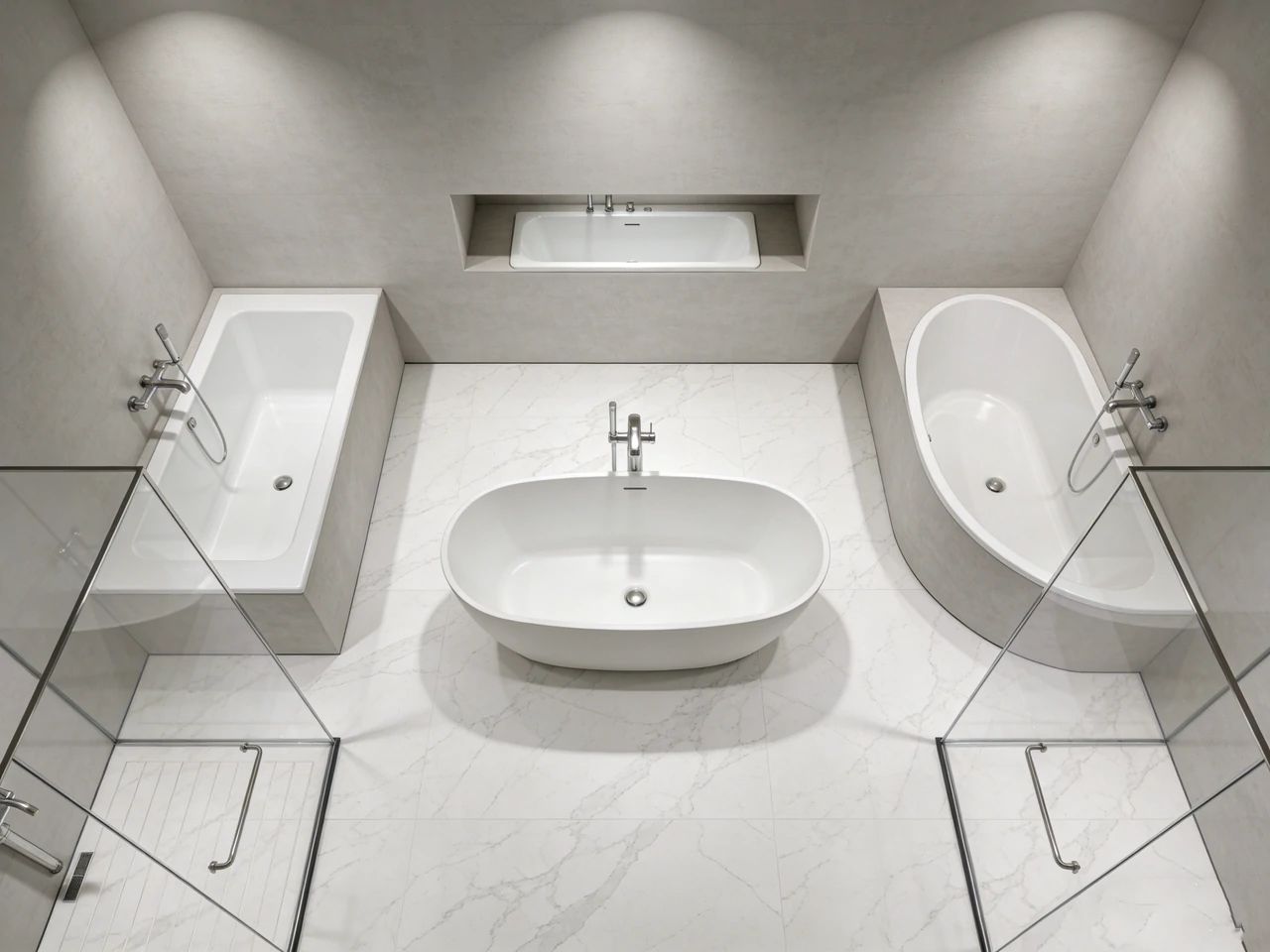
Bathtubs come in various sizes and styles, varying by installation type—alcove, drop-in, freestanding, and corner—each requiring specific dimensional considerations and coordination strategies. Understanding the type of tub is critical when selecting a different bathtub for your project, as dimensions, rim height, and installation requirements can vary widely.
Alcove Tubs With Three-Wall Constraints and Apron Requirements
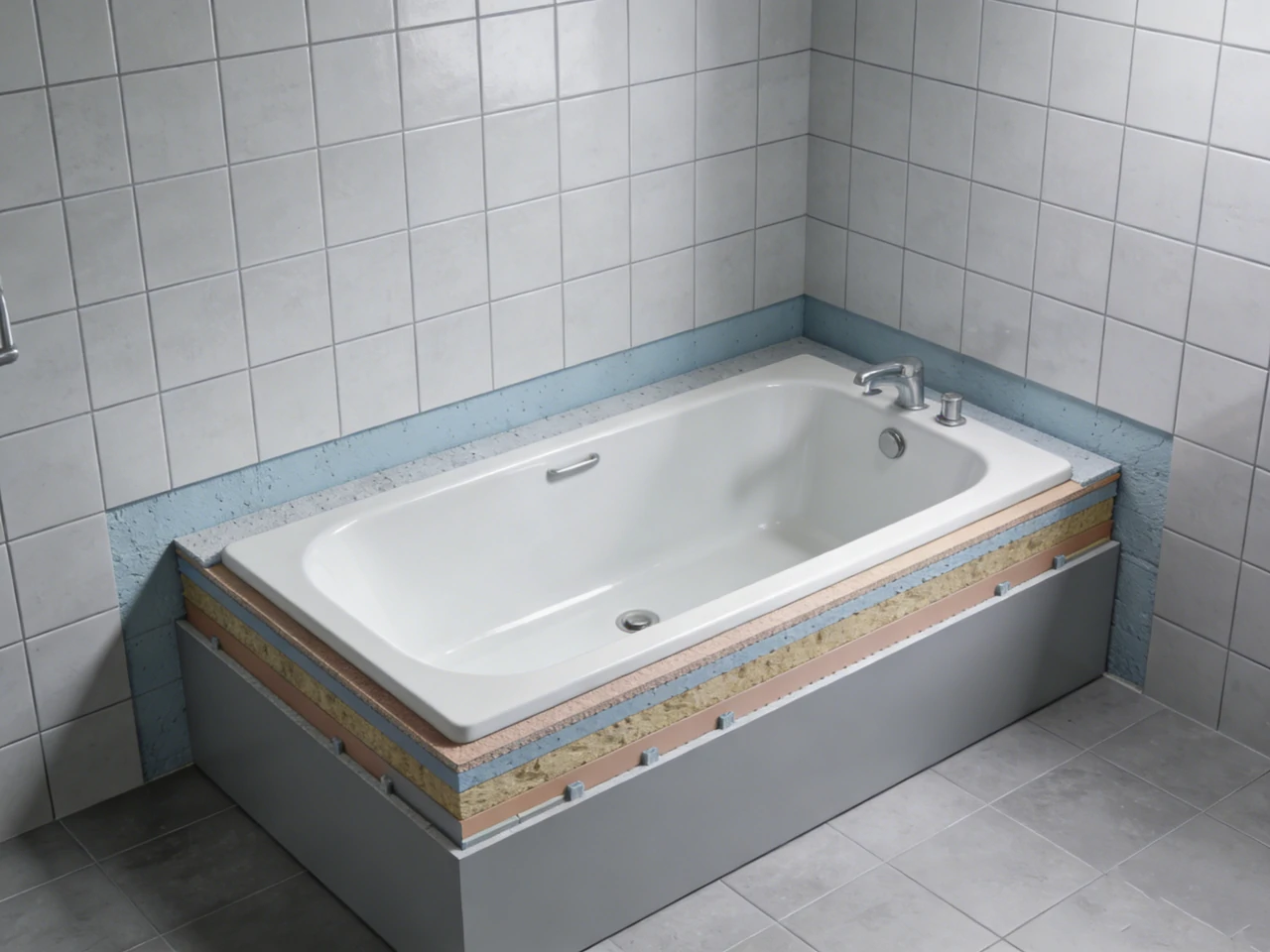
An alcove bathtub is defined by three finished walls and a front apron. The “standard alcove” constraint is not only length and width; it includes:
- Flange geometry at wall interfaces (for waterproofing continuity)
- Apron profile affecting finished floor return and access strategy
- Stud-to-finish dimensional assumptions (tile buildup, backer board thickness, and sealant joints)
For multi-unit programs, alcove tubs are preferred when repeatability and serviceability are priorities, since the supply interface can be standardized and wall protection can be integrated into a complete tub/shower system.
Drop-In Tubs With Deck Cutout and Access Panel Considerations
A drop-in tub is driven by the deck opening and support structure rather than a three-wall envelope. Specification needs to address:
- Deck cutout dimensions and corner radii (often more critical than overall L × W)
- Rim bearing and support requirements (continuous support vs point loads)
- Access panel strategy for drain/overflow service (location, minimum opening, and finish coordination)
Drop-in formats can use a standard bathtub size such as 60 inches in length, with a deck for a drop-in tub that provides at least 6 inches of flat deck. When choosing a bathtub, consider the size for your bathroom, the bathtub size and type, and ensure there is enough space to allow for installing a bathtub and maintaining at least 30 to 40 inches wide in smaller bathrooms.
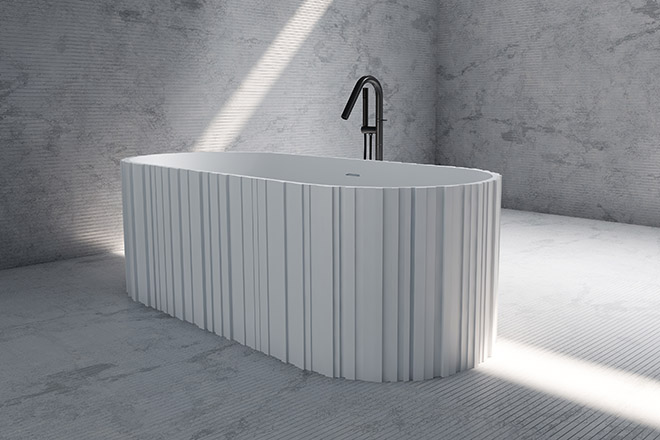
Freestanding Tubs With Variable Footprints and Service Routing
A freestanding tub or oval tub introduces higher variability in bathtub sizes and rim height, giving more options for a perfect tub while planning space around the tub. Key planning considerations include:
- Footprint vs rim overhang: confirm whether the published width is at the rim or at the base
- Service routing: floor or wall supply, and waste/overflow alignment without a concealed alcove chase
- Clearance planning: cleaning access and code-required clearances where applicable
Freestanding tubs are often specified for design intent to achieve the perfect tub, but procurement should treat them as higher coordination risk unless the project provides controlled rough-in tolerances and verified mock-up conditions.
Corner Tubs With Side-Length and Diagonal Clearance Planning
A corner tub is frequently scheduled by side length (e.g., 60 in × 60 in), but the usable interior and diagonal projection can drive bathroom circulation conflicts. For coordination:
- Confirm side-length convention (outside-to-outside at the rim vs deck footprint)
- Check diagonal dimension relative to door swings and required clear floor space
- Validate front apron radius and enclosure compatibility if paired with a shower system
Applicable codes, accessibility standards, and certification requirements directly influence bathtub dimensions, clearances, and interface conditions (as specified by
ADA and the
U.S. Access Board).
Code, Accessibility, and Certification Requirements Affecting Dimensions
Applicable codes, accessibility standards, and certification requirements directly influence bathtub dimensions, clearances, and interface conditions.
ADA Tub Dimensional Requirements and Clear Floor Space Coordination
Where an accessible bathing fixture is required, ADA coordination extends beyond the tub itself. A common reference point is the 60 × 30 in tub footprint class, paired with clear floor space requirements and transfer provisions. In practice, the bathroom plan must reserve compliant maneuvering and transfer clearances that may exceed the tub envelope.
Grab Bar Placement and Control Reach per ADA and ICC A117.1
Accessibility layouts require early coordination of:
- Grab bar backing and exact bar locations relative to the tub rim and control wall
- Control reach ranges (height and lateral reach) so valves and diverters remain operable within prescribed ranges
- Clear floor space positioning relative to apron and entry
Treat these as architectural and MEP interface requirements; the tub selection must support the intended control wall and flange configuration without forcing rework.
Plumbing Code Constraints From IPC and UPC
- Waste/overflow fitting requirements
- Trap and vent configuration constraints
- Material and listing expectations for plumbing fixtures and fittings
In procurement, require that submittals clearly identify the intended drain size class and waste/overflow compatibility so the rough-in can be standardized across a unit mix.
Applicable Certification and Listing Standards Including ASME and CSA
For commercial projects, include acceptance criteria tied to recognized scopes:
- Accessibility: ADA and ICC A117.1
- Plumbing system design: IPC or UPC as adopted by jurisdiction
- Fixture performance/listing: ASME/CSA plumbing fixture standards applicable to bathtubs and bath waste fittings
Plumbing Rough-Ins and System Integration
Proper coordination of drain, overflow, and supply interfaces ensures reliable installation and minimizes conflicts between disciplines.
Drain and Overflow Location Conventions and Tolerance Control
Standard tub size does not guarantee standard rough-in. Drain and overflow locations vary by:
- alcove vs drop-in geometry
- end-drain vs center-drain designs
- internal slope requirements and structural ribs
For project control, treat drain centerline as a critical dimension with stated tolerance. If a renovation program expects substitution flexibility, specify an allowable rough-in adjustment range and confirm field conditions before locking the purchase order.
Drain Size Selection and Waste Vent Standardization
From a multi-unit procurement perspective, standardization reduces downstream variability:
- Keep drain size class consistent across unit types when possible
- Align trap and vent routing to a repeatable template
- Confirm that overflow assemblies match the tub wall thickness and material type
This is a key reason the 60-inch alcove remains common: the downstream waste/vent package can be repeated with fewer exceptions.
Supply Interface Constraints for Wall-Mounted Deck-Mounted and Floor-Mounted Fittings
Supply interface selection is not aesthetic-only; it drives wall depth, deck thickness, and service access:
- Wall-mounted: requires coordinated valve depth, backing, and waterproofing detailing
- Deck-mounted: requires deck thickness limits, hole patterns, and access provisions beneath the deck
- Floor-mounted: requires slab coordination, anchoring allowances, and precise tub placement control
Select the tub and fitting interface as a system. Changing the tub type late often forces changes to valve rough-ins and waterproofing scopes.
Rough-In Compatibility Matrix by Tub Type and Size Class
| Tub type / size class |
Common drain location |
Rough-in risk level |
Typical supply interface constraints |
Notes for standardization |
| Alcove 60 in standard |
End-drain most common |
Low–Medium |
Wall-mounted or deck-mounted at apron end |
Highest interchangeability when drain datum matches across SKUs |
| Alcove 54 in compact |
End-drain common |
Medium |
Wall-mounted often constrained by shorter deck |
Verify door swing and clearances in tight plans |
| Extended 66–72 in |
End-drain or center-drain |
Medium–High |
Wall/deck supply may shift relative to backrest geometry |
Confirm valve reach and spout projection early |
| Drop-in 60 in |
End-drain or center-drain |
Medium |
Deck-mounted common; access panel required |
Deck cutout and service access drive feasibility |
| Freestanding 55–75 in |
Center-drain common |
High |
Floor- or wall-mounted; tight tolerance |
Placement control and on-site verification reduce rework |
| Corner tubs |
Project-specific |
High |
Deck-mounted common; enclosure constraints |
Confirm diagonal clearance and access strategy |
Materials and Performance Characteristics Linked to Standard Dimensions
Material selection affects bathtub weight, durability, acoustic performance, and compatibility with standard dimensional envelopes.
Material Options for Commercial Projects Including Acrylic Steel and Cast Iron
Material selection impacts consistency, handling, acoustic performance, and long-term service risk:
- Carbon Fiber bathtubs provide high strength with reduced weight, making them suitable for both standard-size and oversized installations.
- Acrylic with reinforcement: common for commercial programs due to controlled surface finish, reduced mass for logistics, and acceptable thermal retention. Evaluate reinforcement design and base support to manage deflection.
- Carbon Fiber-reinforced composites: can be cost-efficient, but performance depends on laminate schedule, resin control, and structural support. Specify minimum performance criteria and verify thickness consistency.
- Enameled steel: durable surface but can transmit noise and may feel colder; check enamel quality controls and chip resistance expectations for commercial turnover.
- Enameled cast iron: high mass and rigidity with strong durability profile, but affects freight, handling, and floor loading coordination.
For any material, procurement should require third-party listing where applicable and verify that the bathtub category matches the project’s abuse and cleaning regime.
Water Capacity Ranges and Hot Water System Implications
For a 60-inch standard bathtub, typical fill volumes commonly fall in the 40–60 gallon (151–227 L) range depending on interior geometry and overflow height. Capacity impacts:
- domestic hot water sizing assumptions (especially in hospitality peak-use conditions)
- recovery time and energy modeling inputs
- structural load calculations when filled
When the question “is a 60 inch tub too small” arises in project meetings, the professional answer is to compare interior bathing well length and effective soak depth against the program requirement to determine the best tub for each project scenario. A 60-inch tub is often acceptable for standardized guestroom packages, but extended lengths or deeper wells may be justified where bathing is a stated amenity or where occupant mix indicates higher fit risk.
Structural Load and Floor Coordination for Filled Tub Weight
For coordination, use conservative, documented assumptions:
- Water mass plus occupant load plus tub mass can create a meaningful point load concentration.
- Material choice is a major variable (lightweight reinforced acrylic vs high-mass cast iron).
- Freestanding tubs can concentrate loads through smaller contact footprints than alcove tubs with continuous bases.
Engineering review should use manufacturer-published mass and support conditions, plus a defined water volume assumption tied to overflow height.
Reference Standards for Material and Performance Testing
Performance requirements relevant to commercial selection can include:
- Surface slip resistance testing approaches (commonly referenced through ASTM methods)
- Material property testing approaches (impact, hardness, stain resistance), depending on project specification
- Plumbing fixture listing/certification to applicable ASME/CSA bathtub standards and local acceptance requirements
Manufacturing Quality Assurance and Dimensional Control
Quality assurance measures and dimensional controls are critical for ensuring repeatable installation and minimizing field rework.
Dimensional Tolerances and Measurement Reference Points
For project consistency, treat tolerance as a procurement requirement, not a field problem. Key controls include:
- Overall length/width tolerance at defined measurement points (rim-to-rim, outside face to outside face)
- Flange straightness along wall-contact edges (critical for waterproofing continuity)
- Deck/rim flatness where wall sets, doors, or tile returns interface
Publish the measurement points in the approval submittal so incoming inspection is objective.
Surface Quality Gloss Uniformity and Slip Resistance
Commercial acceptance criteria should be explicit:
- allowable cosmetic variation zones (rim vs bathing well)
- gloss uniformity expectations where lighting is high-contrast
- slip-resistance performance requirements where specified by the project
Align these requirements with the project’s cleaning protocols and expected turnover frequency.
Warpage Control Base Support and Leveling Design
Warpage and support conditions drive jobsite risk even when a tub meets nominal “standard tub size”:
- Insufficient base contact can create deflection, stress cracking, or sealant failure at wall interfaces
- inconsistent leveling features increase time variability per unit, affecting schedules in multi-unit work
- skirt/apron fit can drift if the tub body is not rigidly controlled
Procurement can reduce risk by requiring documentation of base support concept and verifying representative samples.
Incoming Inspection Checklist for Project Deliveries
Use an incoming QA checklist that mirrors the approved submittal:
- Confirm model ID and listed standard compliance markings per submittal
- Verify overall L × W at defined rim points (record measurements)
- Verify drain centerline location from the specified datum edge
- Check flange straightness along wall-contact sides (visual + straightedge method as specified)
- Inspect surface defects in bathing well and rim zones under consistent lighting
- Confirm packaging integrity and record freight damage indicators before acceptance
- Validate included components (drain/overflow compatibility notes, feet/supports if supplied, templates if applicable)
Sourcing and Selection Criteria for Commercial and Multi-Unit Procurement
This section outlines how to balance interior bathing comfort, external envelope constraints, and supply chain considerations for commercial projects.
Balancing Interior Bathing Comfort With External Envelope Constraints
External envelope drives fit; internal dimensions drive user function and complaint risk. For standardized programs:
- Use the standard tub size envelope (often 60 inches long) to lock the bathroom module.
- Use interior bathing well length and overflow-based soak depth to differentiate tiers without changing framing.
- Require drawings that show interior dimensions at a defined height line, not only at the rim.
Interchangeability Strategies Across Standard Tub Size Classes
Interchangeability is achieved when these are aligned across alternates:
- drain/overflow datum locations and tolerances
- flange type and wall-interface geometry
- apron height and finished floor interface
- supply interface assumptions (spout reach, valve location, deck thickness limits)
Without that alignment, a “standard bathtub size” substitution can trigger tile rework, valve relocation, or enclosure conflicts.
Lead Time Packaging and Freight Damage Risk Management
For large shipments, bathtub sourcing should account for:
- packaging design that protects corners/rims (highest damage exposure)
- palletization that supports site receiving constraints (elevator sizes, corridor widths, staging limits)
- inspection and rejection procedures aligned to contract terms
Freight damage rates can materially impact schedules in multi-unit projects; reduce risk through defined packaging specs and receiving protocols.
Required Submittal Documentation for Commercial Approval
For commercial submittals, require at minimum:
- dimensioned cut sheet with interior and exterior measurements
- rough-in drawing showing drain/overflow datums and tolerance notes
- listing/certification evidence to applicable standards
- cleaning and chemical exposure limitations relevant to the material system
- warranty terms appropriate for commercial use and turnover cycles
Project Application Scenarios and Decision Frameworks
Effective bathtub selection in commercial, multi-unit, or specialized residential projects requires more than simply choosing a “standard size.” Project context, user needs, and installation constraints drive the decision framework. The following scenarios illustrate how different programs—from hospitality to multi-family, healthcare, and renovation projects—translate dimensional standards into practical design, coordination, and procurement strategies.
Hospitality Projects Using Repeatable Sixty-Inch Alcove Packages
Hospitality projects typically prioritize repeatability and service access. A 60 inches long alcove tub package remains common because it allows:
- repeatable wall set or tile module coordination
- standardized waste/vent routing
- consistent apron access strategies where service is required
Where guest experience requirements justify upgrades, consider deeper-well or extended-length options only if the program can absorb rough-in and enclosure changes.
Affordable and Multi-Family Projects Using Compact Fifty-Four-Inch Modules
In constrained footprints, “what’s a good bathtub size for small bathrooms” is addressed through module coordination:
- 54-inch alcove tubs can preserve circulation and door swing clearances in compact plans.
- Widths near 30 inches can reduce encroachment into required clear floor spaces.
- Confirm that reduced exterior size does not create unacceptable interior bathing well constraints for the occupancy mix.
In multi-family, avoid mixing incompatible rough-ins across unit types unless a clear segregation plan exists for purchasing, staging, and installation sequencing.
Healthcare and Accessible Units With Integrated ADA Coordination
Accessible units require early integration among architectural, MEP, and waterproofing scopes:
- confirm the required clear floor space and transfer approach
- coordinate grab bar backing and exact locations
- verify that control reach ranges and spout location align with the selected tub geometry
Treat the tub as one component in an accessibility-compliant bathing system; dimensional compliance depends on the surrounding clearances and control placement, not only the tub’s “standard size.”
Professional Advisory Answer on Rough-In Tolerances for Renovation Projects
In renovations, existing framing and piping variability makes tolerance control more important than in new construction. For a 60-inch standard alcove tub, specify:
- Drain centerline datum and allowable field adjustment range (state the reference edge and a tolerance band that matches the waste/overflow assembly and the site conditions)
- Finished wall build-up assumptions (backer + waterproofing + tile), since these can shift the tub’s effective set-in position within the alcove
- Alcove opening tolerance (framing and squareness), since out-of-square conditions can force the tub to “rack,” affecting flange contact and waterproofing
From a procurement standpoint, require the tub rough-in drawing to be reviewed against verified field measurements before release, and avoid “equal” substitutions unless drain/overflow datums and flange geometry match the approved baseline.
FAQs
What Is the Standard Size of a Tub in North American Projects?
In North American residential, hospitality, and multi-family construction, the most widely adopted standard bathtub size is 60 inches long by 30–32 inches wide (approximately 1524 × 762–813 mm). This size is most often specified in an alcove configuration, where the tub is enclosed on three sides by walls. Rim heights typically fall in the 14–20 inch range, depending on the tub material (acrylic, steel, cast iron) and whether the design prioritizes ease of entry, deeper soaking, or compatibility with standardized apron and finish details.
What Is the Most Common Bath Size for Multi-Unit Procurement?
For large-scale multi-unit procurement, a 60-inch alcove bathtub remains the dominant choice. This size supports repeatable framing layouts, consistent drain and overflow rough-ins, and standardized waterproofing and wall interfaces across vertically stacked units. Using a uniform tub size reduces coordination risk, simplifies procurement and QA processes, and minimizes RFIs during construction—key priorities in multi-family and hospitality programs.
Is a 60-Inch Tub Too Small for Commercial Specifications?
Not inherently. A 60-inch tub can fully satisfy commercial specifications when evaluated correctly. The key is to assess interior bathing well length, effective soak depth to overflow, and user profile requirements against the project program. Many hospitality and multi-family developments intentionally standardize on 60-inch tubs to ensure construction repeatability and cost control. Larger or extended-length tubs are typically reserved for premium unit tiers, suites, or amenity-driven designs where differentiation and enhanced user experience justify the added coordination and cost.
What Bathtub Size Is Typically Specified for Small Bathrooms in Multi-Family Layouts?
In small bathrooms, where room depth, circulation, or door swing is constrained, compact alcove tubs measuring 54 inches long and 27 to 32 inches wide are ideal. These standard alcove tub sizes provide a practical choice for smaller bathrooms and ensure enough clearance for installation while maintaining a comfortable soaking tub experience. This is the format to consider when you want the bathtub to fit both user comfort and tight spaces. These tubs are ideal for small spaces and are often selected when choosing a new tub or deciding on a bathtub for your space. This choice helps maintain at least 6 inches of flat deck space, with enough space to ensure the bathtub can fit comfortably. These compact formats help maintain code-compliant clearances while preserving a full bathing function. When using reduced-length tubs, it is critical to confirm that drain rough-in locations, overflow heights, and wall-interface geometry remain compatible with the standardized bathroom module and waterproofing system.
Which Dimensions Should Be Treated as Critical for Rough-In Coordination?
For rough-in and cross-discipline coordination, the most critical bathtub dimensions include the drain centerline location, overflow location, and rim or apron height, along with flange geometry for alcove installations. These parameters directly impact waste and vent alignment, valve and spout placement, tile and finish transitions, and long-term serviceability. Treating these dimensions as fixed early in design helps prevent misalignment between structure, MEP systems, and finishes during construction.
References