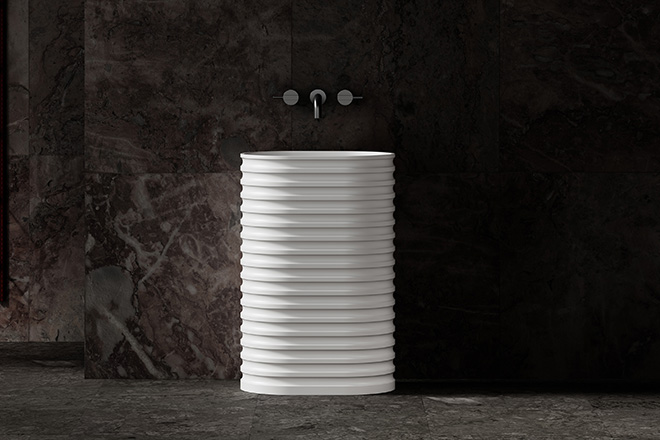
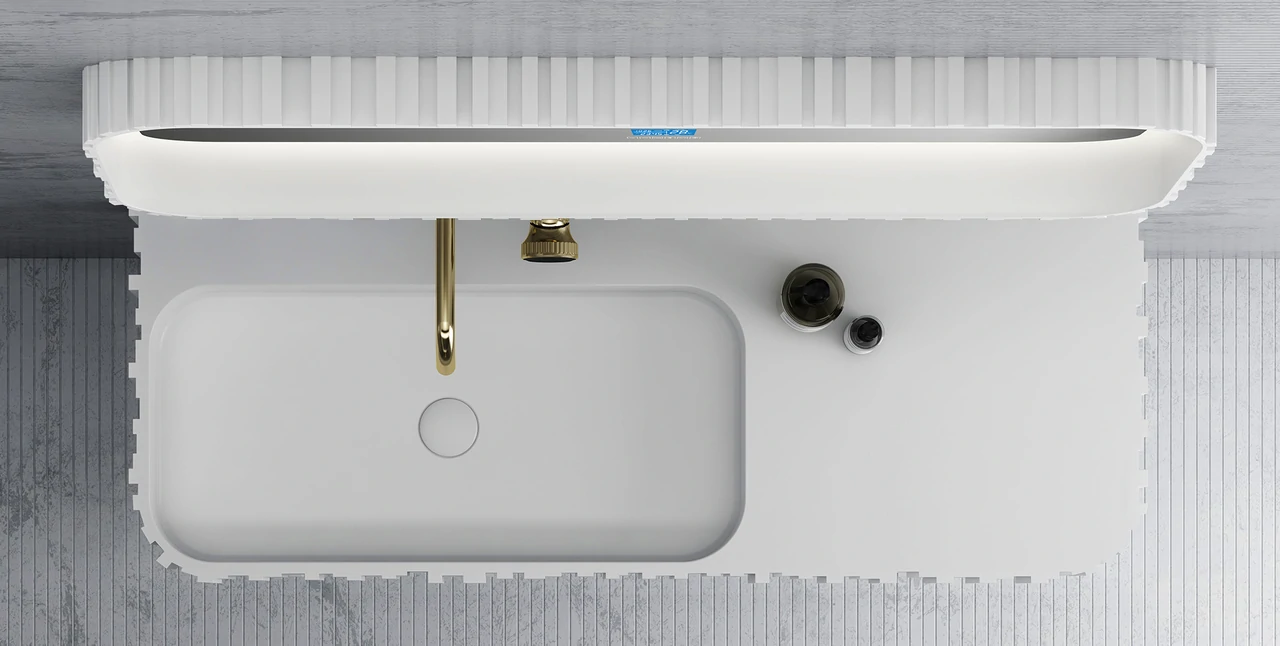
Stone resin countertop sinks have become a preferred choice in commercial and hospitality projects where durability, aesthetics, and repeatable performance are critical. Supplied as standalone vessel basins, these sinks integrate with countertops, waste sets, faucets, and vanity systems, forming a coordinated bathroom component that must meet stringent dimensional, material, and finish standards. For architects, specifiers, and procurement teams, understanding the distinctions between stone resin, solid surface, and composite stone basins, as well as their manufacturing, testing, and installation requirements, is essential to ensure consistency across multi-unit deployments and long-term operational reliability.
This guide provides a detailed supplier specification framework for stone resin countertop sinks, covering material composition, surface performance, geometric tolerances, system integration, quality assurance, and commercial considerations, helping B2B buyers make informed, risk-mitigated decisions for hospitality, multi-family, and commercial washroom projects.
Professional scope: countertop stone resin sink types
Stone resin
countertop basins are typically specified as above-counter (vessel) wash basins supplied as independent units to be integrated with a countertop, waste set, faucet, and furniture/vanity system. For multi-unit commercial work, the selection should be treated as a repeatable component within a controlled bathroom product set, with defined tolerances, approved finishes, and documented interfaces (cutout, drain alignment, spout envelope, overflow strategy).
Definitions: stone resin vs solid surface vs composite stone wash basins
In project documentation, “stone resin” is commonly used as a market term for mineral-filled resin basins. To avoid ambiguity at procurement and submittal stages, define the material family in measurable terms:
- Mineral-filled resin (stone resin / composite stone): a cured resin matrix filled with mineral powders/aggregates (often limestone or marble-derived). Performance is strongly driven by mineral loading, filler type, and cure control.
- Solid surface (acrylic- or resin-based): homogeneous, non-porous material class produced from resin + fillers, typically formulated for machinability and repairability. “Solid surface” can overlap with stone resin; clarify resin chemistry and mineral percentage rather than relying on the label.
- Engineered composite stone: a broader category that can include different binders, aggregate sizes, and surface systems (gel coat or integral). Confirm whether the finish is integral-through-body or coating-based, as this affects repair allowances and long-term appearance.
For specification control, request a declared material composition window (mineral/resin ratio range), whether the color is through-body, and whether any surface coating is used.
Product scope boundaries: countertop/vessel basins vs undermount and integrated tops
This category is limited to countertop/vessel basins supplied as standalone units. Exclude from this scope unless explicitly called out in the schedule:
- Undermount basins: different rim geometry, mounting hardware requirements, and cutout tolerances.
- Integrated countertop-and-basin tops: different logistics, jointing, seam control, and furniture coordination.
- Wall-hung basins: require structural fixing design and load criteria that are not transferable to countertop basins.
Keeping scope boundaries clear prevents late-stage design changes that impact stone tooling, faucet rough-ins, and counter fabrication.
Project decision checkpoints: spec freeze, mock-up approval, and change control
For hotel bathroom sinks and other repeat-unit projects, stone resin basin decisions should be locked through formal checkpoints:
- Specification freeze: lock nominal size, bowl depth, overflow type, finish, and drain interface (waste diameter standard, pop-up compatibility).
- Mock-up approval: validate perceived color under project lighting, water splash behavior at the specified flow rate, and alignment with the selected faucet/spout reach.
- Change control: enforce a documented engineering change process for any revision to wall thickness, rim profile, overflow slot, or color masterbatch—these changes impact mold sets, capacity, and multi-lot matching.
Structured element: sink type taxonomy matrix (application × mounting × overflow)
| Application context |
Mounting |
Overflow strategy |
Typical specification priority |
| Hospitality (guestroom) |
Countertop vessel |
Integrated overflow (preferred) or no overflow (project-dependent) |
Cleanability, chip resistance, dimensional repeatability |
| Multi-family |
Countertop vessel |
Integrated overflow |
Compatibility with standard faucets and wastes; replacement units |
| Public/commercial washrooms |
Countertop vessel (selective) |
Integrated overflow strongly preferred |
Vandal resistance, chemical exposure tolerance |
| Premium suites / signature rooms |
Countertop vessel (feature forms) |
Overflow or concealed overflow |
Geometry control, finish consistency, splash mitigation |
Material composition and performance characteristics
Material performance must be handled as a declared, testable set of properties—not a generic “durable” claim. For vessel sinks wholesale procurement, align material requirements with housekeeping chemicals, water quality, and expected impact risks from luggage, accessories, and frequent cleaning cycles.
Mineral–resin ratios and fillers: impact on stiffness, weight, and thermal behavior
- Higher mineral loading generally increases stiffness and improves heat feel, but can increase brittleness if impact modifiers and cure control are not managed.
- Resin system selection drives chemical resistance, long-term color stability, and repair behavior.
- Filler type and particle size distribution affect surface smoothness, edge integrity at thin rims, and machining outcomes (e.g., drain hole CNC finishing).
For project comparability across suppliers, request:
- declared mineral/resin ratio range,
- density,
- water absorption (or non-porosity declaration supported by test method),
- heat tolerance and thermal shock statement appropriate to wash basin use.
Surface performance: non-porosity, stain resistance, scratch repairability, and color stability
Professional concerns typically revolve around repeated exposure to cosmetics, dyes, disinfectants, and hard-water scaling.
- Stain behavior (e.g., cosmetics/pigments): a non-porous surface reduces absorption risk, but staining can still occur via surface film formation or micro-scratches. Specify resistance to common bathroom staining agents and define acceptable cleaning chemistry (neutral-pH, non-abrasive surfactants; avoid aggressive solvents unless validated).
- Scratch management: stone resin surfaces can often be refinished within defined limits if the color is through-body. If a coating is used, repairability is constrained and rework must be contractually defined.
- Color stability: require pigment stability information and ΔE control for phased deliveries (see Quality Assurance section).
Finish engineering: matte vs gloss, texture control, and cleanability in commercial use
For matte white resin basins, finish selection should be tied to use conditions and housekeeping practice:
- Matte finishes: hide water spots and minor surface waviness better, but can be more sensitive to burnishing (localized shine) from repeated abrasive contact. Specify allowable gloss range and uniformity requirements.
- Gloss finishes: generally easier to wipe clean and may show fewer drag marks from soft materials, but can reveal scratches and highlight shape distortion under lighting.
In commercial settings, finish engineering must be supported by:
- declared gloss units at a defined measurement angle (method to be agreed),
- maximum visible pinholes/voids criteria,
- cleanability validation with the project’s chemical set (or a defined standard set).
Structured element: material property table (density, water absorption, hardness, heat tolerance)
Typical declaration items for submittals (values to be declared and verified per supplier test plan):
| Property |
Typical target range (stone resin basin) |
Why it matters in commercial use |
Verification approach |
| Density |
~1.6–2.1 g/cm³ |
Weight planning, handling risk, perceived solidity |
Supplier declaration + incoming sampling |
| Water absorption |
≤0.1% (commonly specified) |
Stain resistance and hygiene expectations |
Test method declaration and batch checks |
| Surface hardness |
project-defined (e.g., Barcol or similar) |
Scratch visibility and cleaning wear |
Agreed hardness test method |
| Heat tolerance (service) |
basin-use appropriate (not cookware-level) |
Hot water exposure, thermal cycling |
Thermal cycling/heat exposure statement |
| Chemical resistance |
compatible with neutral-pH cleaners and diluted disinfectants |
Housekeeping compatibility |
Chemical spot test protocol agreed in contract |
Dimensional specifications and geometric tolerances
Dimensional control is the difference between a basin that “fits” once and a basin that standardizes across hundreds of rooms. Treat tolerances as procurement requirements, not manufacturing suggestions.
Nominal sizes and capacity ranges for multi-unit standardization
Common countertop vessel formats tend to cluster around:
- Length: ~500–620 mm (approx. 20–24 in)
- Width: ~350–450 mm
- Overall height: ~120–170 mm (varies by style)
- Bowl depth: typically ~90–140 mm depending on splash strategy and visual proportion
For multi-unit procurement, standardization targets should include:
- consistent internal bowl volume to avoid user-perceived variation across rooms,
- consistent rim elevation to maintain faucet outlet height alignment and mirror sightlines.
Critical tolerances: rim flatness, wall thickness, drain alignment, and warp limits
Specify the following as critical-to-fit characteristics:
- Rim flatness: controls gasket/sealant continuity and rocking on the countertop. Define a maximum allowable gap when seated on a reference plane.
- Wall thickness uniformity: affects strength, weight consistency, and translucency risk under strong lighting.
- Drain hole diameter and position: must match waste set standards and allow trap alignment within the vanity. Define positional tolerance from basin centerlines.
- Warp/twist: particularly important for thin-rim designs; define allowable twist measured across datum points.
Edge/rim profiles: thin-rim aesthetics vs structural risk and handling constraints
Thin rims can reduce visual mass and align with contemporary furniture detailing, but they raise project risk in three areas:
- Impact resistance at edges (chip risk during transport and installation handling)
- Flatness sensitivity (thin rims reveal countertop unevenness)
- Finish uniformity (matte textures can show variation more readily on sharp transitions)
If thin-rim is specified, require:
- reinforced rim geometry or controlled minimum thickness,
- stricter packaging and handling requirements,
- defined acceptance criteria for edge chips and permissible rework.
Structured element: dimensional drawing set (plan/section) with tolerance callouts
Example submittal drawing callouts for a rectangular vessel basin (illustrative; confirm per model):
PLAN (top view)
- Nominal overall: L = 600 mm, W = 400 mm
- Drain center: X = L/2 ± 2 mm, Y = W/2 ± 2 mm
- Rim seating band width: 15–25 mm, continuous
SECTION (side view)
- Overall height: H = 140 mm ± 3 mm
- Bowl depth: D = 110 mm ± 3 mm
- Rim thickness: t = 10–18 mm (min to be declared)
- Wall thickness: tw = 8–12 mm (min to be declared)
- Rim flatness: max gap ≤ 0.8 mm on reference plane (method agreed)
- Warp/twist: ≤ 1.5 mm across defined datum points (method agreed)
Standards, compliance, and documentation for submittals
Standards alignment is often project- and jurisdiction-specific. The procurement objective is to compile a submittal package that allows the design team and owner to approve performance, hygiene, and regulatory compliance without interpretive gaps.
Wash basin performance standards to reference (e.g., EN 14688) and acceptance criteria
For wash basins, a commonly referenced performance standard is EN 14688 (wash basins—functional requirements and test methods). When referenced, align acceptance criteria with:
- dimensional verification and installation interface requirements (as applicable to countertop basins),
- overflow performance (if overflow is included),
- surface quality and cleanability expectations consistent with the standard’s intent.
Where EN standards are not used, align on an equivalent local basin performance standard and document the equivalence in the submittal.
Chemical and environmental compliance: REACH, RoHS, VOC declarations, Prop 65 (where applicable)
Common documentation requests for commercial projects include:
- REACH compliance declaration for substances of very high concern (as applicable).
- RoHS declaration where components or markets require it (more typical for electronic products, but sometimes requested as a general restricted-substances statement).
- VOC documentation if the project has indoor air requirements, particularly if coatings, adhesives, or packaging materials are in scope.
- Prop 65 warning/compliance statement for projects shipping into jurisdictions that require it.
Document scope clearly: basin body material, any coatings, and supplied accessories (overflow trims, fasteners) may have different compliance obligations.
Fire/smoke and material safety documentation needs (project-dependent; authority having jurisdiction)
Stone resin basins are not typically a primary fire load item, but some authorities or project specifications request:
- reaction-to-fire classification for materials,
- smoke development statements,
- safety data for any coating systems.
Confirm early whether the authority having jurisdiction requires a formal classification for the basin material or only for adjacent assemblies (vanity carcass, wall panels, countertop).
Which standards should a composite stone basin meet for commercial approval?
A practical approval set for a composite stone countertop basin typically includes:
- a recognized wash basin performance standard (EN 14688 or local equivalent),
- declared material properties (density, water absorption, chemical resistance approach),
- restricted substances declarations (REACH and other project-specific requirements),
- quality plan and dimensional drawings with tolerances,
- verification of overflow performance if overflow is specified.
Approval should be evidence-based: test reports where available, and controlled manufacturing declarations where tests are not standard for the category.
Submittal Package & Acceptance Gates
In commercial projects, the submittal package serves as the primary interface between design intent, supplier capability, and quality assurance. A comprehensive package includes dimensional drawings, material datasheets, color and finish specifications, performance test reports, maintenance instructions, and any regulatory compliance documentation. Acceptance gates are defined at three stages: preliminary review (conceptual approval), detailed review (construction or procurement readiness), and final approval (production readiness). Early submission of these documents allows verification against project-defined overrides, ensuring that any deviations from baseline standards are explicitly documented. Suppliers are expected to provide all items in a consistent format, clearly labeled and traceable to internal QA/QC records, to facilitate efficient review by project stakeholders.
System integration: countertop, plumbing, and accessory coordination
Countertop vessel basins are system components. Most project failures are interface failures: cutout mismatch, faucet reach errors, overflow conflicts, or insufficient access for maintenance.
Countertop interface: cutout templates, adhesive/sealant compatibility, and support requirements
Require supplier deliverables that allow the countertop fabricator to execute repeatable cutouts:
- Cutout template (2D) with datum references and permitted tolerance bands
- 3D geometry for clash detection and coordination with vanity drawer layouts
- Seating surface definition: whether the basin sits on a flat rim, small feet, or a recessed seating ring
Sealant/adhesive selection should be specified at the system level. Confirm chemical compatibility with the basin surface and countertop material (engineered stone, natural stone, solid surface, compact laminate, porcelain slab), and ensure the seating band provides sufficient area for a continuous seal.
Drain and overflow engineering: pop-up waste compatibility, flow rate, and clean-out access
- Waste interface: confirm drain hole diameter and thickness at the drain land to suit the selected waste set and gasket stack-up.
- Overflow strategy: for hotel bathroom sinks, integrated overflow reduces flood risk and protects the casework. If “no overflow” is specified for aesthetic reasons, document the risk acceptance and coordinate with faucet flow rate limits and housekeeping protocols.
- Access: ensure the trap and waste are serviceable without removing the basin or dismantling the countertop, especially in multi-unit properties where maintenance efficiency is operationally critical.
Faucet and spout reach coordination: deck clearance, splash control, and rough-in constraints
Professional coordination targets for countertop basins:
- Spout reach: aim the water fall line near the bowl centerline and closer to the drain half than the front rim to reduce splash and countertop wetting.
- Spout outlet height above rim: commonly controlled to manage splash; higher outlets increase splash energy and dispersion. Set an allowable range based on bowl depth and internal slope.
- Flow rate: align with local water regulations and splash testing outcomes. In no-overflow designs, flow rate control becomes a safety control.
This addresses common project questions such as “What faucet height is best for countertop sinks?”: the correct answer is an engineered envelope—spout height, reach, and flow—validated against the selected basin geometry and pressure conditions.
Structured element: system relationship diagram (basin × countertop × drain × faucet envelope)
System envelope (coordination diagram in words):
- Basin datum: rim plane (Z0) and centerlines (X0/Y0)
- Faucet: spout outlet located at (Xf/Yf), height Zf above Z0
- Target impact point: within defined zone around drain center (Xd/Yd), not on vertical bowl walls
- Drain: waste set stack height must clear drawer/door hardware and allow trap access
- Countertop: cutout must maintain minimum edge distances to prevent stone breakage and allow sealing band continuity
Manufacturing controls and quality assurance criteria
For vessel sinks wholesale programs and phased hotel rollouts, quality control must be built into the purchase specification to protect schedule and uniformity.
Process overview: casting/molding, curing, CNC finishing, sanding/polishing, coating (if used)
A controlled manufacturing route for stone resin countertop basins typically includes:
- Mold preparation and casting/molding with controlled mix ratio and degassing strategy
- Curing under controlled time/temperature to stabilize dimensions and reduce internal stress
- CNC machining for drain holes and datum surfaces where required
- Sanding/polishing or texture finishing to achieve specified gloss and tactile uniformity
- Coating application (if used) with defined film thickness and adhesion criteria
From a procurement standpoint, request documented process controls for cure time windows and finishing steps that affect rim flatness and surface pinhole rates.
Color control: batch tracking, ΔE tolerances, and multi-lot matching for phased projects
Color mismatch is a frequent rejection cause in matte white resin basins and colored programs. Require:
- Batch traceability: link each basin to material batch and production date
- Color master control: controlled reference panel and lighting conditions for evaluation
- ΔE tolerance: define an acceptable ΔE range and measurement method for projects that require strict multi-lot matching (especially where rooms are delivered in phases or replacement stock is required)
Inspection plan: critical-to-quality checks (pinholes, voids, cracks, gloss uniformity, flatness)
A contract-ready inspection plan should define:
- sampling level per lot,
- measurement tools and methods,
- acceptance thresholds.
Typical critical-to-quality items:
- rim flatness and rocking
- drain hole position and diameter
- surface defects (pinholes, voids, inclusions)
- edge chips and corner integrity
- finish uniformity (gloss/texture consistency)
- crack inspection under defined lighting
What defect criteria and rework limits should be specified in purchase contracts?
Specify:
- Reject criteria: structural cracks, through-body voids, unstable warpage, drain misalignment beyond tolerance, coating delamination (if coated).
- Conditional acceptance: minor, non-visible underside defects if they do not affect seating, sealing, or hygiene.
- Rework limits: define whether surface refinishing is permitted, the maximum allowable rework area, and whether rework is allowed on coated products. Require reworked units to meet the same gloss/texture and stain performance as non-reworked units.
Packaging, logistics, and multi-unit risk management
Damage rates often rise when thin rims and matte finishes are combined with long-distance freight. Packaging is part of product conformity.
Packaging specification: corner protection, abrasion prevention, humidity control, and labeling
Require packaging that addresses:
- corner and rim protection (edge crush resistance)
- abrasion prevention (non-woven sleeves or equivalent to prevent rub marks)
- humidity management where long transit times risk carton degradation
- labeling with model code, color code, batch number, and room/zone allocation where projects need staged delivery
Palletization and container loading logic: damage reduction vs freight efficiency
Define:
- units per pallet and maximum stack height,
- interlayer protection strategy,
- pallet wrap requirements to prevent movement without compressing rims.
Freight efficiency must not override product integrity; one damaged pallet can disrupt room handover schedules.
Lead time structure: tooling, sampling, production, QC hold points, and shipment readiness
For standard models:
- lead time should include raw material readiness, production slot, and QC hold points.
For custom countertop sinks:
- include tooling lead time, first-article sampling, approval cycle, and controlled ramp-up.
Define shipment readiness as:
- packing complete,
- QC passed with recorded results,
- documentation set complete (packing list, compliance declarations, inspection records as required).
How should lead time and on-time delivery be validated for multi-site rollouts?
Use a validation approach that includes:
- capacity proof (output per week by model family),
- confirmed raw material availability windows for pigments and resins,
- factory hold points for first-article and pre-shipment inspection,
- an agreed allocation plan for phased deliveries (including spare units per batch).
Stone resin countertop sinks supplier evaluation framework
Selecting a stone resin countertop sinks supplier should follow a qualification model aligned with repeatability, documentation, and change control—especially for hospitality and multi-family programs where replacements must match years later.
Supplier qualification: factory capability, capacity proof, traceability, and audit readiness
Core qualification checks:
- capability to hold rim flatness and drain alignment tolerances at scale
- documented traceability (batch, date, line)
- calibration records for measuring equipment
- readiness for customer audits and transparent corrective action procedures
- evidence of stable raw material sourcing for consistent color and finish
OEM/ODM deliverables: drawings, 3D files, cutout templates, and engineering change process
For professional coordination, minimum deliverables should include:
- 2D dimensioned drawings with tolerances and datum strategy
- 3D files for coordination
- countertop cutout template files
- declared material and finish specifications
- formal engineering change notice procedure (revision control, effective date, lot segregation)
Commercial terms: MOQ, sample policy, warranty scope, spare units, and claims workflow
Commercial terms should protect project execution:
- MOQ by model/color
- sampling and approval rules (including “golden sample” retention)
- warranty scope tied to commercial use conditions
- agreed spare unit percentage and storage conditions
- claims workflow with photo criteria, batch traceability, and resolution timelines
What documentation should be included in a basin submittal package for approval?
A complete package typically includes:
- product data sheet with model code, finish, and nominal dimensions
- tolerance drawing (plan/section) and cutout template
- material declaration (composition window, density, water absorption approach)
- compliance declarations (REACH and other project-required items)
- finish control statement (gloss/texture range, color control method)
- QC and inspection plan summary
- care/cleaning compatibility statement for neutral-pH, non-abrasive cleaning regimes (for facility teams)
How to Choose a Stone Resin Countertop Sinks Supplier
Choosing a reliable stone resin countertop sinks supplier is a critical decision for commercial projects, as it affects product performance, project timelines, and long-term operational costs. A B2B procurement approach should focus on material quality, manufacturing capability, supplier reputation, supply chain reliability, after-sales support, and transparent pricing.
-
Assess Product Quality and Material Specifications
Product quality is the foundation of any successful commercial installation. Start by verifying the stone resin composition, ensuring an optimal ratio of natural stone powder to resin, which directly influences durability, stain resistance, and heat tolerance. Evaluate finish and customization options, including available colors, textures, and the ability to manufacture custom shapes or sizes to match project requirements. Insist on quality certifications, such as ISO or SGS, to confirm consistency and adherence to international standards. High-quality suppliers often provide technical datasheets detailing hardness, thermal resistance, and surface performance under frequent cleaning.
Example phrasing: “Ensure the supplier provides stone resin sinks that meet international quality standards for durability and surface finish.”
-
Evaluate Manufacturing Capacity
A supplier’s production capacity determines whether they can meet your project demands efficiently. Assess production volume capabilities, from small batches for boutique projects to bulk orders for large commercial deployments. Check lead times and flexibility, especially for urgent or phased installations, as the ability to adjust production schedules can prevent costly delays. Additionally, review the technology and equipment used in manufacturing; modern, automated facilities typically produce more consistent products with lower defect rates.
-
Verify Supplier Credentials and Reputation
Supplier credibility is essential to minimize project risk. Prefer partners with extensive experience in B2B markets, particularly those serving hotels, healthcare facilities, or large commercial bathrooms. Request references and case studies to evaluate past performance and project execution. Confirm compliance records to ensure adherence to environmental, health, and safety regulations.
According to industry procurement experts, suppliers with a proven track record reduce project risk and post-sales issues, making them more reliable partners for large-scale commercial projects.
-
Assess Supply Chain and Logistics
Efficient logistics are critical for heavy and fragile stone resin sinks. Verify that the supplier offers professional packaging that protects products during transit. Assess their export experience, including familiarity with international shipping procedures and customs documentation. Ensure that inventory and stock availability align with your project schedule, as suppliers with buffer stock can prevent delays caused by production backlogs.
-
Evaluate After-Sales Support
After-sales support directly impacts long-term satisfaction and operational efficiency. Confirm the supplier’s warranty and defect handling policies, ensuring clear guidelines for replacements or repairs. Check for technical support, including installation guidance or troubleshooting assistance for large-scale projects. Suppliers who adopt a partnership approach, collaborating on product improvement or co-development, often provide additional strategic value beyond the initial purchase.
-
Compare Pricing Transparently
Pricing should be evaluated in the context of total project cost rather than per-unit cost alone. Consider shipping, customs, and potential installation support when comparing suppliers. Favor partners offering flexible B2B payment terms, such as L/C or net-30/60, to optimize cash flow. While competitive pricing is important, value often outweighs the lowest cost in commercial projects, as reliability, consistent quality, and responsive support reduce long-term risk and maintenance expenses.
Commercial applications and specification templates
Commercial washroom applications demand a balance between functional performance, maintenance efficiency, and aesthetic consistency. Different facility types—from hospitality suites to high-traffic public restrooms—pose unique challenges in durability, chemical exposure, and replacement planning. The following sections outline specification strategies tailored to typical operational priorities, including practical vessel use in hotels, vandal-resistant solutions for public facilities, and considerations for custom countertop installations.
Hospitality and multi-family: durability priorities, finish selection, and replacement strategy
For hotel bathroom sinks, vessel basins can be practical when the system is engineered for:
- controlled splash behavior (bowl depth + internal slopes + faucet envelope)
- overflow risk management (prefer integrated overflow unless design constraints prevent it)
- repeatable cleanability (matte vs gloss selected based on housekeeping tools and chemical set)
- replacement continuity (spare units matched by batch or controlled ΔE window)
This addresses typical operator concerns such as “Are vessel sinks practical for hotel guests?”: practicality is achieved through coordinated geometry, controlled flow, and service access—not by the basin alone.
Public/commercial washrooms: vandal resistance considerations and cleaning chemical exposure
Where misuse risk is higher:
- prioritize thicker wall sections and edge robustness over extreme thin-rim forms
- require stronger packaging and on-site handling controls
- validate chemical resistance against higher-frequency disinfectant use
- specify stable mounting/seating to resist lateral loads and prevent seal failure
Custom programs: tooling feasibility, unique geometries, and repeatability across batches
Custom countertop sinks may be justified when the basin is a signature design element or when dimensional constraints demand a unique footprint. To keep custom work repeatable:
- define minimum radii, wall thickness, and draft angles for mold release
- limit undercuts that complicate tooling and increase defect rates
- lock pigment system and finish method early to avoid multi-lot drift
- require first-article approval and a retained control sample
This also addresses “Can stone resin sinks be customized in color?”: yes, but it requires defined pigment control, ΔE tolerances, and batch traceability to prevent phased-project mismatch.
Structured element: decision framework (performance tier × budget × schedule × customization level)
| Project driver |
Recommended basin approach |
Procurement control emphasis |
| Fast schedule, standard rooms |
Standard model, standard colors |
Capacity proof, stable tooling, tight tolerances |
| High durability, high cleaning frequency |
Thicker sections, robust rim, validated chemical resistance |
Surface defect criteria, chemical compatibility statement |
| Signature design / premium suites |
Custom countertop sinks, feature geometry |
Engineering change control, first-article approval, spare strategy |
| Phased rollout with future replacements |
Standard geometry + strict color control |
ΔE tolerance, batch tracking, retained sample |
FAQs
Are vessel sinks practical for hotel guests?
Vessel sinks can definitely work in hotels, especially when sourced from a reliable stone resin countertop sinks supplier. They add that “wow factor” and can be a memorable design element in boutique or luxury hotels. Guests often appreciate the elevated look, and a high-quality vessel sinks wholesale option ensures consistency across multiple rooms. That said, in family-oriented or high-traffic hotels, vessel sinks might be less practical due to their height, which could be inconvenient for shorter guests or children. Careful faucet selection and placement are key to avoid splashing. For hotel owners or designers, choosing hotel bathroom sinks that balance aesthetics, guest convenience, and maintenance is essential.
Does stone resin stain easily from makeup?
Matte white resin basins and other stone resin sinks are generally quite resilient. Light foundation, lipstick, or mascara may leave temporary marks, but stone resin is non-porous, making stains easy to wipe off with a damp cloth or mild cleaner. For hotels, selecting a stone resin countertop sinks supplier that offers durable, stain-resistant finishes can reduce housekeeping time and ensure a consistent guest experience. Regular maintenance ensures the sinks stay pristine, which is especially important for luxury custom countertop sinks where appearance reflects brand quality.
What faucet height is best for countertop sinks?
When pairing faucets with custom countertop sinks or standard stone resin basins, height is crucial. The spout should sit about 8–10 inches above the sink rim. For taller vessel sinks wholesale installations, a high-arc or vessel-style faucet ensures comfortable hand washing without splashing. B2B buyers, such as hotel chains or commercial bathroom designers, should consider faucet height in combination with sink depth to balance design and guest convenience. This small detail can greatly improve both aesthetics and daily usability of hotel bathroom sinks.
Can stone resin sinks be customized in color?
Yes, many stone resin countertop sinks suppliers offer color customization, allowing you to order custom countertop sinks that match your hotel’s brand or interior palette. From classic matte white to unique bespoke shades, customization is highly achievable without compromising durability or ease of maintenance. For B2B buyers, this flexibility allows for signature bathroom designs across multiple properties while keeping costs and lead times manageable. Choosing a supplier with experience in vessel sinks wholesale and custom color options ensures consistent results.
How to prevent water splashing from vessel sinks?
Water splashing is common with vessel sinks, but smart design choices can minimize it. Correct faucet placement is essential, and pairing your matte white resin basins or custom countertop sinks with an appropriate spout reduces splash. Deeper bowls and gently sloped interiors are effective, and regulating the faucet flow can also help. For hotels, reducing splashing not only improves guest comfort but also lowers cleaning time and water wastage. Suppliers offering vessel sinks wholesale with thoughtful design features make it easier to achieve a practical yet stylish installation.
Is matte or glossy finish better for sinks?
Choosing between matte and glossy finishes depends on maintenance priorities and aesthetics. Matte white resin basins look modern and luxurious but show fingerprints and water streaks more easily, while glossy sinks are easier to wipe clean and maintain a polished appearance in high-traffic areas. For hotels and commercial spaces, selecting from a trusted stone resin countertop sinks supplier ensures a finish that meets both design and practical needs. Hybrid finishes are also available for those wanting a balance between style and maintenance in hotel bathroom sinks.
References