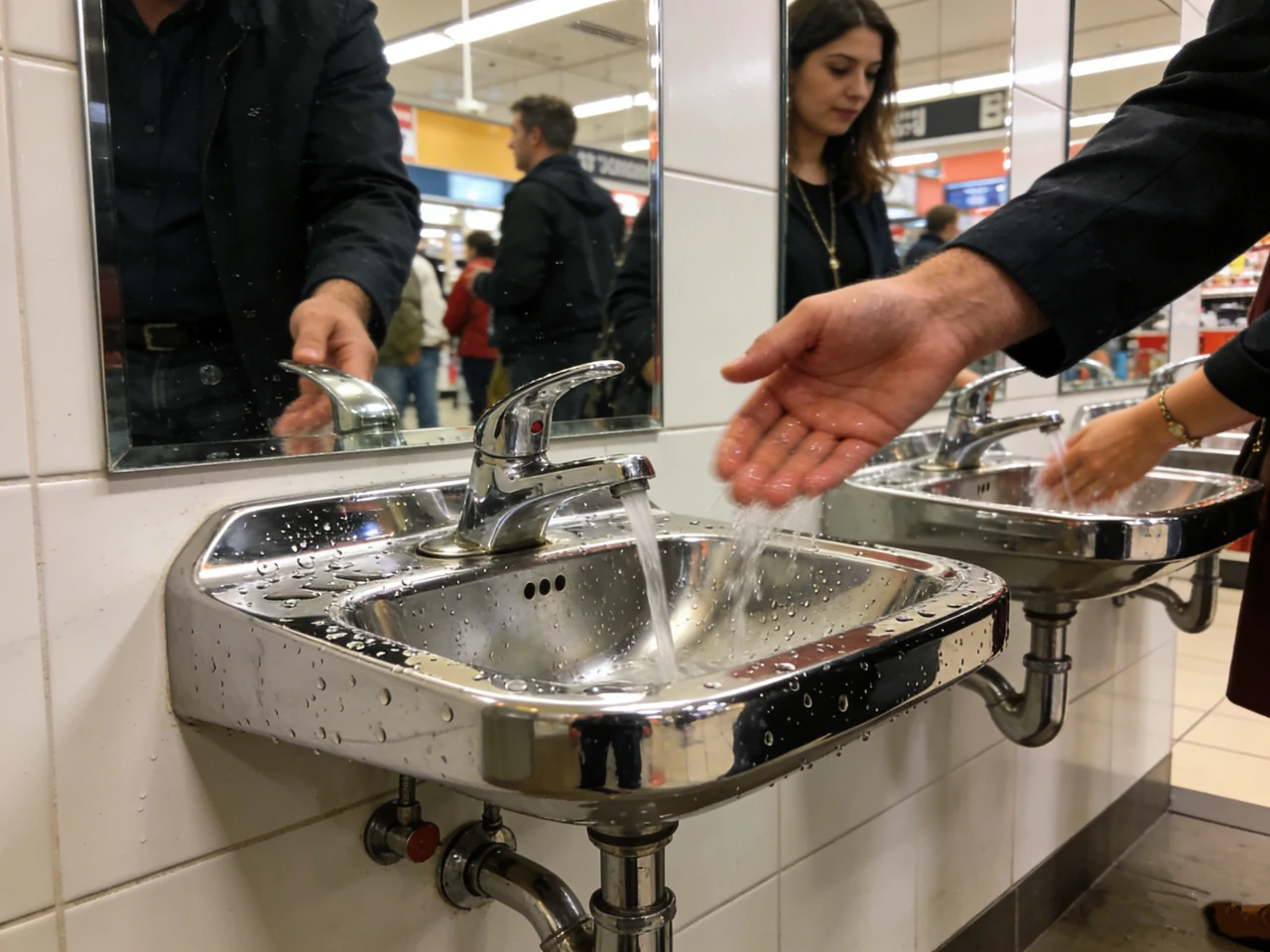
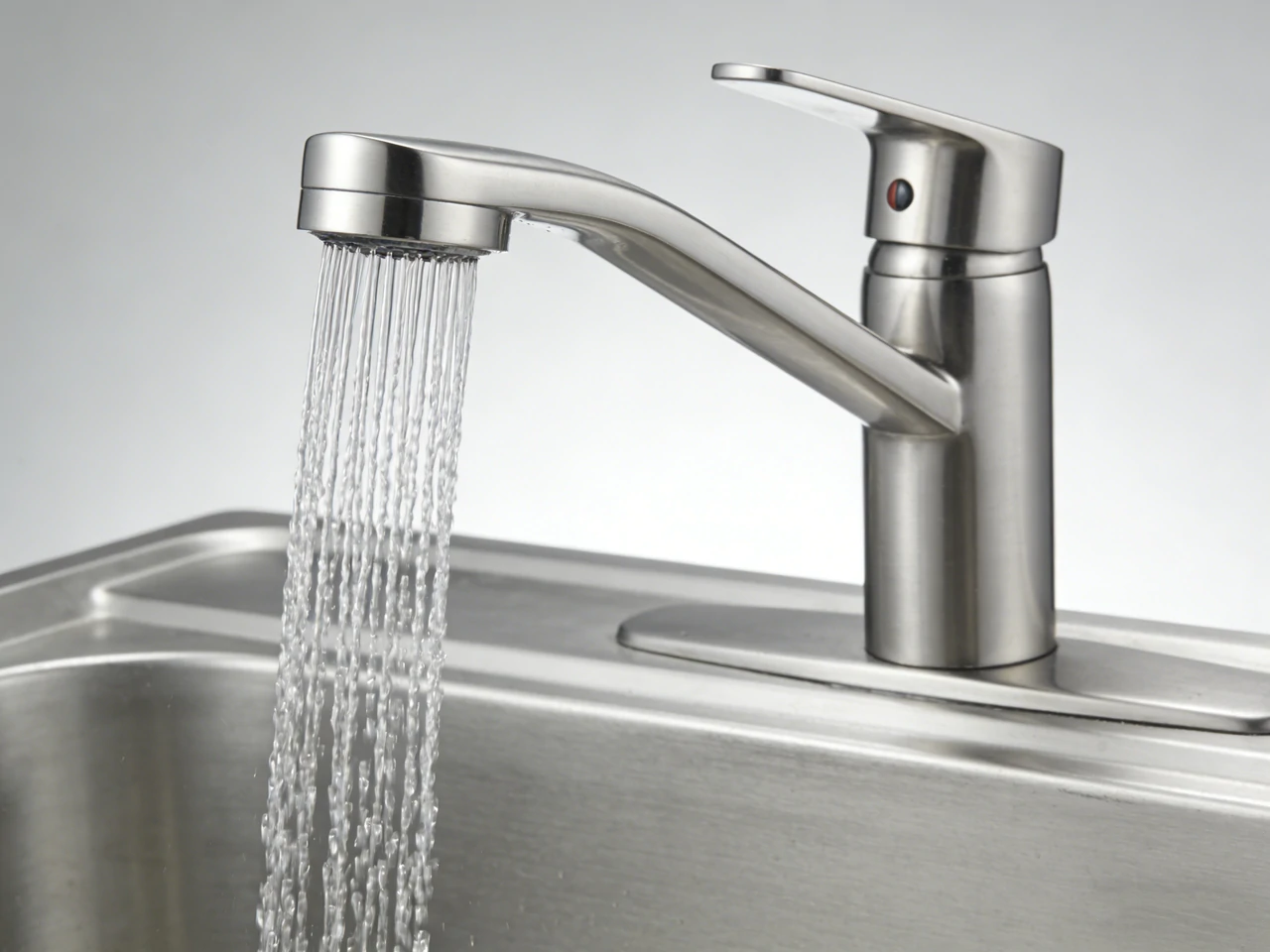
Commercial grade
bathroom faucets are designed for public and managed environments where durability, compliance, and long-term reliability matter more than decorative variation. In high-traffic restrooms, faucets must perform consistently under frequent use while meeting regulatory requirements for flow rate, accessibility, and material safety.
For architects, engineers, facility managers, and procurement teams, selecting a commercial lavatory faucet is a system-level decision rather than a finish choice. Factors such as use classification (public vs. private), control mode, water efficiency limits, and maintenance strategy directly affect inspection approval, downtime risk, and total cost of ownership.
This article explains how commercial grade bathroom faucets are defined, specified, and evaluated in professional projects, focusing on standards, codes, and performance criteria rather than brand marketing claims.
Definition, scope, and project evaluation criteria
When specifying commercial faucets, it’s important to assess the complete lavatory system, considering factors like basin geometry, water supply interface, and durability. A faucet in a public restroom is not just a standalone fixture but part of an integrated system that must align with long-term maintenance and regulatory requirements.
Commercial grade bathroom faucets are lavatory fittings specified for public, shared, or managed environments where durability, regulatory compliance, service continuity, and fleet consistency take precedence over decorative variation. In professional specifications, “commercial grade” is typically evidenced through third-party performance standards (mechanical, hydraulic, material safety), documented cycle-life expectations, vandal-resistance provisions, and defined flow-rate compliance for the intended use classification (public vs. private lavatory).
From a manufacturer and project-specification perspective, the faucet should be evaluated as part of a complete lavatory system—basin geometry, mounting condition, water supply interface, mixing/temperature control strategy, integration with bespoke
bathroom cabinets for projects, and facility maintenance constraints—rather than as an isolated trim item.
Commercial vs. private lavatory faucets: code-defined use cases (IPC/UPC)
In North American projects, model plumbing codes distinguish between public and private lavatory applications through fixture classification and use-case assumptions. This classification directly impacts allowable flow rates, the appropriateness of metering fittings, and how compliance is documented during submittals and inspections. For example, hospitality guestrooms are often treated as “private” in practice, while lobby, conference, and back-of-house restrooms are treated as “public,” even within the same property. Specifiers should confirm the authority having jurisdiction (AHJ) interpretation early, because it influences both product selection and the compliance evidence required.
Performance priorities for public/high-traffic restrooms (durability, uptime, compliance)
High-traffic restrooms prioritize: (1) uptime under abuse and frequent cycling, (2) consistent hydraulic performance across a range of inlet pressures, (3) resistance to corrosion, scaling, and chemical exposure, and (4) compliance with operability and material-safety requirements. These priorities commonly drive selection toward heavy-duty construction, robust cartridge architectures, tamper-resistant outlet components, and standardized internal parts to reduce downtime across multi-site portfolios. For procurement teams evaluating heavy duty faucets bulk orders, part commonality and service strategy can be as decisive as unit cost.
Stakeholder spec inputs: architect, engineer, contractor, facilities, procurement
Commercial faucet specifications typically combine inputs from:
- Architect/interior designer: mounting type, spout reach/height, finish family, visual alignment with accessories and partitions, and compatibility with basin geometry to control splash.
- Plumbing engineer: flow-rate compliance, pressure/temperature assumptions, mixing strategy, water hammer risk, and interface to supply stops and risers.
- Contractor: rough-in realities, deck thickness constraints, connection standards, and installation tolerances for multi-unit repeatability (without prescribing step-by-step methods).
- Facilities/operations: service access, battery or power strategy for sensors, preferred cartridge families, aerator maintenance approach in hard-water regions, and standardized spare parts.
- Procurement: compliance documentation, lead-time assurance, substitution controls (equals language), and long-term availability of replaceable components.
What defines a “commercial grade” lavatory faucet in specifications?
A “commercial grade” lavatory faucet is typically defined through measurable requirements, such as:
- Certification to ASME A112.18.1 / CSA B125.1 for performance and material provisions.
- Flow-rate compliance appropriate to the public or private lavatory classification.
- Lead-free faucets are required for potable water contact surfaces (as applicable under U.S. law).
- Durable construction (commonly solid brass bodies/spouts in many commercial specifications), cartridge cycle-life expectations, and finish performance criteria suitable for frequent cleaning.
- Tamper-resistant features (aerator retention, handle/fastener control) where vandalism risk is present.
- Documented submittals: dimensioned drawings, flow/pressure data, certification listings, and replacement parts continuity.
Regulatory and code compliance requirements
Faucets used in public lavatories must comply with various regulations and codes, including EPAct flow rate limits, ADA accessibility, and lead-free requirements. Understanding these codes and how they apply to faucet specifications is crucial for ensuring compliance and meeting project goals.
EPAct 92 maximum flow rates: 2.2 gpm baseline vs. 0.5 gpm public lavatory limits (DOE/FEMP)
U.S. federal requirements under EPAct establish baseline maximum flow for faucets at 2.2 gpm at 60 psi. For many public lavatory applications, procurement programs and code-driven practice commonly apply stricter limits: 0.5 gpm for public lavatory faucets, including defined limits for metering fittings (either continuous flow limit or a gallons-per-cycle limit). Project teams should treat flow-rate compliance as a submittal-critical attribute, not a value-engineering afterthought, because it can affect inspection outcomes and building performance targets. These limits are grounded in U.S. federal regulation under the Energy Policy Act, which establishes the maximum allowable flow rate for lavatory faucets at 2.2 gpm at 60 psi, as codified in 10
CFR Part 430.
Model code alignment: IPC/UPC classifications for public lavatories and metering fittings
Model codes (IPC/UPC) are frequently adopted with local amendments. They influence acceptable fitting types (manual, metering, sensor) and, in some jurisdictions, may shape expectations around self-closing fittings in specific occupancies. Where metering fittings are used, the compliance burden often shifts from “maximum continuous flow” to cycle volume and shutoff behavior. Submittals should clearly state whether the faucet is continuous-flow, metering, or sensor-actuated with a timed shutoff, and provide the corresponding tested performance values.
ADA accessibility expectations for operability (handle types, activation force, reach)
Faucet operability should be aligned with ADA expectations: controls that can be operated with one hand, without tight grasping, pinching, or twisting of the wrist; and with reasonable activation force. In practice, this favors single-lever manual controls, compliant metering push mechanisms, and touchless activation in many public spaces. Designers should also coordinate spout reach and control location with basin geometry and countertop depth to maintain accessible reach ranges and avoid unintended splash.
Lead-free requirements for potable water contact (Safe Drinking Water Act)
Where faucets dispense potable water, U.S. requirements commonly referenced as “lead-free” apply to wetted surfaces and materials. For commercial projects, “lead-free” should be treated as a documented compliance condition with clear certification or manufacturer declaration aligned to the applicable definition. In the United States, “lead-free” requirements for plumbing products are derived from the Safe Drinking Water Act and are enforced through
EPA oversight, making documented compliance a regulatory condition rather than a voluntary marketing claim. This is particularly important for portfolio procurement, healthcare, education, and projects with heightened material transparency requirements.
Hydraulic performance and water-efficiency specifications
Water-efficient faucets are crucial for commercial applications, particularly in high-traffic areas where reducing water usage without compromising performance is essential. Understanding flow rates and hydraulic performance helps ensure faucets meet both water efficiency goals and operational needs.
Flow-rate selection for commercial lavatories: 0.5 gpm continuous and metered limits
Flow-rate selection should align to:
- Use classification: public vs. private lavatory (and any local amendments).
- Activation mode: continuous, metering, or sensor with timed shutoff.
- User throughput goals: handwashing efficacy in high-traffic spaces without exceeding regulated limits.
- Basin geometry: low-flow streams can still splash if spout reach and outlet pattern are mismatched to bowl shape.
In hospitality, water-saving commercial taps are often deployed in public and back-of-house washrooms at 0.5 gpm, while guestrooms may target private-lavatory requirements that differ by program. When evaluating touchless hotel faucets, confirm whether the intended location is a public lavatory (0.5 gpm expectation) or a private lavatory (often higher allowable flow), and document the basis in the schedule.
Pressure-performance expectations: rated flow at 60 psi and low-pressure performance criteria
Flow ratings are typically stated at 60 psi. However, large facilities can experience lower dynamic pressure at peak demand or at remote branches. A robust commercial specification addresses:
- The rated flow at 60 psi (for compliance),
- Acceptable performance at reduced pressures (to avoid unusable handwashing flow),
- Sensitivity to pressure variation (to control perceived inconsistency across fixture banks).
For sensor or metering faucets, pressure variation also affects timing and the perceived “dose” of water per activation. Submittals should include pressure-performance curves where available, or at minimum a stated operating pressure range consistent with commercial distribution systems.
Outlet engineering: laminar vs. aerated flow options for splash control and user experience
Outlet type is a specification lever for both hygiene and maintenance:
- Laminar flow reduces air entrainment, which can reduce aerosolization concerns in some environments and can present a clear stream. Laminar outlets may be preferred in healthcare and some institutional contexts, depending on project policy.
- Aerated flow can provide perceived fullness at low flow rates and can help with rinsing feel, but aerators may be more sensitive to mineral buildup in hard-water areas.
Splash control is not only about flow rate; it is a coordination problem between spout reach/height, stream pattern, and basin depth/slope. Commercial schedules should pair outlet type with basin family, rather than leaving it as a late substitution.
Flow-rate compliance table (public vs. private vs. metered)
| Application / fitting classification |
Common U.S. compliance reference |
Maximum flow condition (typical reference) |
Notes for specifications |
| Public lavatory (continuous flow) |
DOE/FEMP practice aligned to EPAct interpretations |
0.5 gpm at 60 psi |
Confirm AHJ interpretation for “public” areas in mixed-use buildings. |
| Public lavatory (metering) |
DOE/FEMP practice aligned to EPAct interpretations |
0.5 gpm continuous or 0.25 gallons per cycle |
Specify cycle volume and shutoff timing expectations in addition to max flow. |
| Private lavatory (continuous flow) |
EPAct baseline |
2.2 gpm at 60 psi |
Many private programs target lower voluntary flows; verify program requirements. |
Materials, construction, and finish performance
Commercial faucets must be made from durable materials that can withstand harsh conditions, including exposure to chemicals, high traffic, and vandalism. Material choice, construction quality, and finish performance directly impact the longevity and reliability of the faucet.
Body and spout construction: solid brass vs. alternatives; dezincification resistance considerations
Commercial-grade faucets are commonly specified with solid brass bodies/spouts due to machinability, durability, and long-term sealing stability. In aggressive water conditions (high chlorides, unfavorable pH, elevated temperature), alloy selection and casting quality influence corrosion behavior. Where dezincification risk is known, project teams may require dezincification-resistant materials or documented suitability for the local water chemistry.
For multi-unit programs, material consistency matters: changes in alloy, wall thickness, or plating base preparation can create visible variation across installations and can also affect thread integrity and service life.
Cartridge technology and cycle-life expectations (ceramic vs. other architectures)
Cartridge architecture is central to reliability. Ceramic disc cartridges are widely used in commercial specifications because they support repeatable sealing surfaces and long cycle life when matched with appropriate filtration and material quality. For metering or sensor faucets, the functional equivalent is the valve module and its rated cycle performance.
From a project standpoint, “lifespan” should be framed as:
- expected cycles to leakage under standard test conditions,
- expected service interval in the facility’s water quality,
- availability of replacement cartridges/valve modules over the building’s operational horizon.
A commercial faucet used in a high-traffic restroom can experience orders of magnitude more actuations than a private lavatory; cycle-life data and spare-parts continuity are therefore procurement-critical.
Finish systems for commercial duty: chrome, PVD, powder coat; abrasion and chemical resistance
Finish selection in commercial environments should prioritize cleanability and resistance to abrasion and chemicals over purely aesthetic selection. Common commercial finish technologies include:
- Electroplated chrome: widely specified for durability and consistent appearance, generally compatible with neutral-pH cleaning protocols.
- PVD coatings: often selected where enhanced scratch resistance is required; verify coating system qualification and adhesion testing.
- Powder-coated finishes: can support color standardization programs; verify chemical resistance to the facility’s disinfectant and cleaning regimen.
Specifications should state expectations for finish adhesion, corrosion resistance, and acceptable cleaners (chemistry-based requirements such as neutral-pH, non-abrasive surfactants) to avoid premature dulling or coating damage in managed facilities.
Vandal-resistant and tamper-resistant features (handles, fasteners, aerators)
In public and semi-public restrooms, tamper resistance is a functional requirement:
- Aerator/outlet retention requiring a service key,
- Concealed or controlled handle fastening,
- Robust lever/actuator design resistant to side-loading,
- Sensor spout designs with protected components and fail-safe behavior suitable for managed maintenance.
These features reduce service calls and limit uncontrolled flow changes caused by unauthorized aerator swaps.
Standards, certifications, and third-party verification
Faucets in commercial applications must meet industry standards and certifications to ensure they perform as expected and comply with regulations. Third-party verification provides confidence that the products meet all necessary requirements for performance, safety, and environmental impact.
ASME A112.18.1 / CSA B125.1: performance, materials, and test scope
For North American commercial lavatory faucets, ASME A112.18.1 / CSA B125.1 is the primary harmonized standard commonly cited. It addresses performance characteristics such as pressure testing, leakage, endurance, and material provisions. Specifications should require compliance listing and ensure the exact catalog number submitted matches the certified configuration (including outlet type and activation mode).
NSF/ANSI drinking water material safety and extraction criteria (where applicable)
Where faucets contact potable water, NSF/ANSI material safety and extraction criteria may be relevant to demonstrate that wetted materials are suitable for potable systems. Whether a specific NSF/ANSI standard is required can vary by jurisdiction and project program; when required, it should be stated explicitly and verified through current listing documentation.
Water efficiency programs and procurement references (EPA/DOE): applicability limits by use case
Public lavatory flow-rate limits frequently align with federal procurement references (DOE/FEMP). Voluntary labeling programs may focus on private lavatory fittings rather than public fixtures; therefore, the absence of a particular label is not, by itself, evidence of non-compliance for public lavatory applications. Professional schedules should anchor compliance to the applicable law/code and the tested flow performance for the submitted configuration.
Reference notes: where to cite code authorities, standards bodies, and certification listings
For commercial submittals, cite:
- The applicable standard (e.g., ASME/CSA),
- The tested flow rate at 60 psi for the exact outlet configuration,
- Any lead-free declarations aligned to legal definitions,
- Any jurisdiction-required potable-water material safety listing (when applicable),
- The AHJ-adopted model code edition (IPC/UPC) where fixture classification is disputed.
System compatibility and integration with lavatory assemblies
A faucet never operates alone. This section frames faucet selection as a coordination exercise with basins, mounting conditions, project cabinets, supply connections, and temperature control strategies.
Deck-mounted vs. wall-mounted coordination: rough-in, spout reach, and basin geometry constraints
Mounting selection is primarily a coordination issue:
- Deck-mounted faucets must match hole pattern (single-hole, centerset, widespread) and deck thickness ranges, and must provide spout reach that lands the stream within the basin’s wetted zone.
- Wall-mounted faucets shift coordination to in-wall rough-in and spout projection; they can improve deck cleanability and free counter space but require disciplined alignment between wall construction tolerances and basin location.
In both cases, spout height and reach should be coordinated with basin depth and drain location to control splash at low flow rates, especially for 0.5 gpm public lavatory applications where outlet pattern becomes more noticeable.
Inlet connections and supply interface: typical 1/2" NPT (MPT/FPT) and project coordination checks
Commercial lavatory faucets commonly interface through 1/2" NPT threaded connections (male or female depending on design), coordinating with supply stops and flexible connectors selected by the contractor. Professional planning requirements include:
- Confirming inlet thread type and orientation in submittals,
- Ensuring adequate access for service under the deck or behind access panels,
- Avoiding mixed-connection standards across a project where parts standardization is required.
Mixing strategy and temperature control: centralized vs. point-of-use considerations
Temperature strategy has direct implications for scald risk management, maintenance, and user experience:
- Centralized mixing (tempered water distribution) can standardize temperatures across fixture banks but requires building-level control and verification.
- Point-of-use mixing (within faucet trim or local mixing valves) can improve local controllability but increases the number of service points.
Sensor and metering faucets often require special attention to minimum pressure differential and stable temperature to avoid inconsistent activation behavior or uncomfortable temperature swings.
Compatibility matrix (mounting type × basin type × connection × control method)
| Mounting type |
Basin type (typical) |
Connection interface (typical) |
Control method suitability |
Coordination focus |
| Deck-mounted, single-hole |
Countertop/vessel or integrated deck basin |
1/2" NPT to supply stops |
Manual single-lever, sensor |
Hole diameter, deck thickness, spout reach vs. bowl centerline |
| Deck-mounted, widespread |
Commercial vanity basin |
1/2" NPT to supply stops |
Two-handle, sensor (where designed) |
Hole spread, under-deck clearance, consistent alignment across banks |
| Wall-mounted |
Wall-hung or countertop basin |
In-wall supplies to stub-outs |
Manual, metering, sensor |
Rough-in depth, spout projection, access for service, wall tolerance control |
| Deck-mounted, centerset |
Commercial vanity basin |
1/2" NPT to supply stops |
Manual, metering |
Standardization across units, ADA operability, aerator/outlet selection |
Control modes and lifecycle trade-offs (manual, metering, sensor)
Different control modes solve different operational problems. This section introduces the lifecycle, maintenance, and performance trade-offs that specifiers should weigh when choosing between manual, metering, and sensor faucets.
Manual single-lever and two-handle configurations: ADA operability and abuse resistance
Manual single-lever designs are commonly specified where ADA operability and straightforward serviceability are priorities. Two-handle configurations may be used for design continuity in certain commercial interiors but can introduce operability constraints if not carefully selected and can increase touch points.
For abuse resistance, consider handle geometry and fastening, side-load tolerance, and cartridge retention method. In school or transit-adjacent environments, the mechanical robustness of the actuation mechanism and the availability of tamper-resistant components can materially affect downtime.
Metering (self-closing) faucets: cycle volume, reset time, and misuse mitigation
Metering faucets support water control by limiting run time per activation. From a specification standpoint, key parameters include:
- Maximum gallons per cycle (or timed run),
- Reset time behavior,
- Shutoff reliability over cycle testing,
- Maintainability of the metering mechanism.
Metering fittings can reduce misuse (e.g., leaving water running), but in some occupancies they can negatively affect user throughput if cycle volumes are too low. In high-traffic restrooms, cycle tuning should be aligned with expected handwashing duration and local policy.
Sensor (touchless) faucets: hygiene drivers, power options, and fail-safe behavior
Touchless control reduces touch points and is frequently evaluated for managed environments, including touchless hotel faucets in public areas. The professional evaluation should address:
- Power strategy: battery, hardwired, or mixed; and the maintenance implications across a site portfolio.
- Sensing stability: susceptibility to reflective surfaces, lighting conditions, and basin geometry.
- Fail-safe behavior: how the faucet behaves under low battery, sensor obstruction, or fault conditions, including shutoff limits to prevent continuous flow.
- Service model: modular replacement vs. field repair, and whether components are standardized across the project.
Comparison matrix (capex, uptime risk, vandal resistance, water performance, serviceability)
| Attribute |
Manual |
Metering |
Sensor |
| Upfront equipment cost |
Low to moderate |
Moderate |
Moderate to high |
| Water control |
User-dependent |
Controlled by cycle |
Controlled by logic/timing |
| Uptime risk profile |
Mechanical wear, misuse |
Mechanical timing wear |
Electronics + valve module + power dependency |
| Vandal/tamper resistance |
Depends on handle/aerator design |
Often robust; fewer “leave-on” events |
Spout robustness and protected components required |
| Water performance at low flow |
Outlet selection critical |
Cycle volume critical |
Calibration/timing + outlet selection critical |
| Serviceability at scale |
Strong if cartridges standardized |
Strong if metering module standardized |
Strong if power and modules standardized; requires planned maintenance |
Manufacturing quality, reliability, and documentation submittals
Beyond compliance, manufacturing quality determines consistency at scale. This section sets expectations for QA/QC practices, reliability indicators, and the documentation required to support commercial decision-making.
QA/QC expectations: pressure testing, leak testing, finish adhesion, and dimensional inspection
For commercial programs, quality assurance should be evidenced through consistent manufacturing controls, including:
- Pressure and leakage testing of valve assemblies,
- Dimensional inspection for critical interfaces (mounting shanks, inlets, spout reach),
- Finish adhesion and corrosion resistance verification aligned to the specified finish system,
- Lot traceability practices to manage corrective actions in the field.
Dimensional consistency is particularly important on multi-unit projects, where small variances multiply into alignment issues across fixture banks and can affect perceived quality at handover.
Reliability indicators: cycle testing, warranty structure, and spare parts continuity requirements
Reliability should be specified and verified through:
- Published endurance/cycle testing aligned to recognized standards where applicable,
- Warranty terms suitable for commercial duty (interpreted alongside actual service conditions),
- A defined spare-parts continuity commitment (cartridges, sensors, aerators/outlets, seals) aligned to the asset management horizon.
When asked “What is the lifespan of a commercial faucet?”, a specification-based answer is that service life is determined by cycle count, water quality, and maintenance regime. Procurement should focus on endurance data, modular replaceability, and parts availability rather than a single calendar-year number.
Submittal package requirements: spec sheets, CAD/BIM, IOM, replacement parts lists
Commercial submittals are decision tools. A complete package typically includes:
- Dimensioned specification sheet with mounting and hole requirements,
- Rated flow data at 60 psi and operating pressure range,
- Certification evidence (ASME/CSA; lead-free declarations; potable water material safety listings if required),
- Finish description and cleaning chemistry limitations,
- CAD/BIM content where project delivery requires it,
- Operation/maintenance documentation and a replacement parts list with ordering identifiers.
What documentation should be included in a faucet submittal for commercial projects?
At minimum, include: certified compliance listing(s), flow-rate documentation for the exact configuration, dimensioned drawings, installation requirements at a coordination level (hole pattern, deck thickness range, inlet type), finish system description with chemical resistance limits, lead-free compliance declaration for potable contact, and a spare-parts schedule that confirms long-term availability.
Sourcing, selection criteria, and project application scenarios
Commercial faucet selection is ultimately a risk-management exercise. This section connects specification requirements to real project scenarios, sector priorities, and total cost of ownership considerations.
Bid/spec alignment: equals language, alternates, and compliance evidence checklist
To control risk during bidding and substitution review, align schedules and division requirements around verifiable attributes:
- Certified standard compliance (ASME/CSA listing),
- Flow-rate compliance for the use classification (public/private, metering vs. continuous),
- Lead-free requirement where applicable,
- ADA operability alignment,
- Outlet type and tamper-resistance requirements,
- Documented materials and finish system.
If “equals” substitutions are allowed, require evidence that the substituted item matches the listed configuration (activation mode, outlet, flow restrictor, power method for sensor units) rather than relying on family-level literature.
Sector-based specification priorities: healthcare, education, office, hospitality, multifamily common areas
Different sectors weigh risks differently:
- Healthcare: hygiene policy, outlet selection (often laminar), dependable temperature strategy, and robust documentation.
- Education: vandal resistance, fast service turnaround, and standardized internal components across campuses.
- Office/commercial: balanced focus on compliance, aesthetics alignment, and serviceability.
- Hospitality: public-area durability and water efficiency; guestrooms may follow different flow requirements than public lavatories. For touchless hotel faucets, confirm maintenance capacity for power management and module replacement.
- Multifamily common areas: durability and tamper resistance similar to public spaces, with strong emphasis on service access and standardized parts.
Total cost of ownership: downtime risk, parts standardization across sites, and service network planning
Total cost of ownership in commercial restrooms is driven by labor and downtime more than by the initial faucet cost, particularly in programs involving custom bathroom furniture bulk procurement across multiple sites. Key levers include:
- Standardizing cartridges/valve modules and outlets across a project or portfolio,
- Selecting finishes that tolerate the facility’s cleaning chemistry without premature degradation,
- Planning for water quality (hardness, sediment) that can drive aerator scaling and valve wear,
- Defining a maintenance model for sensor units (battery replacement intervals, diagnostics, spare modules).
This is where bulk programs—such as heavy duty faucets bulk procurement for multi-site rollouts—benefit from a controlled bill of materials and documented interchangeability.
How should specifiers select sensor vs. manual faucets for high-traffic restrooms?
Select based on operational constraints, not preference. Sensor faucets are appropriate where touch reduction is a facility requirement and where power and maintenance workflows are defined (battery policy, spare modules, fault response). Manual faucets are appropriate where mechanical simplicity and rapid field service are the highest priorities. Metering faucets fit where misuse control is critical and cycle-volume performance supports user throughput. In all cases, confirm the flow-rate and outlet pairing with basin geometry to prevent splash and complaints that become facilities issues.
How can 0.5 gpm compliance be verified during submittals and inspections?
Verification should include: manufacturer-stated rated flow at 60 psi for the exact outlet configuration submitted, certification documentation where applicable, and clear identification of any flow control device integral to the outlet. For inspections, project teams should coordinate with commissioning or field verification practices consistent with the AHJ requirements, ensuring that field changes (such as outlet swaps) do not unintentionally alter the compliant configuration.
Which standards should commercial lavatory faucets be certified to for North American projects?
Commonly required: ASME A112.18.1 / CSA B125.1 for faucet performance. Potable water material safety and lead-free conditions may require additional documentation depending on jurisdiction and project program. Specifications should state the required listings and require current evidence in the submittal.
Managing mineral scaling and limescale in commercial environments (project and facilities perspective)
Hard-water scaling affects outlets, sensors (if water patterns change and cause splash-back), and perceived performance at low flow rates. In specifications, scaling risk can be reduced by:
- Selecting outlet designs that can be serviced with controlled tools and replaced without replacing the entire faucet,
- Preferring finish systems that tolerate facility-approved descaling chemistries (defined by pH and abrasiveness limits),
- Ensuring service access is feasible, so routine outlet maintenance does not require fixture removal,
- Coordinating filtration or water treatment policies at the building level where scaling drives repeated downtime.
Facility teams typically manage limescale with defined cleaning chemistry (neutral-pH or mildly acidic solutions compatible with plated/coated surfaces) and non-abrasive tools; abrasive pads and aggressive acids can damage finishes and void performance expectations. Specifications should align finish selection with the planned cleaning protocol.
FAQs
What documentation should procurement request for lead-free faucets on commercial projects?
When procuring lead-free faucets, always ask for a lead-free compliance declaration. This document should clearly state that the faucet meets the local regulations for potable water contact surfaces. Don’t rely on generic marketing statements—get the exact model number, finish, and any internal components that come into contact with water. And always double-check that the declaration is up to date, especially if your project spans several years.
Are touchless hotel faucets justified outside guestrooms?
Absolutely, as long as you have the right maintenance plan. Touchless faucets in public areas (lobbies, bathrooms, back-of-house) can reduce contact and help keep everything hygienic. But, they do need a reliable power source—whether battery or hardwired—and regular maintenance checks. In guest rooms, though, many hotels stick to manual faucets for simplicity and easier upkeep.
How can hotels reduce water consumption through lavatory faucet specifications?
To reduce water use, go for 0.5 gpm faucets in public restrooms, but make sure the outlet pattern still works well for handwashing. Pair that with the right basin design, and splash won’t be an issue. Also, avoid swapping out aerators later—small changes can lead to water waste. Stick to your original plan for optimal efficiency.
What are typical ADA-related faucet requirements that affect product selection?
For ADA compliance, the faucet should be easy to operate with one hand—think single-lever or sensor controls. The controls shouldn’t require too much force, and the spout reach should be within a reasonable range for people with disabilities. It’s important to coordinate the faucet with the basin and countertop to ensure full accessibility, so nothing feels out of reach.
What is a reasonable service-life expectation for a commercial lavatory faucet?
In a high-traffic environment, like a public restroom, you should think in terms of cycles, not years. Faucets can last for years, but internal parts (like cartridges and valves) will need to be replaced regularly. The key is serviceability—faucets with standardized parts and modular replacements will give you the best long-term value.
References
https://en.wikipedia.org/wiki/Universal_Product_Code