Oversized bathtubs require careful coordination of structure, MEP systems, finishes, and procurement. Proper specification ensures user fit, compliance, and repeatable installation across commercial and multi-unit projects.
Scope Stakeholders And Decision Outputs
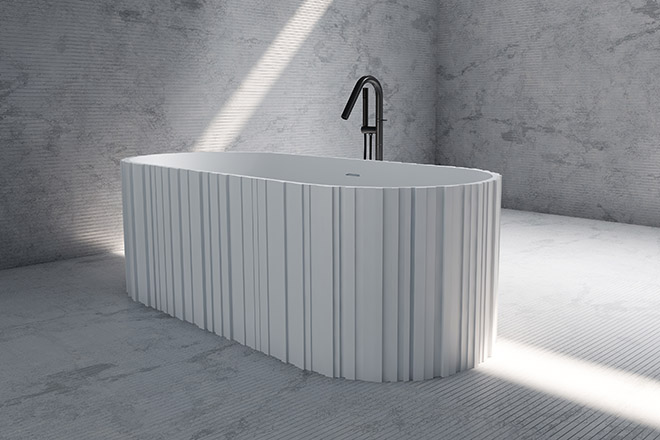
Big bathtubs (also referred to in specifications as an oversized bathtub, largest freestanding tub, longest bathtub, or biggest bathtub within a product line) introduce measurable impacts on structure, MEP coordination, finishes, and procurement risk. In commercial and multi-unit programs, the bathtub is not specified as a standalone fixture; it is coordinated as part of a complete bathroom system including waterproofing, drains/overflows, valves and spouts, access panels, partitions, accessories, and housekeeping constraints.
For professional stakeholders—project buyers, procurement managers, architects/interior designers, developers/contractors, and distribution partners—the decision outputs typically include: confirmed dimensional envelope and interface points, documented compliance pathway by market, repeatable manufacturing/QA criteria, and a submittal package complete enough to protect schedule and reduce RFIs.
Project Contexts Supported Hospitality Multi-Unit Residential And Healthcare
- Hospitality programs tend to prioritize consistent fit-up, serviceability, and surface durability under frequent cleaning cycles. If “statement” tubs are used, they must still meet housekeeping access and drainage performance requirements.
- Multi-unit residential programs prioritize SKU standardization, predictable rough-in, tolerance control, and damage-resistant logistics. Oversized tubs are most often limited to premium unit tiers to control structural and MEP variability.
- Healthcare and assisted living contexts may require additional safety and accessibility controls. Deep-soak formats can be restricted by accessibility standards, supervision protocols, and risk controls (slip resistance strategy, grab bar coordination, entry/egress considerations).
Specification Deliverables Expected Cutsheets BIM CAD Submittals And QA Records
A commercially usable bathtub specification typically requires:
- Cutsheets with overall dimensions, internal basin dimensions, waterline/overflow definition, capacity, and empty/full weight.
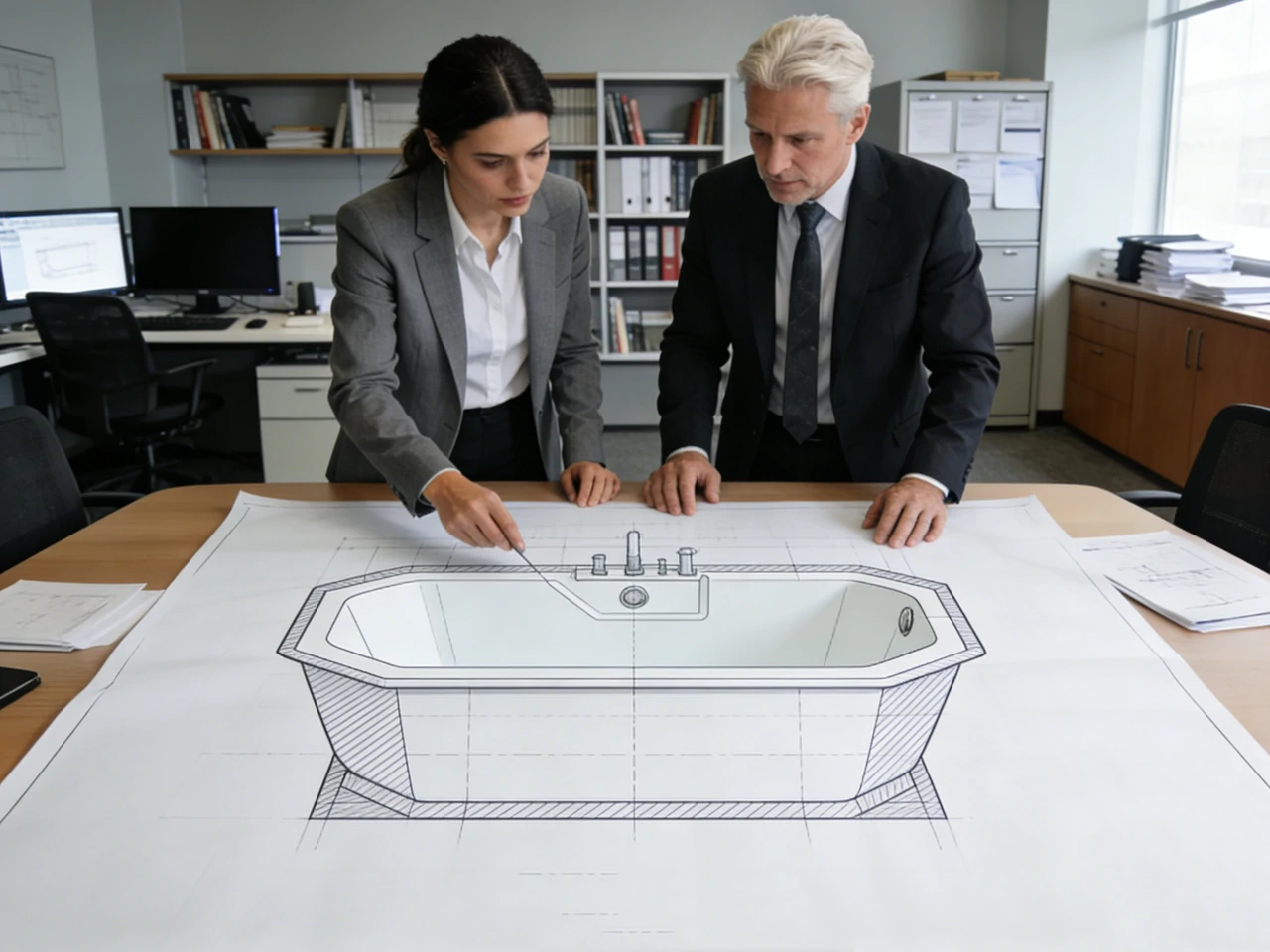
- BIM/CAD (2D plans/sections plus 3D content where required) showing drain/overflow location options and required access zones.
- Submittals including compliance marks/certifications applicable to the project jurisdiction and plumbing code pathway.
- QA records and traceability: material batch controls, dimensional inspection results, leak/pressure testing records, and packaging validation outcomes.
Definition Boundary Big Versus Standard Tubs Dimensional And Functional Criteria
In project specifications, “big” should be defined using measurable criteria rather than style descriptors:
- Standard alcove baseline is commonly around 60 in L × 30–32 in W, with 14–16 in typical soaking depth (as defined by a project’s waterline/overflow approach).
- Big bathtubs commonly start at ≥72 in (183 cm) overall length and/or ≥36 in (91 cm) overall width, and often target ≥16–20 in (41–51 cm) usable soaking depth for immersive use. The specification should also distinguish overall envelope from internal basin envelope; internal length/width govern user fit and water volume more reliably than rim-to-rim dimensions.
Structured Elements Decision Tree For Selecting Type Versus Constraints
Oversized tub selection decision tree (project planning level)
- Bathroom planning constraint
- If wall-to-wall space is fixed and service access is required → consider alcove / skirted / drop-in
- If open perimeter clearance is available and visual independence is required → consider freestanding
- Structural capacity and logistics
- If structure and access routes limit weight and handling → prioritize reinforced acrylic or mineral composite. In premium, low-volume signature spaces, carbon-fiber reinforced bathtubs and other advanced lightweight constructions can further reduce structural load while maintaining oversized proportions.
- If maximum impact resistance is required and structure can support higher dead loads → consider cast iron/porcelain enamel
- MEP constraints
- If rough-in location must match repeatable stacks → fix drain location early and avoid high-variability freestanding drain offsets
- If high-capacity fill or hydrotherapy is required → validate valve flow rate, hot water recovery, electrical provisions, and access
- Program risk profile
- If multi-unit schedule and repeatability dominate → standardized SKUs, finishes, and drain/overflow kits
- If premium, low-volume signature spaces → accept higher customization and longer lead times with formal change control
Professional Definition And Classification Of Oversized Tubs
Installation type—freestanding, drop-in, alcove, corner, or skirted—dictates tolerances, access requirements, and waterproofing interfaces. Classification ensures consistent specification and procurement practices.
Classification By Installation Type Freestanding Drop-In Alcove Corner And Skirted
In procurement and coordination, installation type is a primary classifier because it governs tolerances, waterproofing interfaces, and service access:
- Freestanding: requires perimeter clearances; drain/overflow alignment and floor penetrations must be tightly coordinated.
- Drop-in: installed into a deck; offers flexibility in surround design but adds scope for waterproofing, access panel placement, and deck structural support.
- Alcove: three-wall enclosure; strongest repeatability for multi-unit rough-in but can limit “biggest” internal basin gains unless length increases.
- Corner: footprint-efficient in certain layouts; can deliver a wide basin but complicates framing, tile layout, and access.
- Skirted: integrated apron; can improve visual integration and conceal plumbing while still needing defined access strategy.
Oversized Criteria Length Width Soaking Depth And Internal Basin Envelope
To avoid ambiguous “largest” claims, oversized tubs should be specified by:
- Overall L × W × H (outside envelope)
- Internal basin L × W at waterline or mid-depth (where meaningful)
- Usable soaking depth (see definitions below)
- Overflow configuration and waterline height
- Capacity at waterline (not just brimful volume)
- Empty weight and full operational weight
What Dimensions Qualify As “Big” In Project Specifications?
A practical project threshold for “big bathtubs” is typically met when one or more apply:
- Overall length ≥72 in (183 cm) (common marker for a “longest bathtub” within a standard bathroom bay)
- Overall width ≥36 in (91 cm) (often drives structure and door/route logistics)
- Usable soaking depth ≥16–20 in (41–51 cm) at the defined waterline Projects that specify a largest freestanding tub frequently target 72–80+ in length with a basin geometry that preserves internal reclining length after back slopes and lumbar shaping.
Structured Elements Decision Tree For Selecting Type Versus Constraints
| Tub type |
Typical oversized use case |
Key constraints to coordinate |
Procurement risk drivers |
| Freestanding |
Premium hospitality suites; high-end multi-unit penthouses |
Perimeter clearance; floor drain position; housekeeping access |
Drain offset variability; finish damage in transit; floor penetration alignment |
| Drop-in |
Custom surrounds; controlled deck aesthetics |
Waterproofing detailing; access panel sizing; deck load |
Scope gaps between trades; access not matching pump/valve needs |
| Alcove (large format) |
Repeatable multi-unit bathrooms needing longer basin |
Fixed rough-in; three-wall tolerance stack-up |
Fit-up issues if framing/tile varies; limited service access if not planned |
| Corner |
Layout-driven solutions where width is available |
Complex framing; tile cuts; access strategy |
Higher field variability; difficult standardization across units |
| Skirted |
Visual integration with simplified perimeter |
Access panel location; skirt-to-floor tolerances |
Access omitted or undersized; skirt damage during handling |
Dimensional Criteria For Big Bathtubs Specification First
Internal basin dimensions are critical for occupant fit and water volume. Defining these metrics clearly avoids mismatches between marketing claims and functional performance.
Dimension Ranges: Overall and Internal Basin Length and Width for Fit‑for‑User Requirements
For large-format tubs, internal basin length is the dimension most often missed in submittals. A 72–80 in overall tub may yield significantly less reclining length due to backrest slope and rim thickness. For occupant-fit targets (including “what size tub for a 6 foot person” in project briefs), many specifiers use these practical baselines:
- Overall length: 72–80+ in typically supports taller users, but only if internal basin length is proportionate.
- Internal basin length: commonly targeted at ~60–70+ in depending on backrest geometry and whether dual-ended symmetry reduces flat length.
- Internal basin width: frequently ~20–30+ in depending on shape; wider basins increase capacity and fill-time demands.
A project requirement such as “accommodate a 6 ft occupant” should be written as an internal reclining length requirement (with tolerance), not as a marketing-style overall length preference.
Soaking Depth And Waterline Definitions Useful Depth Versus Overflow To Rim
Depth must be defined consistently to avoid disputes between design intent and code-compliant overflow performance:
- Rim height: top edge of the tub; relevant for entry/egress and guard heights near glass.
- Overflow height: the controlling maximum waterline for code-compliant operation.
- Usable soaking depth: vertical distance from the drain-side low point (or seat datum, if a formed seat exists) to the overflow waterline. For oversized bathtub specifications, requiring the manufacturer to state usable depth at waterline reduces ambiguity versus “total height” claims.
Capacity Bands Gallons And Liters And Fill Time Implications For Projects
Capacity drives MEP and operational impacts:
- Standard tubs often fall in the ~40–60 gal (150–230 L) range at typical waterline.
- Oversized tubs commonly reach ~80–120 gal (300–450 L) and can exceed 150–200+ gal (570–760+ L) depending on width and depth.
For projects, the capacity is not just a comfort parameter; it affects:
- Fill time (valve flow rate and pressure)
- Hot water storage/recovery and peak draw modeling
- Drain down rate and overflow performance
- Housekeeping turnaround time (where relevant)
Structured Elements Specification Table Length Width Height Depth Capacity Empty And Full Weight
The table below shows typical specification bands used to bracket “biggest” and “largest” tubs in commercial schedules. Values vary by geometry and material; procurement should require manufacturer-declared values for the exact SKU.
| Category |
Overall L × W × H |
Usable soaking depth (at overflow) |
Capacity at waterline |
Empty weight (typical) |
Full operating weight (typical) |
| Large alcove / skirted |
70–72 in × 32–36 in × 20–24 in |
14–18 in |
60–90 gal (230–340 L) |
90–180 lb (40–82 kg) |
650–1,000+ lb (295–454+ kg) |
| Large freestanding |
72–80+ in × 32–40+ in × 22–30 in |
16–20+ in |
70–120+ gal (265–455+ L) |
120–300+ lb (55–136+ kg) |
750–1,400+ lb (340–635+ kg) |
| Extra-wide / true oversized |
72–80+ in × 42–60+ in × 24–30 in |
16–20+ in |
120–200+ gal (455–760+ L) |
200–600+ lb (91–272+ kg) |
1,200–2,300+ lb (545–1,045+ kg) |
Note on “how much does an oversized bathtub cost” (commercial context): cost must be evaluated as a total installed scope impact, not a unit-only comparison. Drivers include material system, certification/testing, surface finish class, packaging and damage risk, country-of-origin logistics, accessory/trim interfaces, and project volume. In multi-unit programs, the larger cost exposure is often coordination and change-order risk (structure + MEP + waterproofing) rather than the tub shell alone. For procurement, a supplier quotation should separate: tub, drain/overflow kit, optional insulation, optional hydrotherapy package, and documentation/compliance costs per market.
Structural And Space Planning Integration Architectural Coordination
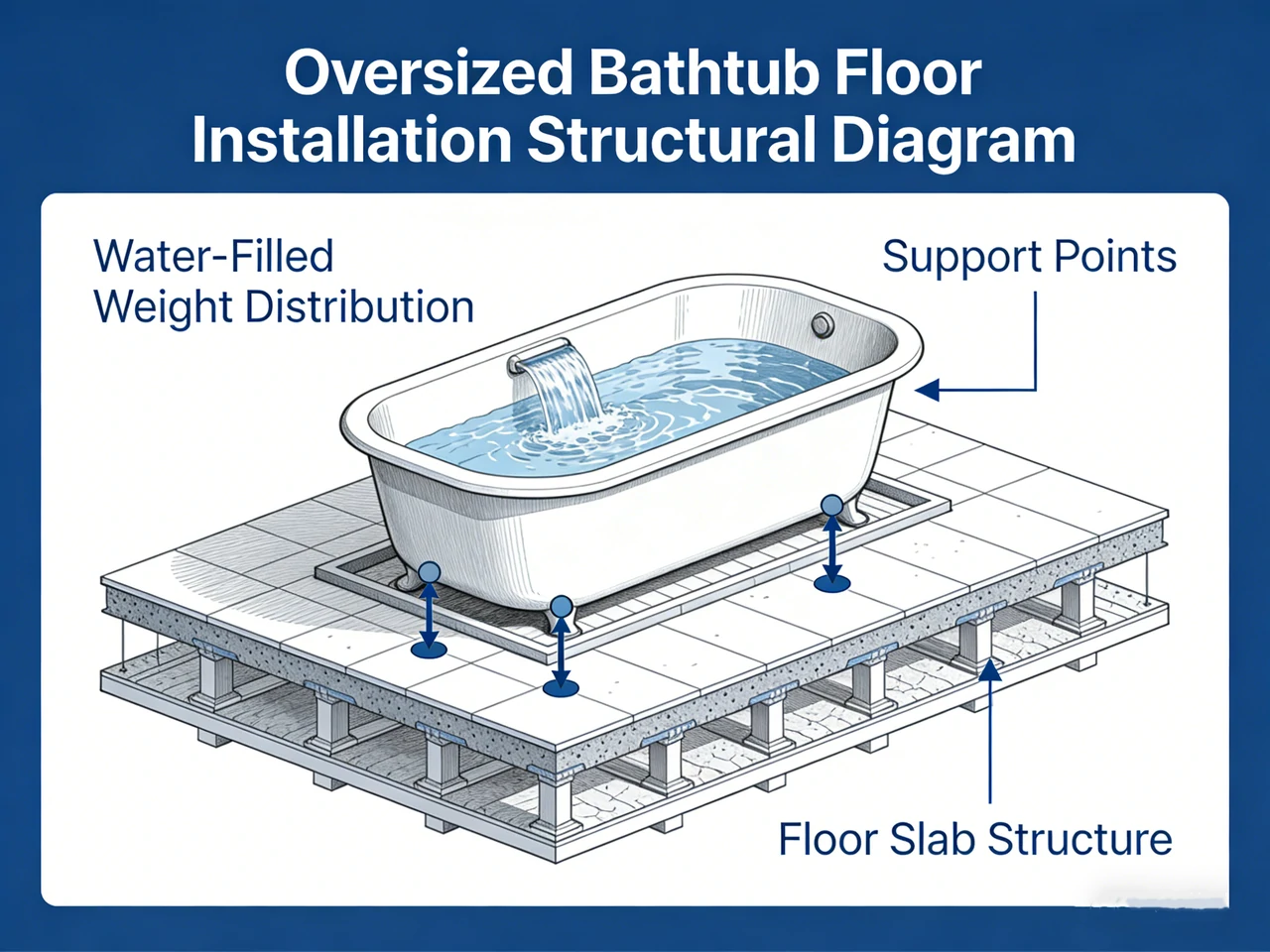
Floor loading, point loads, reinforcement, and clearance planning are critical for oversized tubs to ensure safety, serviceability, and long-term durability.
Floor Loading Point Loads And Reinforcement Triggers Reference Building Code Authority And NAHB Guidance
Large tubs concentrate load through a limited footprint. Structural review should address:
- Dead load: tub empty weight plus finishes and deck (for drop-in).
- Live load: water mass plus occupant load assumptions.
- Load distribution: footprint contact points (feet, base frame, or full-contact bottom).
Industry guidance often references residential floor design baselines (e.g., ~50 psf as a common reference point), but project teams must defer to the governing building code and structural engineer-of-record for the actual design criteria. Guidance on floor loading and reinforcement for residential and multi-unit programs can be found through the National Association of Home Builders (
NAHB). For oversized configurations, reinforcement triggers typically include:
- Extra-wide tubs with high capacity (water mass dominates)
- Cast iron or heavy composite in upper floors
- Freestanding tubs with discrete feet (higher point loads)
Clearances Access Zones And Serviceability Valve Access Drain Access Pump Access Where Applicable
For commercial operations, service access is not optional; it is a cost-control requirement. Coordination should define:
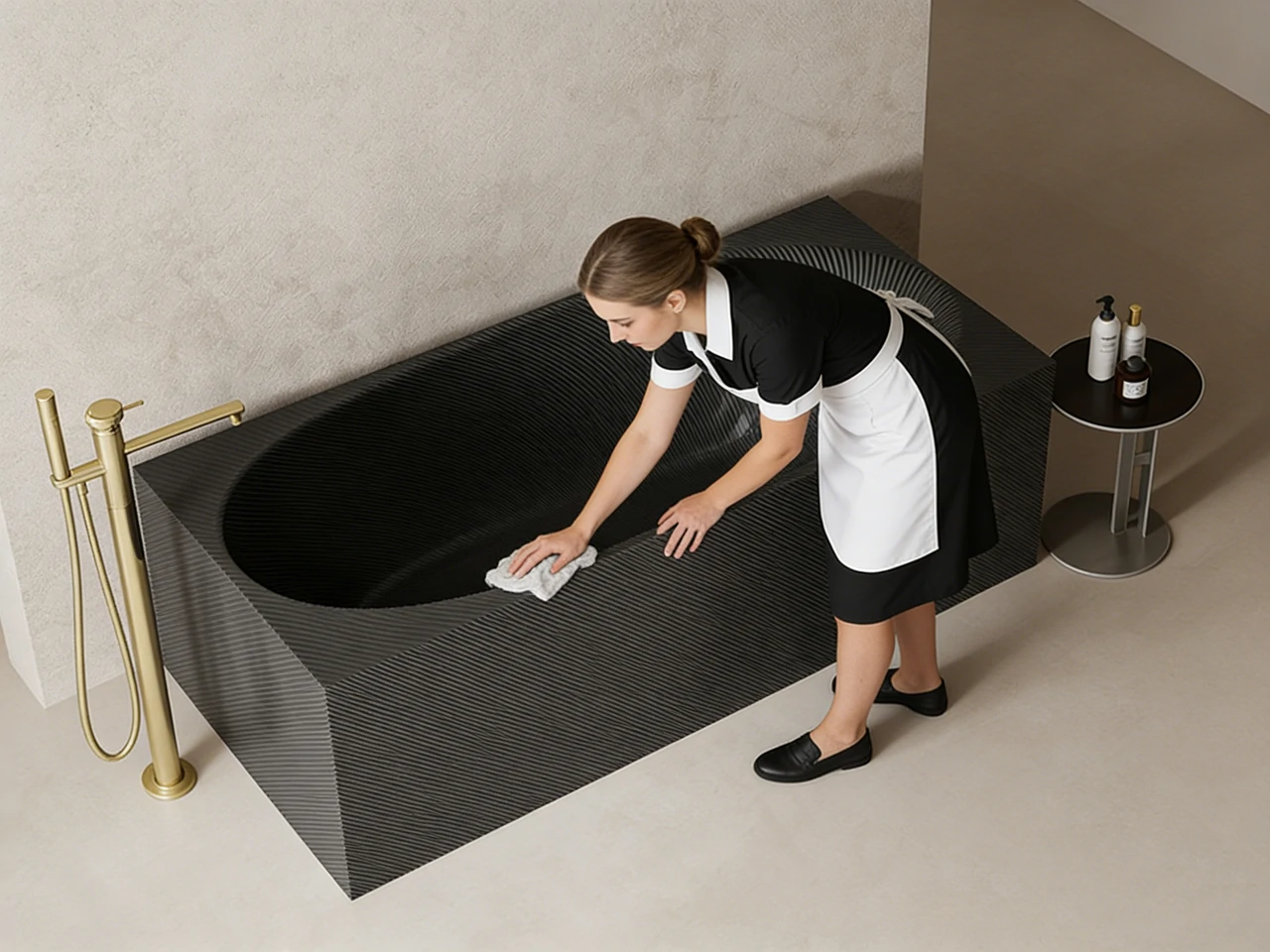
- Perimeter cleaning clearance (freestanding): enough space to clean behind and under edges, subject to project housekeeping requirements.
- Access to drain/overflow connections: via ceiling below, side access panel, or adjacent service zone.
- Hydrotherapy service access (if used): pump/blower access panel sized to component envelope plus tool clearance.
- Removable panels: defined fastening method and finish coordination so panels remain serviceable after handover.
What Floor Load Rating Is Required For A 72–80 Inch Tub At Full Capacity?
There is no single universal rating that can be applied without the tub’s declared capacity at waterline, empty weight, and support footprint. A planning-level approach used in project coordination is:
- Determine full operating weight = empty tub + water mass + occupant allowance.
- Convert to load intensity using the effective footprint area and support points.
- Confirm local floor assembly capacity with the structural engineer, considering joist direction, slab thickness, and reinforcement.
As a practical trigger, any tub in the 72–80 in range with >80–120 gal capacity often warrants early structural sign-off because full operating weights commonly exceed ~750–1,400+ lb (340–635+ kg) depending on material and geometry.
Structured Elements Plan And Section Diagrams Showing Clearance And Access Zones
Freestanding (plan view) — clearance and cleaning/service zones (conceptual)
| Area/Zone |
Description |
| [Wall] (Left) |
Left wall boundary |
| Recommended access/clean zone (Left) |
Suggested cleaning and service clearance on the left side of the tub |
| [FREESTANDING TUB] |
Main freestanding bathtub unit |
| Recommended access/clean zone (Right) |
Suggested cleaning and service clearance on the right side of the tub |
| [Wall] (Right) |
Right wall boundary |
| Door path + handling route |
Entryway and handling path: verify minimum clear opening and turning radius for transport and installation |
Drop-in (section) — access panel and waterproofing coordination (conceptual)
| Layer / Zone |
Description |
| Tile / Finish Deck |
Top deck surface; waterproofing is installed beneath finish |
| Tub Rim Flange |
Edge of the drop-in tub that sits on the deck |
| Drop-in Tub Shell |
Main body of the drop-in bathtub |
| Service Void |
Space beneath the tub shell for plumbing and optional pump installation |
| Drain / Overflow |
Tub waste connections located within the service void |
| Access Panel |
Removable panel sized for component removal and servicing (not just inspection) |
| Substrate / Framing |
Structural support layer; coordinate load and deflection limits with finishes |
Materials And Performance Characteristics For Large Format Tubs
Material selection—acrylic, cast iron, porcelain enamel, or mineral composite—affects weight, handling, durability, and surface repairability. Specifications should quantify performance and maintenance expectations.
Acrylic Cast Iron Porcelain Enamel And Mineral Composite Trade Off Criteria
Material choice for big bathtubs should be based on quantified performance and logistics rather than visual preference alone.
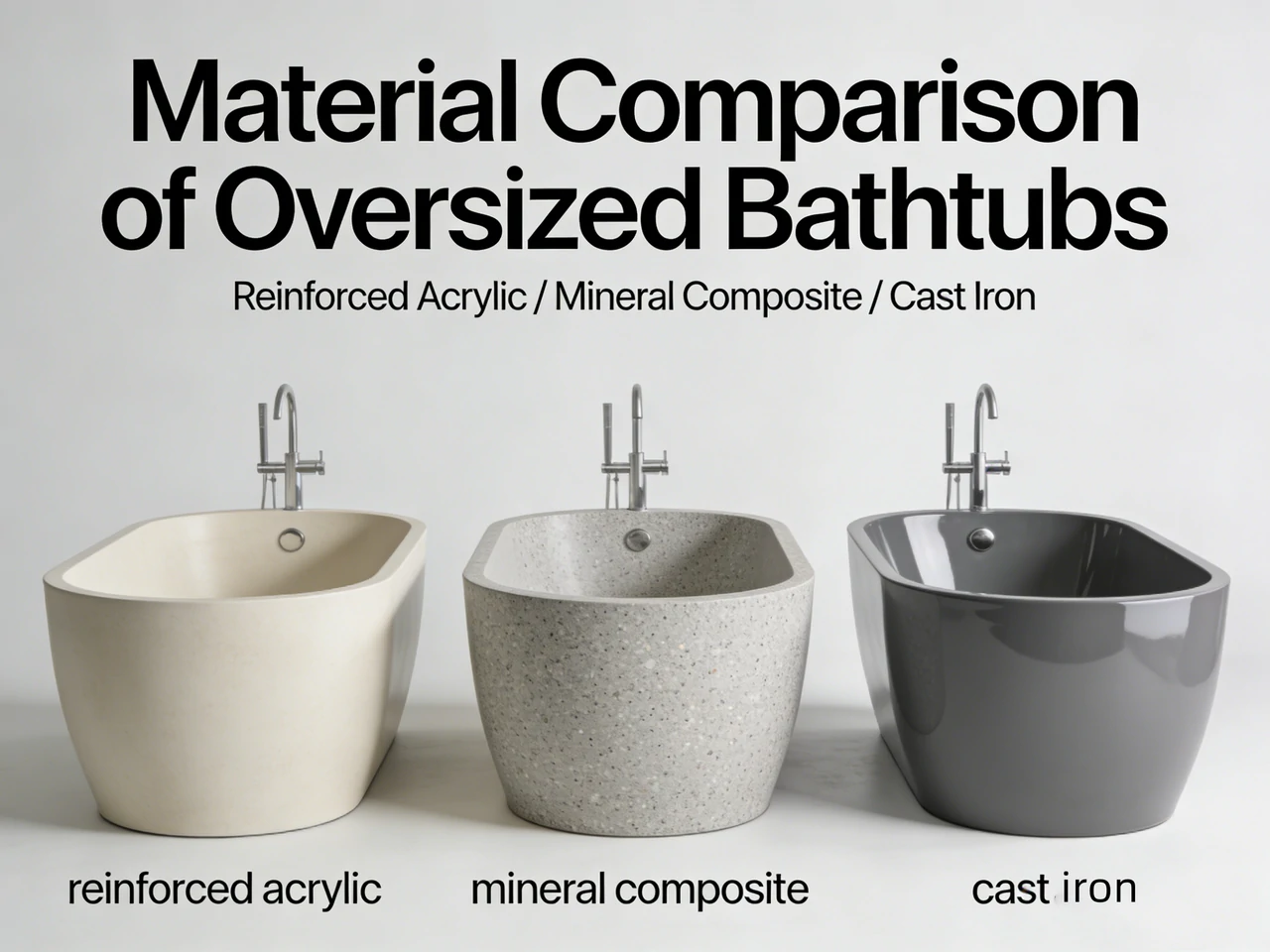
- Reinforced acrylic: advantageous for large freestanding formats due to weight and moldability. As a result, reinforced acrylic bathtubs are widely used for oversized acrylic tubs in multi-unit and hospitality programs where repeatable installation is critical. Procurement should specify reinforcement approach, minimum wall thickness expectations, and deflection limits under load to protect seal interfaces and perceived quality.
- Cast iron with porcelain enamel: high surface hardness and impact resistance, but significantly higher mass. Requires early handling-route planning and may trigger structural reinforcement in elevated floors.
- Mineral composite (solid-surface class materials): often provides stiffness and thermal mass, but weight can approach cast iron levels depending on formulation. Surface repairability and chemical resistance must be documented for housekeeping cycles. For oversized formats in premium hospitality and residential projects, solid-surface bathtubs are frequently specified where rigidity, surface consistency, and long-term repairability are required.
Thermal Retention Surface Hardness Scratch Resistance And Chemical Resistance For Commercial Housekeeping
For hospitality and multi-unit operation, the surface system must tolerate:
- Frequent cleaning with neutral-pH, non-abrasive agents and disinfectant protocols consistent with facility requirements.
- Scratch/abrasion exposure from housekeeping tools and accidental contact.
- Color and gloss stability under warm water exposure and cleaning cycles.
Specifications should define allowable cleaning chemistry (functional requirements, not product names) and require supplier documentation for chemical resistance and repair protocols (what is field-repairable vs factory-only).
Weight And Handling Implications For Multi Unit Logistics Including Empty Weight Packaging And Damage Risk
Large tubs increase logistics risk and variability:
- Route survey: door widths, elevator capacity, corridor turns, and staging areas should be validated against crate dimensions and handling equipment needs.
- Packaging validation: corner protection, base pallet rigidity, tilt/drop criteria, and vibration resilience should be confirmed for the project’s shipping method.
- Damage classification: procurement should align with the manufacturer’s defect classification (cosmetic vs functional) to avoid inconsistent field acceptance.
Structured Elements Materials Performance Matrix Weight Durability Repairability And Thermal Retention
| Material system |
Relative empty weight |
Surface durability |
Repairability (field) |
Thermal retention tendency |
Typical project fit |
| Reinforced acrylic |
Low–medium |
Medium (scratch risk) |
Often feasible (controlled repair kits/protocols) |
Medium (improved with insulation strategies) |
Multi-unit where handling and repeatability are priorities |
| Cast iron / porcelain enamel |
High |
High (impact/abrasion) |
Limited; enamel chips are difficult to make invisible |
High (thermal mass) |
Ground floors or structurally robust slabs; durability-driven programs |
| Mineral composite |
Medium–high |
Medium–high (depends on formulation) |
Often feasible (sanding/polishing protocols vary) |
Medium–high |
Premium programs balancing stiffness and repairability |
Plumbing Electrical And System Compatibility MEP Integration
Drain, overflow, and valve coordination, hydrotherapy readiness, and hot water delivery must be confirmed to avoid installation or operational failures.
Drain Overflow And Valve Specifications To Confirm Before Procurement
Big bathtubs increase the penalty for rough-in errors. Submittals should lock:
- Drain centerline location (X/Y from reference walls or tub centerline)
- Overflow height and orientation
- Connection type and trap clearance requirements
- Pipe size conventions: many jurisdictions and designs use 1.5–2 in nominal connections for bathtub wastes; confirm the governing plumbing code and project standard.
For freestanding tubs, confirm whether the project uses:
- Floor-mounted drain kits with specific escutcheon geometry
- Concealed waste/overflow routing requirements
- Offset options (if any) and their tolerance impacts
High‑Capacity Fill Strategies: Valve Flow Rates, Mixed‑Water Delivery, and Hot‑Water System Impacts
Oversized tubs can exceed typical mixed-water delivery assumptions. Coordination should address:
- Target fill time and required mixed-water flow rate at available pressure
- Hot water storage and recovery during peak usage (hospitality peak windows are common stress points)
- Thermostatic control requirements (scald protection policy, where required)
- Noise and water hammer controls if high-flow valves are used
Electrical installation of hydrotherapy systems must comply with
NFPA/NEC guidelines to ensure safety and proper grounding. This is where “is a 72 inch tub too big” becomes a project question rather than a spatial one: a 72 in tub may be feasible geometrically, but may be non-viable if the building’s hot water system cannot deliver required volume and recovery without redesign.
Hydrotherapy Readiness for Whirlpool and Air Systems: GFCI, Grounding, and Service Disconnects with Reference to UL/NEC
If hydrotherapy is in scope, the bathtub becomes an MEP-coordinated system:
- Electrical: GFCI protection, bonding/grounding, and a service disconnect as required by jurisdiction and product listing conditions.
- Access: pump/blower access panel sized for removal and service.
- Acoustic/vibration: verify mounting and isolation requirements to avoid structure-borne noise in multi-unit stacks.
- Compliance: confirm the listing/marking and installation constraints required by the certifying body.
Drain, Overflow, and Valve Specifications to Confirm Before Procurement
Procurement packages should confirm, in writing and on drawings:
- Drain location (centerline), orientation, and tolerance
- Overflow height and cover geometry
- Waste/overflow kit compatibility with tub wall thickness and material
- Valve type and required flow rate at project pressure
- Spout reach and discharge geometry to prevent water striking the overflow or rim
- Service access method and minimum access opening
- Jurisdictional plumbing code pathway and required marks/listings
Standards Certifications And Compliance Documentation
ASTM, ASME, CSA,
IAPMO, and local codes ensure material performance, product safety, and accessibility compliance. Specifications should reference applicable standards and required documentation.
Material and Fixture Performance Standards with Reference to ASTM
Project specifications often reference material and performance test methods through
ASTM standards (scope varies by material system). The submittal should identify which test methods are used for:
- Material properties (impact resistance, hardness proxies, chemical resistance approaches)
- Surface performance expectations
- Dimensional verification methods
Where a project is performance-based, require the manufacturer to state test method + acceptance criteria + report availability rather than listing generic standard numbers without evidence.
Plumbing Product Compliance And Marking Reference ASME CSA And IAPMO By Market
Commercial projects typically require evidence that the bathtub and related plumbing components align with the applicable code regime and certification pathway for the destination market. Common documentation expectations include:
- Product listing/marking where required by jurisdiction
- Third-party certification evidence for plumbing components (as applicable)
- Traceable documentation matching the delivered SKU revision
Accessibility And Risk Controls For Deep Soak Bathtubs Reference ADA And ANSI
Deep soaking depths (often specified as 16–20+ in usable depth) can conflict with accessibility requirements depending on occupancy type and jurisdiction. Where accessibility is in scope:
- Confirm whether bathtubs are allowed in the accessible unit type and under what conditions.
- Coordinate grab bar strategy, slip resistance approach (within allowed surface properties), and entry/egress risk controls.
- Document any project-approved deviations and the authority having jurisdiction acceptance pathway.
Typical Certifications Required For Commercial Bathtub Submittals
Requirements vary by market and project type, but commercial submittals commonly request:
- Plumbing code compliance evidence for the jurisdiction (product marking/listing where required)
- Electrical listing evidence for hydrotherapy components (where applicable)
- Material declarations and restricted substance documentation (where required by project policy)
- Quality documentation: leak testing, dimensional inspection, and packaging validation summaries
Manufacturing Quality Tolerances And Verification For Project Supply
Dimensional tolerances, repeatability, and surface inspection criteria prevent field fit-up failures and ensure consistent quality across production lots.
Dimensional Tolerances and Repeatability for Large Molds for Fit‑Up Risk Control at Scale
Large-format tub production amplifies tolerance stack-up risk: small deviations in rim flatness, overall length, or drain location can create field fit-up failures—especially in alcove and drop-in surrounds with hard finishes. A project-grade specification should request:
- Declared tolerances for overall L/W/H, rim flatness, and drain/overflow location
- Defined measurement datums (how and where the tub is measured)
- Process controls for mold wear and dimensional drift across production lots
Surface Quality Criteria: Finish Inspection, Defect Classification, and Repair Protocols
To prevent inconsistent acceptance across sites, define:
- Acceptable surface class (gloss level range where relevant, uniformity expectations)
- Defect classification: sink marks, inclusions, voids, scratches, waviness, color variation
- Repair protocol: what is repairable in the field, maximum repair size, and how repairs are validated
Pressure and Leak Testing, Drain Assembly Verification, and Packaging Validation for Transit
For commercial projects, verification is often more valuable than generalized claims:
- Leak testing at drain/overflow interfaces and through-wall penetrations (where applicable)
- Drain assembly fit verification to prevent cross-threading, misalignment, or gasket compression issues
- Packaging testing appropriate to shipping mode (drop/tilt/vibration), with documented pass criteria and change control if packaging is revised mid-program
Structured Elements: Incoming Inspection Checklist and Factory QA Hold‑Point Table
Incoming inspection checklist (site/warehouse receiving)
- Packaging intact; corner/base impacts documented
- SKU and revision match approved submittal
- Visual finish inspection under defined lighting distance/angle
- Dimensional spot-check: overall length/width, drain location, rim flatness at critical contact points
- Included components verified: drain/overflow parts, fasteners (if any), documentation set
- Any nonconformance tagged with photo evidence and batch/serial traceability
Factory QA hold-point table (typical control points)
| Hold point |
Verification focus |
Record retained |
| Raw material intake |
Batch identification, formulation controls where applicable |
Material batch record |
| In-process dimensional check |
Drain/overflow location, rim flatness, overall envelope |
Dimensional inspection log |
| Surface finish inspection |
Defect classification to agreed criteria |
Finish inspection record |
| Leak/fit test |
Drain/overflow sealing integrity |
Test record per unit/lot |
| Packaging sign-off |
Correct packout, protection elements, label traceability |
Packaging checklist |
Sourcing And Selection Criteria For Commercial Programs
Standardizing oversized tub SKUs and controlling customization thresholds minimizes procurement complexity, ensures repeatable fit, and reduces lead-time variability.
SKU Rationalization for Multi‑Unit: Standardization versus Customization Thresholds
Big bathtubs can quickly multiply SKUs when drain location, overflow style, finish, and accessory interfaces vary. Programs typically benefit from:
- Fixing a small set of oversized tub configurations (by tier) rather than allowing per-unit variation
- Standardizing drain/overflow kits and rough-in positions across unit types where possible
- Restricting custom geometry unless it is tied to a repeatable room template
Customization should be gated by documented impacts: lead time, minimum order quantities, compliance re-testing needs, and re-submittal requirements.
Lead Times Minimum Order Quantity Strategy And Change Control For Engineering Revisions And Revision Tracking
Commercial procurement should require:
- A defined lead time by SKU and finish class, with production slot commitments where applicable
- Stated minimum order quantities by configuration if tooling, color, or surface process changes are involved
- Change-control: revision tracking for drawings, molds, and accessory interfaces; any change after approval should trigger a controlled re-submittal process
Submittal Package Requirements Including Drawings Certificates Test Reports And Installation Constraints
A complete submittal package for big bathtubs should include:
- Dimensioned drawings (plan/section) including datums and tolerances
- Internal basin envelope dimensions and waterline/overflow definition
- Capacity at waterline, empty weight, and full operating weight
- Drain/overflow details and compatibility statement
- Market compliance documentation as required
- Handling and storage constraints relevant to maintaining finish quality
Structured Elements Procurement Scorecard Spec Compliance Risk Lead Time And Documentation Completeness
| Evaluation category |
What to verify |
Typical acceptance target |
| Spec compliance |
Dimensions, basin envelope, depth at waterline, capacity, weights |
Matches schedule and room templates with stated tolerances |
| Coordination risk |
Drain location stability, access strategy, surround interfaces |
Low variability; clear datums; validated access clearances |
| Manufacturing consistency |
QA hold points, defect criteria, traceability |
Documented controls and repeatable inspection outputs |
| Lead time / supply risk |
Capacity, buffering, packaging robustness |
Lead time aligned to site sequence; packaging validated |
| Documentation completeness |
Drawings, compliance evidence, test records |
Submittal ready with minimal RFIs |
FAQs
What is an oversized bathtub called in project documents?
Common project terms include oversized bathtub, large-format tub, extra-large tub, and, when freestanding, largest freestanding tub within a specified product series. The most defensible approach is to define “oversized” by minimum overall length/width and usable soaking depth at the overflow waterline, plus internal basin envelope.
What is considered a large bathtub for commercial specifications?
A common threshold is ≥72 in (183 cm) overall length and/or ≥36 in (91 cm) overall width, with ≥16–20 in (41–51 cm) usable depth depending on program intent. Internal basin dimensions should be stated explicitly to avoid mismatches between overall size and functional soaking space.
What size tub should be specified for a 6 foot occupant requirement?
Instead of specifying only overall length, set a requirement for internal basin reclining length (often targeted in the ~60–70+ in band depending on backrest slopes) and verify with the manufacturer’s basin drawing at the defined waterline. This reduces the risk that a “longest bathtub” by overall dimension still has insufficient internal length.
How should cost be evaluated for an oversized bathtub in commercial procurement?
Evaluate cost as a combination of (1) tub material system and finish class, (2) compliance and documentation requirements by market, (3) logistics/packaging and damage risk, and (4) coordination impacts on structure, MEP, and waterproofing. For multi-unit projects, reducing variation and RFIs often produces more value than selecting the lowest unit price.
What are the four main bathtub types used in commercial schedules?
Common categories used in schedules are freestanding, drop-in, alcove, and corner (with skirted often treated as a sub-type depending on the project’s classification system). Selection should be driven by room template constraints, rough-in repeatability, and serviceability requirements.
References